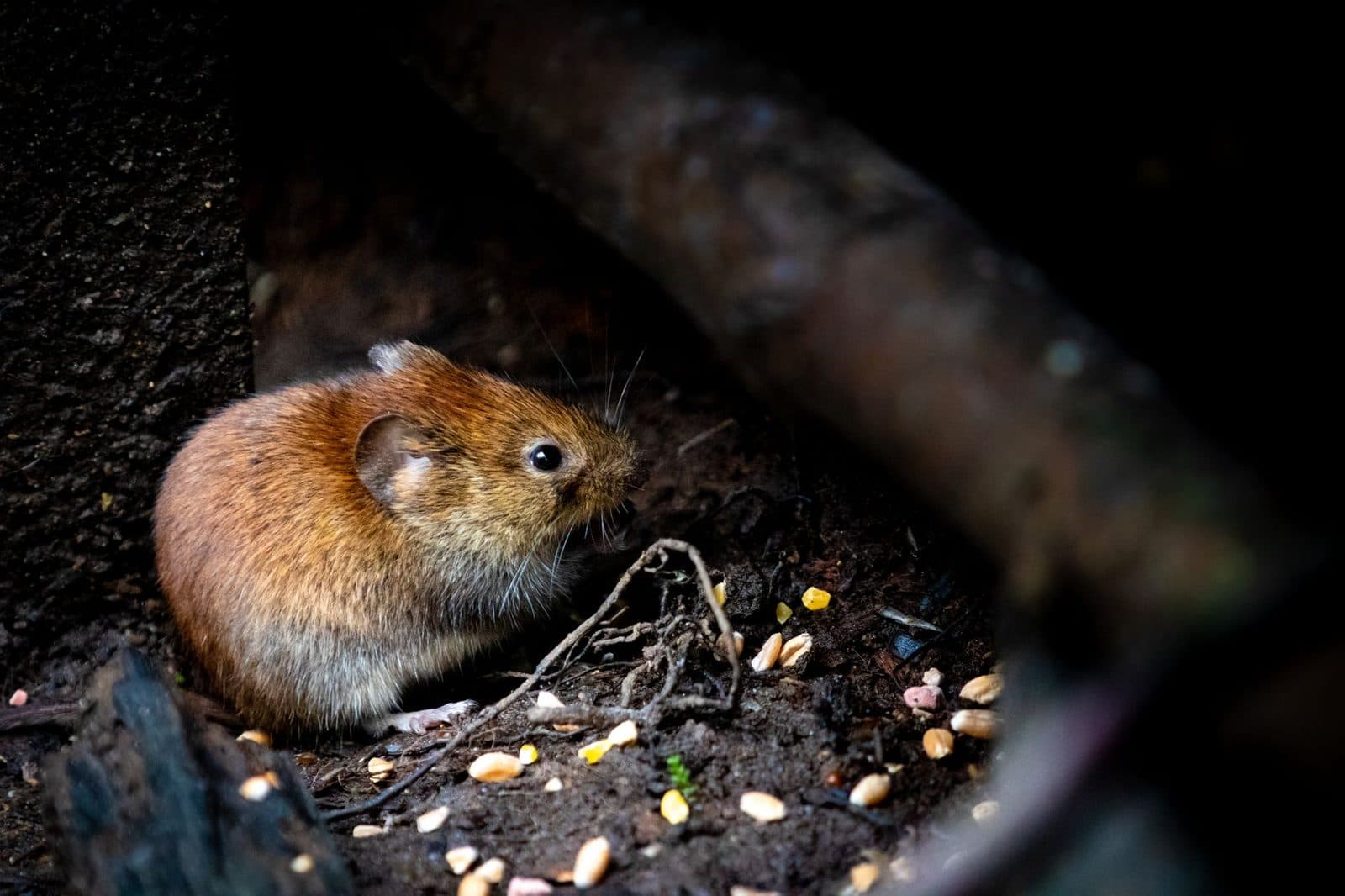
"We did everything. Mesh over the air vent, kibble in a bin, mortar in the garage holes. And after three weeks, it started all over again." This homeowner in Vitry-sur-Seine took two months to find what was keeping rats under his terrace: an outdoor tap fitting dripping a few drops a minute, all year round. A trickle of water invisible from the house, behind a bank of laurels.
It's the most common blind spot in the fight against rodents in a house. We think in terms of food and access — the two subjects this blog has already covered at length, from sealing up holes to bird feeders. But a rodent doesn't only need to eat: it needs to drink, and it is far more vulnerable on that front than on food. Removing water is often the move that tips a stubborn infestation.

How long can a rodent last without drinking?
The orders of magnitude are well established in the biology of commensal rodents and are repeated in vector control and public hygiene reference guides (CDC, technical documentation from pest control operators):
| Species | Daily water requirement | Survival without free water |
|---|---|---|
| Brown rat (sewer rat, Rattus norvegicus) | 15 to 30 ml | 2 to 4 days |
| Black rat (Rattus rattus) | 15 to 20 ml | a few days |
| House mouse (Mus musculus) | 1 to 3 ml | several weeks if its food is moist |
Two practical conclusions, and they don't point the same way:
- Against rats, water is a major lever. A brown rat cannot settle in for long more than a few dozen metres from a reliable drinking point. Drying out the area amounts to evicting it.
- Against mice, water is a secondary but real lever. A house mouse covers much of its needs through its food (fruit, moist pasta, leftovers, condensation). It will still drink as soon as a source exists, and a water point markedly increases the population size a home can support.
In other words: if you have rats in the garden or the cellar, hunting down water is the priority. If you have mice in the kitchen, it's a complement — but one that lowers the ceiling of the infestation.
The ten water points of a Val-de-Marne house
Do the rounds with a head torch and a notebook. The exercise takes forty minutes and is best done in the evening, with the light held at a grazing angle: damp patches and travel marks show up far better in oblique light.
Outside
- The garden tap and its fitting. The classic. A leak at the quarter-turn valve or the spout washer keeps a permanently damp zone going, often hidden by vegetation.
- Flowerpot saucers. They stay full for days after rain. In November, in the 94, they never dry out at all.
- Poorly sealed rainwater butts. A cracked lid or an ungrilled gutter inlet, and you've created a permanent drinking trough — sometimes also a death trap for a rodent that falls in and fouls the water.
- Chicken coop drinkers and outdoor bowls. Already mentioned in the compost bin and chicken coop plan: bring them in or empty them every evening, without exception.
- Stormwater inspection chambers and yard drains. A chamber whose base holds two centimetres of standing water is a perfect drinking spot, and one of the few that nobody ever inspects.
- Ponds, pools and above-ground swimming pools. A liner with an easily reachable rim is an unlimited source.
Inside
- Traps and flexible hoses under the sink. A micro-leak on the dishwasher hose or the trap fitting creates a damp zone inside the base unit — exactly where mice travel, as described in the article on mice behind kitchen appliances.
- The condensate tray and the water heater's safety group. Any appliance that drains water by gravity (reversible air conditioning, heat pump, condensing boiler) produces a steady runoff. A blocked trap turns that runoff into a permanent puddle.
- Toilets and the cistern. A seat left open in a rarely used room, and you have an open-air drinking trough. In a house with a cellar and a basement toilet, this is a very common situation.
- Condensation in cellars and crawl spaces. Below-ground walls, uninsulated cold water pipes, bare earth floors: condensation moisture alone is enough for a rat. It's one of the factors that makes a house cellar so attractive in winter.
To get hard data on that last point, a small indoor thermometer-hygrometer left in the cellar for a week will tell you whether you're above 70% relative humidity — the threshold beyond which condensation on pipes becomes almost continuous.
The drying-out protocol, in order
The point isn't to remove everything at once: it's to remove things in the right order, so that rodents have no fallback left.
Week 1 — close off the avoidable sources
The ones that cost nothing but a gesture:
- empty the saucers and turn them upside down for the winter;
- bring bowls and drinkers in every evening;
- close toilet lids and the doors of rarely used wet rooms;
- mesh the inlets and overflows of the water butt with stainless steel insect screening or a fine mesh secured with a clamp.
Week 2 — fix the leaks
This is where the real work lies. A connected water leak detector placed at the low point of the under-sink unit or near the water heater flags any renewed leak immediately, and saves you inspecting every fortnight.
For visible leaks: tap washers, appliance hoses, trap fittings. An adjustable spanner, some PTFE tape for threaded fittings and twenty minutes are enough for most recurrences. Beyond that — buried pipework, a cracked waste stack — you're out of DIY territory: a broken pipe under a slab is both a water source and an access motorway, a subject covered in spotting a broken pipe.
Week 3 — tackle structural damp
You can't eliminate condensation in a below-ground cellar, but you can reduce it:
- insulate cold water pipes with foam sleeves: this stops the runoff down the pipe, which is often THE drinking spot in the cellar;
- ventilate: one low grille and one high grille set diagonally beat any appliance;
- as a complement, a cellar dehumidifier helps in a small enclosed space, provided you empty the tray — otherwise you've simply moved the puddle.