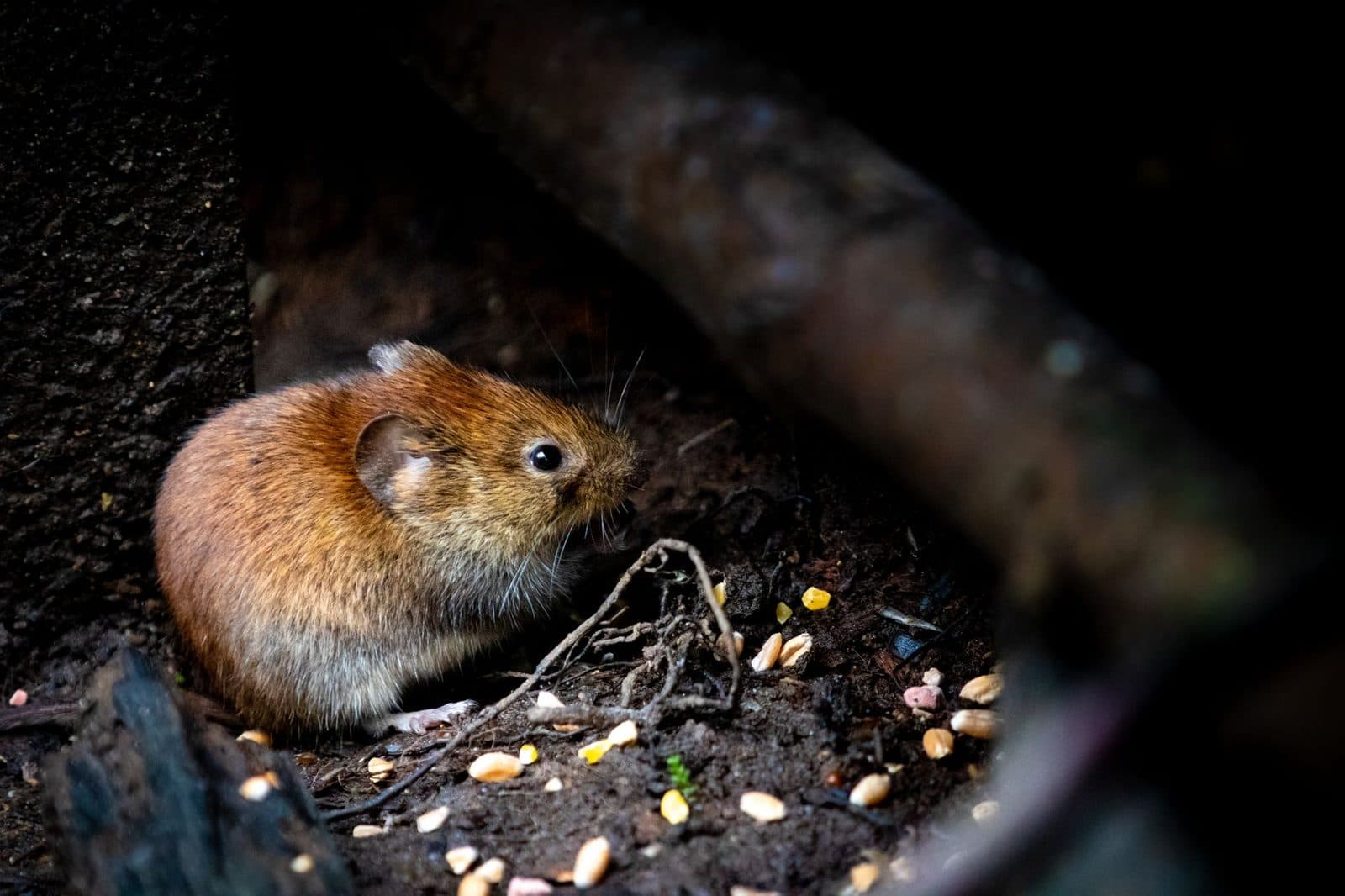
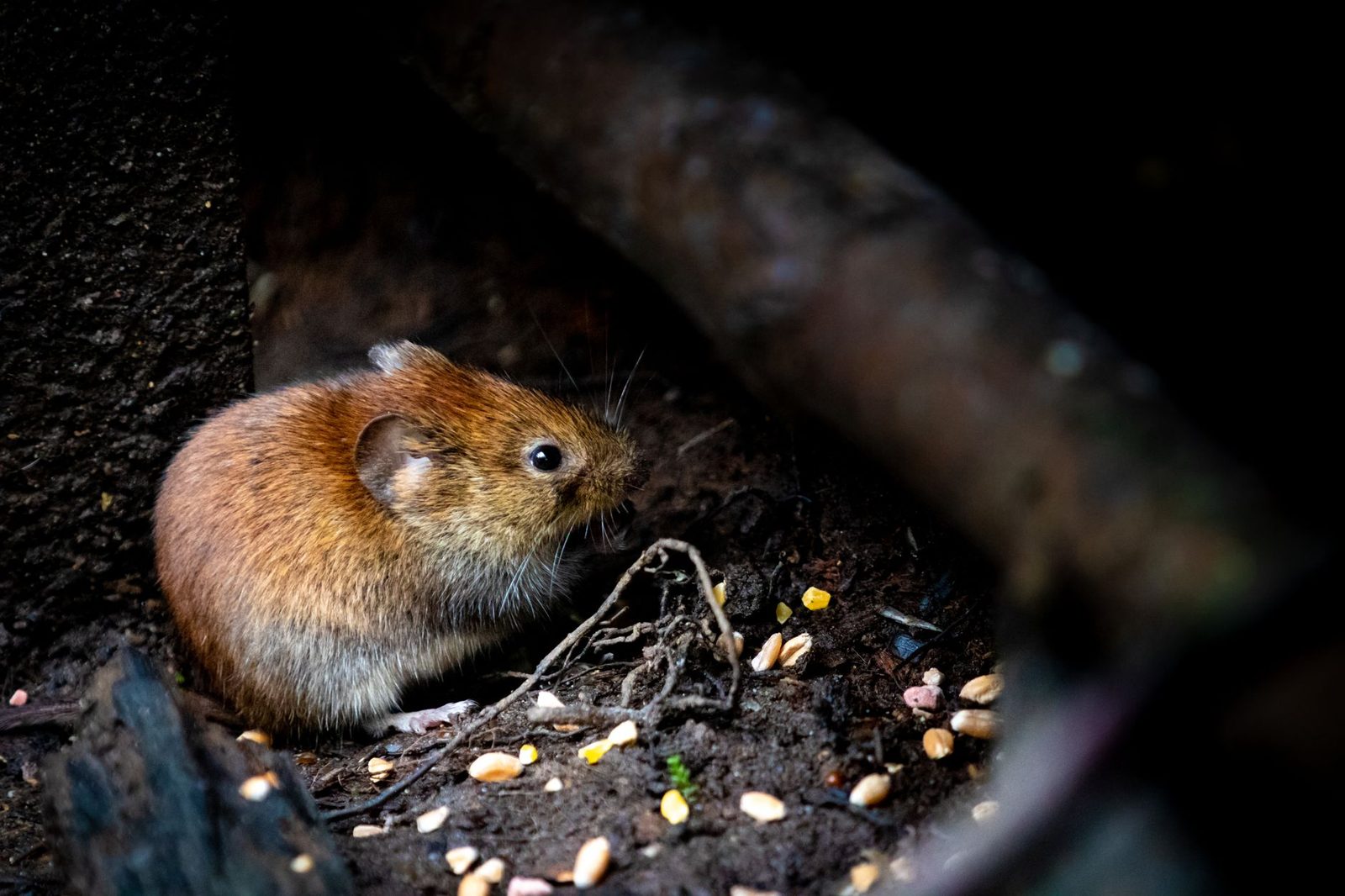
"We did everything, but in the wrong order." This homeowner in Nogent-sur-Marne (Nogent-sur-Marne) sums up autumn's most widespread mistake in a few words. Over three weeks, he had screened a basement vent, set four snap traps in the garage, bought a new compost bin and called two companies for quotes. Droppings kept appearing behind the washing machine. What was missing wasn't one more action: it was a complete survey, done once, in a logical order, to find out how the rodents get in, what feeds them and where they sleep.
An infestation in a detached house is never solved station by station. It is solved once you have answered three questions in the right order: where do they come from, why do they stay, where do they hide. This article isn't another episode about one specific nook of the house — it's the walkthrough that puts every nook into the same table, to be done in a single 45-minute session before the first real frosts. In Val-de-Marne (Val-de-Marne), the useful window is precisely November: brown rats and mice have already started looking for heated shelter, but they haven't settled in for good yet.
Why a walkthrough, and not a series of micro-actions
The logic comes down to one simple integrated pest management rule, the one every professional method follows: first remove access, then the food resource, then the shelter, and only then treat the residual population. Reversing the order means setting traps in a house that still offers an open door and a larder.
| Order | Question | If you skip it |
|---|---|---|
| 1 | How are they getting in? | Everything you remove is replaced within 10 days |
| 2 | What is feeding them? | Baits and traps are ignored, outcompeted by something better |
| 3 | Where are they nesting? | You treat the corridors, not the home base: the population bounces back |
| 4 | Is treatment needed? | Decision made blind, often oversized or pointless |
Hence the value of a set route. You walk the plot clockwise, then move up through the house from bottom to top, and note everything — even what looks trivial. A good walkthrough requires neither technical skill nor expensive equipment: a powerful torch, a tape measure, a telescopic inspection mirror to look behind low furniture and under worktops, a notebook or your phone for photos.
The right kit, and nothing more
Two accessories genuinely improve the quality of the survey. The first is a rechargeable head torch: both hands stay free to pull back a skirting board or hold a mirror, and the grazing beam reveals runway marks that are invisible under direct light. The second, for enclosed spaces — crawl space, roller shutter box, unconverted loft — is a smartphone endoscope camera: 30 to 50 euros, and you avoid dismantling a stud lining just to check a hunch. Also bring disposable nitrile gloves: you'll be handling droppings and insulation dust, never bare-handed.
Stations 1 to 4: around the plot
Start outside, in daylight, at the property boundary. In a detached house, most colonisations are decided beyond the walls.
Station 1 — the fence and boundaries. Look for runways: 4 to 6 cm wide trails through short grass, bare of vegetation, often along a wall or a wire fence. A brown rat moves along fixed routes, under cover. Note any burrows: a clean 5 to 8 cm hole, compacted soil, sometimes two openings a metre apart. Look towards the neighbouring plot or the waste ground: if the runway comes from there, the problem has to be tackled on that side too, and there are remedies when rats come from the street or a neighbouring plot.
Station 2 — the garden's food supplies. The compost bin, the chicken coop, the bird feeder, the bag of seed forgotten in the shed, the fruit fallen under the apple tree. Each item can be checked in ten seconds: accessible from below? grain on the ground? yesterday's leftovers? This is where the battle is won or lost, more so than inside the house. The compost bin and chicken coop plan and the article on bird feeders set out the fixes in detail.
Station 3 — the shelters. A log pile sitting on the ground, dense ivy against the wall, a tarpaulin over a lawnmower, a stack of pots, a garden shed on blocks. The criterion: a dark, dry space, out of reach of the cat, that you haven't put your hand into for six months. Lift things up. Note any shredded materials — insulation, tarpaulin fibre, paper — a sign of a nest.
Station 4 — the base of the walls and the services. Walk the perimeter looking at the 40 cm strip at the foot of the façade: cracks, hollow joints, unsealed conduit entries, a holed crawl-space ventilation grille, a wastewater inspection chamber whose cover no longer seats. Test the bottoms of garage and utility-room doors with a ruler: if a 6 mm blade goes through, a mouse goes through; at 20 mm, a young rat gets through too. The two reference pieces on door bottoms and thresholds and on the materials that actually hold when sealing holes give the lasting solutions.
Field rule: a rodent gets through anything its head can pass. For a house mouse, that's around 6-7 mm; for a brown rat, around 20-25 mm.
Stations 5 to 7: the house, from bottom to top
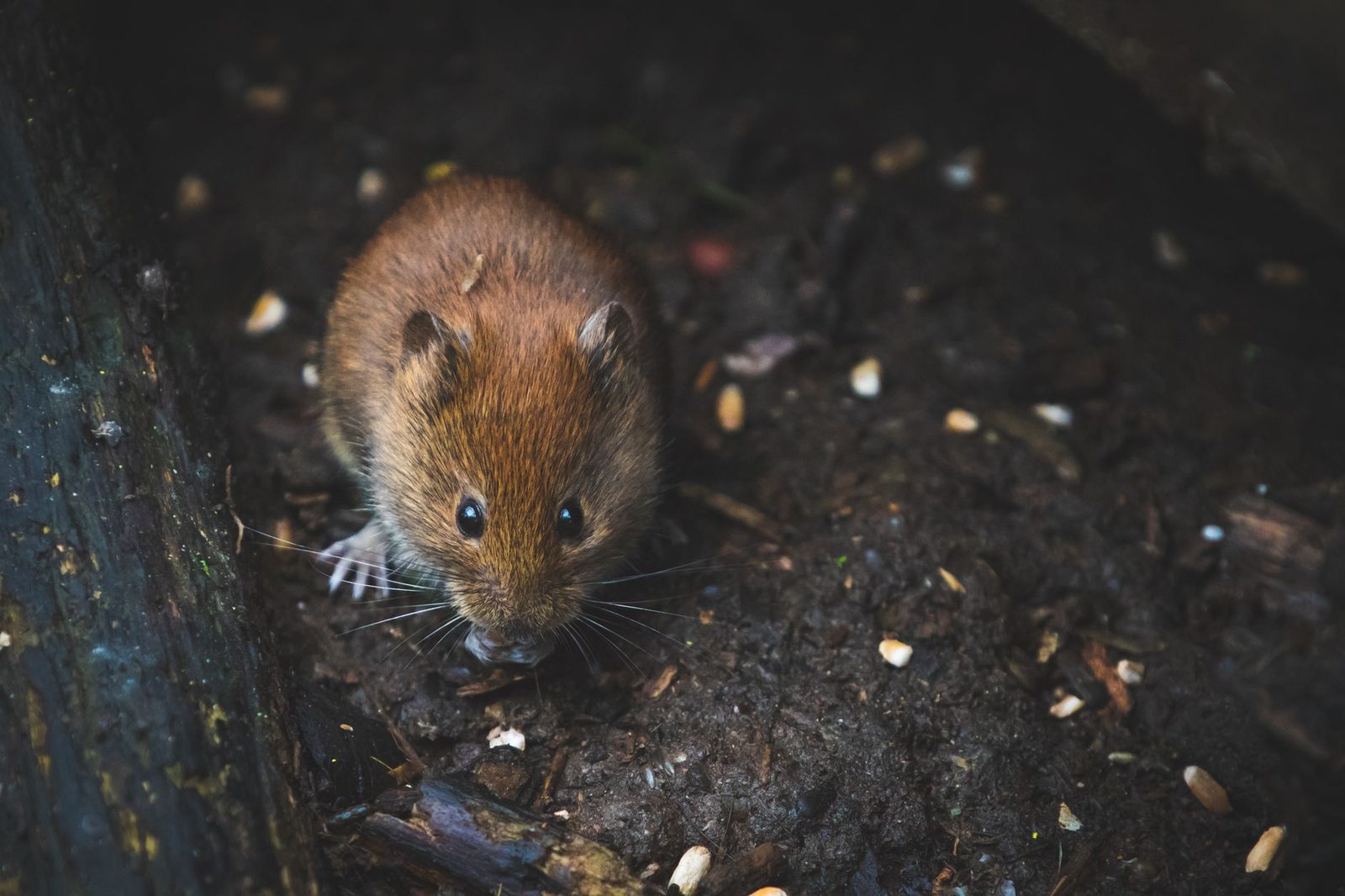
Station 5 — cellar, basement, crawl space. Shine the torch at a grazing angle along the floor, following the walls. Look for three signs: droppings (shape, size, freshness), grease marks — shiny blackish smears at the corners of a route, made of sebum and dust, indicating a path in use for weeks — and gnawing marks on wood or plastic. Check the basement vents one by one, and the base of the downpipes. A persistent sewage smell in the basement deserves investigation: it sometimes signals a cracked drain, a classic entry route for brown rats in older residential areas.
Station 6 — the ground floor, kitchen first. This survey is done on your knees: behind and under the fridge, under the dishwasher, at plinth level, inside the unit housing the water supply pipes. It's the classic trio — compressor heat, moisture, crumbs. Also go through the dry-goods cupboards: a bag of rice or pet kibble pierced at the bottom corner is a dated clue. For vulnerable stores, airtight glass food storage containers settle the open-packet problem once and for all, and incidentally the pantry moth problem too.
Station 7 — loft and ceilings. Go up with the head torch and stay on the walkways or the joists. In blown or roll insulation, look for galleries: collapsed tunnels, compacted wool, debris from electrical conduit sheathing. Inspect the roof perimeter from the inside: daylight under the verge, a slipped tile, a missing cat-slide grille. If you hear noises but can't find anything, the guide to decoding night-time noises will help you tell a rodent from a stone marten or a bird — the treatment isn't the same, and some species are protected.