Harvest mites: the garden pest that ruins summer, and how to protect yourself

L'équipe AntinuisiblePro · Published on July 17, 2026 · 5 min read
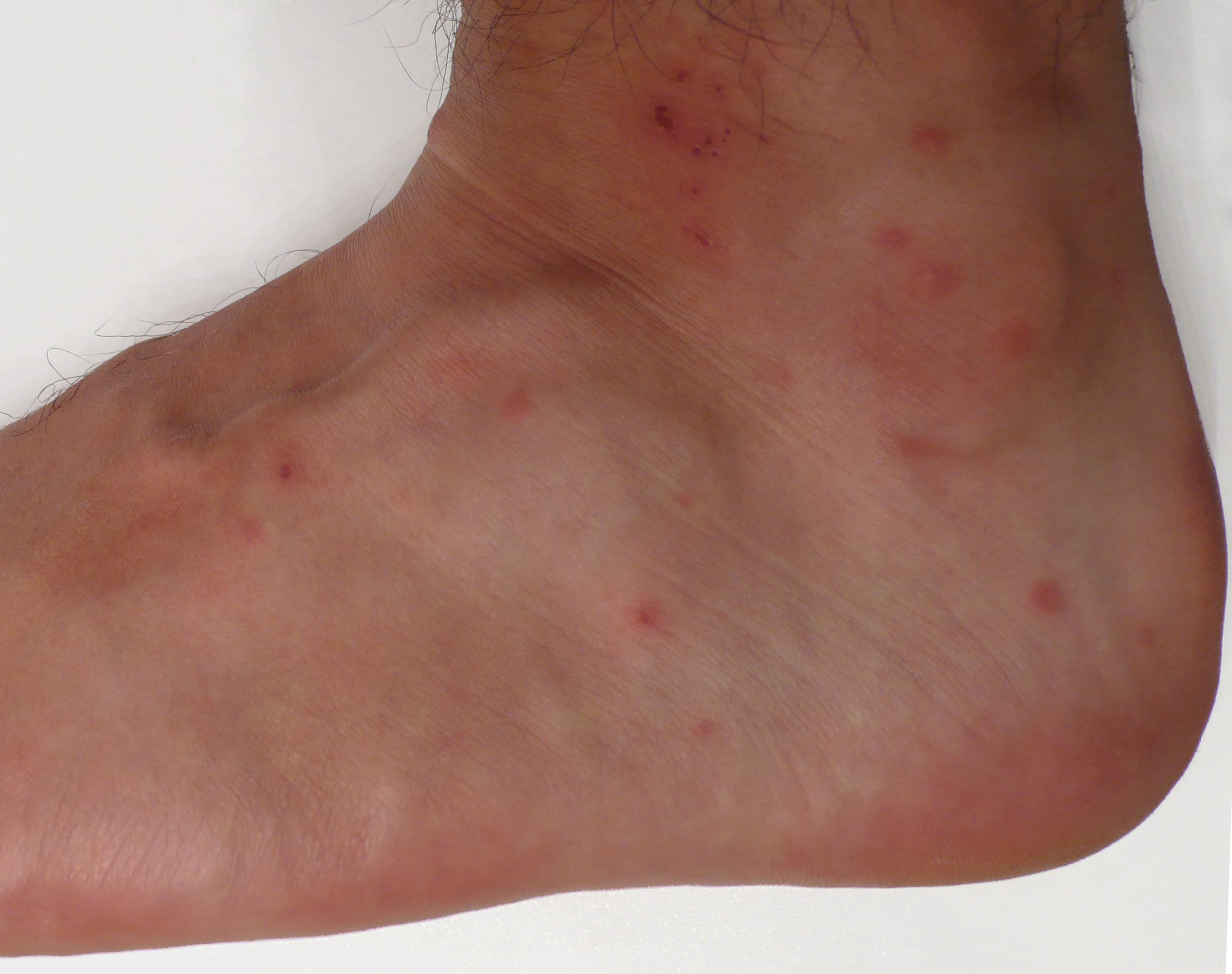
Clustered harvest mite bites on the ankle and foot, small red spots

When the grass turns yellow under the July-August heat and the lawn has gone unmown, a tiny red mite comes on stage: the harvest mite, or chigger (Trombicula autumnalis). Invisible to the naked eye — 0.2 to 0.3 mm — it is responsible for one of the most common summer dermatitises in France, ahead of mosquitoes in many gardens. With summer 2026 forecast to be hotter and drier than average by Météo-France over the Mediterranean arc and the South-West, the regional health agencies (Agences régionales de santé, ARS) are already seeing a rise in pharmacy consultations for "ankle spots" and "summer prurigo". Here is how to recognise it, treat it and protect your garden for the long term.

What exactly is a harvest mite?

The harvest mite is not an insect but the larva of a mite in the Trombiculidae family. The adult, harmless, lives in the soil and feeds on plant debris; only the larva is a parasite. It climbs up blades of grass, borders, low walls and the base of plants, and waits for a passing host — human, dog, cat — to latch onto.

Unlike mosquitoes, the harvest mite does not suck blood. It injects a digestive fluid that dissolves the cells of the epidermis, then sucks up the resulting cellular "mush". It is this fluid that triggers, several hours later, the inflammatory reaction: a red spot topped by a central dot (the attachment point), surrounded by a pink halo.
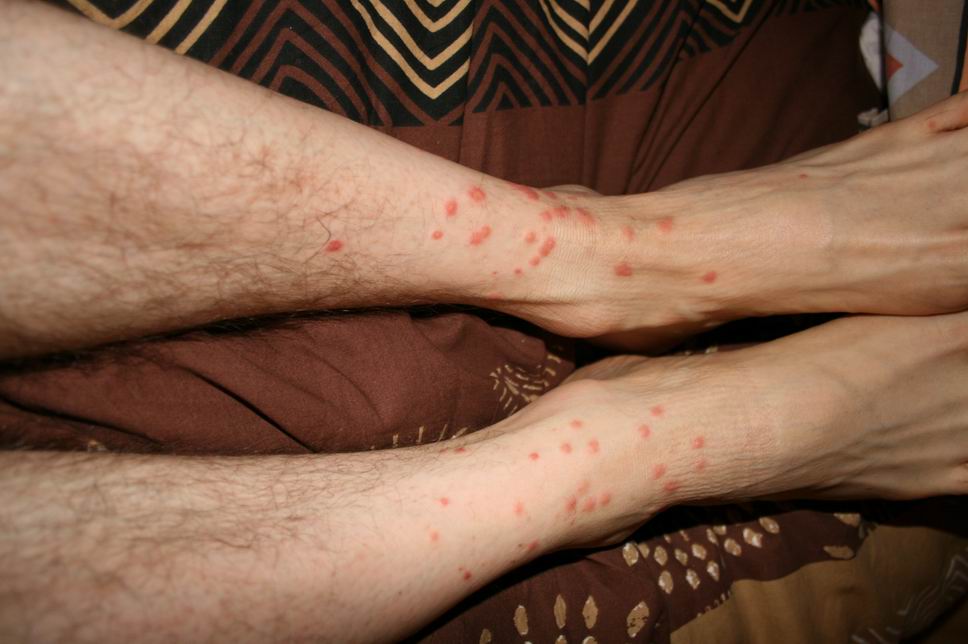
Harvest mite bites on the ankles and calves, three days after exposure

Why summer 2026 is particularly exposed

Three factors converge this year:

  1. Météo-France forecasts a summer 2026 hotter than normal (+1 to +1.5 °C) over the southern half of the country, with longer heat episodes. These conditions speed up the mite's cycle: a single season can produce two to three generations instead of one.
  2. Late mowing and unmown meadows on the urban fringe provide an ideal reservoir. Harvest mites are found in parks, public gardens, path edges, waste ground, golf courses and riverbanks — not just in the countryside.
  3. ANSES and several regional ARS (Occitanie, Nouvelle-Aquitaine, Auvergne-Rhône-Alpes) have been reporting since 2023 a northward extension of its range, with cases documented as far as Île-de-France and the Grand Est.

How to recognise a harvest mite bite

Harvest mite bites have a very distinctive signature:

  • Typical location: ankles, calves, knees, groin, waistband, wrists — always where the skin rubs against grass or tight clothing.
  • Clustered spots (sometimes 5 to 20 in the same area), each centred on a darker red dot.
  • Intense itching, often worse at night, which can persist for one to two weeks.
  • Onset 3 to 6 hours after exposure (sometimes up to 24 h), which makes diagnosis difficult.

Not to be confused with: tiger mosquito bites (isolated spots, biting mainly at dusk), tick bites (the animal stays attached, no clustered spots) or urticaria (diffuse patches, with no outdoor context).
The right steps to find relief

The first rule is not to scratch: secondary infection is the main risk (impetigo, folliculitis). In practice:

  • Shower immediately in lukewarm water with a mild soap after any exposure to grass, then wash your clothes at 60 °C.
  • Rinse the bitten areas with clean water without rubbing.
  • Apply a soothing cream (calendula, crotamiton such as Eurax®, or an antihistamine gel).
  • For severe itching, an over-the-counter oral antihistamine (cetirizine, loratadine) brings quick relief.
  • If the lesions spread, weep or come with a fever, see a doctor: a topical corticosteroid or an antibiotic may be needed.

For pets, harvest mites cause scabs and intense itching, especially between the toes and on the belly. A visit to the vet is essential, together with a suitable external parasiticide treatment.

How to protect your garden

This is where things get interesting for a pest-control professional. Controlling harvest mites relies on reducing larval habitats and a targeted surface treatment:

  1. Mow the lawn regularly (≤ 5 cm) and clear the borders.
  2. Water dry areas: harvest mites hate soil moisture.
  3. Treat high-risk zones (banks, tall grass, borders) with an approved acaricide applied by a properly equipped professional: pyrethroids with residual action on low vegetation.
  4. Keep pets treated (dogs, cats) with an external parasiticide, as they act as a reservoir and reintroduce the larvae into the garden.
  5. Wear covering clothing (long trousers, high socks, closed shoes) when mowing or gardening during the hot hours.

A personalised survey is often needed to target the zones to be treated and avoid blind applications. Discover our treatment services for gardens and green spaces as well as our repellents and skin protections so you can enjoy your outdoor space with peace of mind.

When to call a professional

If the bites persist despite preventive measures, or if you host vulnerable people (children, the elderly, campsites, holiday lets), a professional treatment is recommended. AntinuisiblePro operates across the whole of Île-de-France and neighbouring departments with a two-pass protocol: habitat diagnosis then targeted acaricide treatment, harmless to domestic animals and ornamental vegetation.

Looking for a quote? Contact our experts for a free survey or, in the event of a massive infestation on land open to the public, request a rapid intervention within 24 to 48 h.

A pest problem?

Our experts act fast and for good. Request a free assessment.

Request a free quoteOur services

Back to the blog

CallFree quote