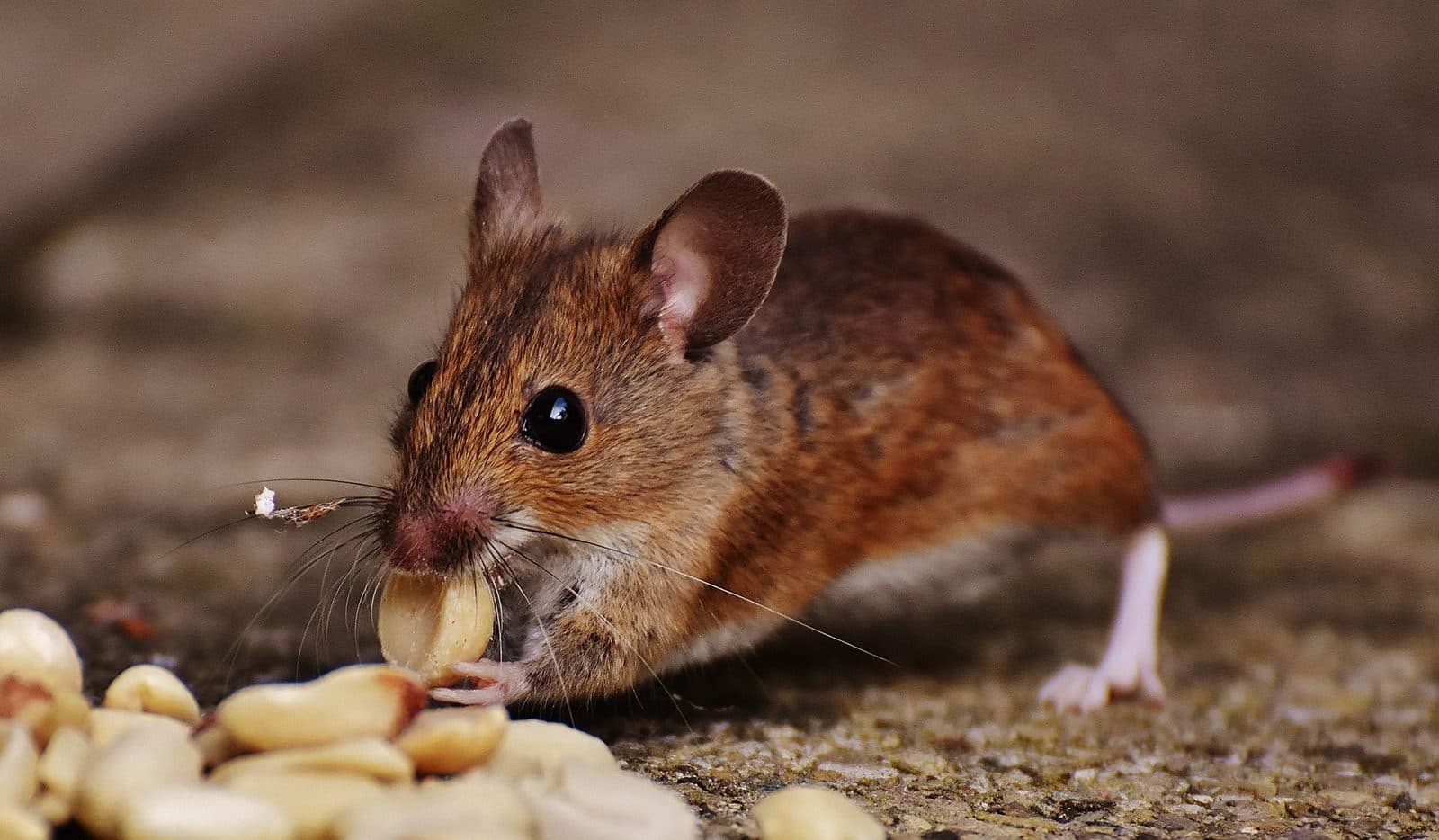
Introduction: the month when the attic becomes a dormitory
There is one very precise moment every year when calls about "noises in the attic" explode at pest control companies: the second half of September and the whole of October. The nights turn cooler, night-time temperatures drop below 12 °C across much of France, and all of our commensal wildlife starts looking for exactly what you are looking for: somewhere dry, insulated and safe from predators. Your roof ticks every box.
The problem isn't so much the noise as the uncertainty. Scratching at 2 a.m. above the bedroom ceiling instantly triggers the same question: "what is that?" And this is where most homeowners go wrong, because they apply a solution before they have made a diagnosis. People put down rat poison for a dormouse, try to trap a stone marten without a licence, or — the trickiest case of all — block an entry point occupied by a colony of bats, species that have been fully protected in France since the ministerial order of 23 April 2007.
Identifying the occupant is therefore the first step, and it determines everything else: the method, the cost, and the legality of your intervention. This article gives you the professionals' framework for reading the signs.
The sound diagnosis: what the noise already tells you
Even before you climb into the attic, your ears provide three usable clues: the time, the texture of the noise, and the movement pattern.
| Clue | Stone marten / pine marten | Edible dormouse, garden dormouse | Rat / mouse | Bat | Bird (pigeon, jackdaw) |
|---|
| Timing | 10 p.m. – 5 a.m., peaks at dusk and before dawn | 9 p.m. – 4 a.m., very active in September–October | All night long, continuous activity | Dusk and return around 4–5 a.m. | Dawn and daytime |
| Noise | Heavy galloping, objects moved about, noisy fights | Quick little dashes, hazelnuts or marbles rolling | Fine scratching, steady gnawing, high-pitched squeaks | Rustling, very high-pitched little cries, never galloping | Cooing, wing beats, daytime shuffling |
| Perceived weight | Sounds like "someone" walking | Light but nervous | Very light, continuous | Almost inaudible when moving | Heavy and slow |
| Route | Along the purlins, in and out of the building | Between insulation and floor | Along walls and cables | Motionless in a cluster, group exit | Fixed entry area |
One highly reliable distinguishing detail: stone martens move objects. If you hear something roll or fall, or if the insulation has been dragged around, it isn't a small rodent. Another marker: fighting. Stone martens (Martes foina) are territorial, and their confrontations produce hoarse cries and stampedes that wake the whole house.
Conversely, a regular, dry, repetitive noise — three seconds of gnawing, a pause, three more seconds — almost always indicates a rodent working on wood, a cable or a PVC pipe. That is the most dangerous scenario for your electrical installation.
The inspection: look for the traces, not the animal
You will almost never see the animal. It does, however, leave four types of evidence. Go up during the day, with a good light source — a rechargeable head torch frees up both hands, which matters when you are picking your way between joists — plus an FFP2 mask and gloves.
1. The droppings
This is the most reliable criterion, and it doesn't lie:
- Stone marten: twisted droppings, tapered at both ends, 8 to 10 cm long, often black and shiny, containing fruit remains (cherry stones, pips) or hair. Deposited in latrines, always in the same spot.
- Edible/garden dormouse: small black droppings about 1 cm, rounded, in piles, often mixed with hazelnut debris.
- Black rat (Rattus rattus, the climber, the attic species): spindle-shaped droppings 1 to 2 cm long, scattered along its routes.
- Mouse: 3 to 6 mm, scattered everywhere, very numerous.
- Bat: crumbly guano that disintegrates between your fingers into shiny dust (insect fragments). No strong urine smell. Deposited vertically below the roost.
This last point is crucial. Bat guano is an indicator of legal protection, not a sign of an infestation to be treated.
2. The smell
Stone marten urine is acrid and persistent, very different from the musky, "warm" smell of a rat colony. An intense ammonia smell in an enclosed space generally signals long-standing occupation, with the insulation thoroughly soaked.
3. Damage to the insulation
Stone martens dig tunnels and flatten glass wool to make a nest; dormice tear insulation into fibres to build a ball; rats gnaw neat tunnels. Blown-in insulation hollowed out into bowls 30 cm across means a carnivore. Shreds of mineral wool piled up in a corner means an arboreal rodent.
4. Smears and passage marks
On the rafters and around entry points, look for greasing marks: a brownish, polished band left by fur on wood or masonry. It indicates daily traffic, and therefore the access point to seal first.
The bat question: what the law says
This is the point on which a private individual can commit an offence without realising it.
The 36 bat species present in mainland France are fully protected by the ministerial order of 23 April 2007 setting out the list of protected terrestrial mammals, pursuant to Article L. 411-1 of the French Environmental Code. This protection covers the individual animals but also their breeding and resting sites. In concrete terms:
It is prohibited to kill, capture or intentionally disturb bats, or to destroy or damage their roosts — attics, bell towers, cellars — even while they are temporarily absent.
The penalties provided for in Article L. 415-3 of the Environmental Code can reach three years' imprisonment and a €150,000 fine for destroying the habitat of a protected species. No serious pest control company will intervene to "eliminate" a colony.
So what should you do? The procedure is clearly marked out:
- Contact the SOS Chauves-souris network, run by the Société française pour l'étude et la protection des mammifères (SFEPM), which has volunteer correspondents in every department. The assessment is free.
- Wait for the right window: maternity colonies occupy attics from May to the end of August. Sealing work can only be carried out in September–October, after the young have flown and before hibernation — which is exactly where we are now.
- Install an exclusion system (a soft sleeve or one-way valve) that lets the animals out without allowing them back in, then seal up.
It's worth remembering the essentials here: a colony of pipistrelles eats several thousand insects a night, including mosquitoes. In areas where the tiger mosquito is spreading, it is an objective ally. The real problem is the guano, which builds up and damages the insulation — and that is managed by fitting collection sheets beneath the roost, not by eradication.
Stone marten: the only real question is access
The stone marten is a nocturnal mustelid weighing around 1.5 kg, classified as a species liable to cause damage (ESOD) in many departments, but trapping is regulated: it requires a trapper's licence (departmental training) and a declaration to the town hall. Anyone setting a trap without a licence risks prosecution, and a badly used trap mostly catches cats.
The good news: trapping is the wrong strategy anyway. Removing a stone marten from a territory frees up a spot that another one will take over within weeks. The only lasting solution is physical exclusion.
The four-step exclusion method
- Find every access point. A stone marten can squeeze through a 5 cm hole; the classic spots are roof verges, purlin ends, cat flaps, poorly jointed gutters, loose ridge tiles, and the space behind rainwater downpipes.
- Check that nobody is left inside. Sprinkle flour in front of the entrance to read the footprints, or tape a sheet of paper over it. Three nights with no traffic = empty attic. Never block up between April and June: unweaned young would die inside, with the resulting smell you can well imagine.
- Seal it properly. Fine-mesh galvanised steel wire mesh, stapled and screwed in place, holds up where expanding foam and silicone fail in a single night. For larger openings, a perforated sheet-metal plate is preferable.
- Discourage climbing back up. Stone martens climb up downpipes and jump from branches. Pruning back to 2 m from the roof and fitting smooth sleeves greatly reduces the pressure.
Ultrasonic repellents have very uneven results and animals quickly get used to them; they can serve as a stopgap measure while work is under way, never as a standalone solution. The same logic applies to scent repellents: they move the animal three metres, they don't plug a hole.
Edible and garden dormice: October's hibernators
The edible dormouse (Glis glis) and the garden dormouse (Eliomys quercinus) are arboreal rodents that spend September and October looking for a hibernation site with a stable temperature. An insulated attic is ideal. Unlike the stone marten, they are not classified as ESOD everywhere, and the garden dormouse is attracting growing attention from naturalists because of its declining populations.
They cause two kinds of nuisance: night-time noise (they are extremely restless until the first frosts) and gnawing of electrical cables. That's the real risk. Insurers regularly report fire claims linked to chewed conduit in roof spaces. A visual check of the installation, using a simple non-contact voltage tester, lets you spot stripped cables before they become a problem.
The strategy is the same as for the stone marten: physical exclusion once you have confirmed the animal has left. Live-trapping a dormouse to release it further away is legally murky and not very effective: a dormouse released less than 2 km away will come back. Seal up instead.
Rats and mice: when the noise comes from above
We associate rats with cellars, but the black rat is an excellent climber that readily colonises attics, farm lofts and suspended ceilings. The clues: steady gnawing, greasing marks along cables, and — the giveaway sign — dozens of fresh droppings.
Here the approach changes in nature: you are dealing with an infestation that is breeding on site, not a lone squatter. Control combines:
- Sealing access points (same principles as above, mesh of 6 mm maximum);
- Removing resources: animal pellets, bird seed, fruit stored in the loft. Storing them in airtight metal containers solves 40% of the problem on its own;
- Mechanical trapping before any chemical option, using fast-triggering spring traps placed perpendicular to walls.
Using anticoagulant rodenticides in an attic is inadvisable for one simple reason: the animal often dies in an inaccessible space, between the insulation and the ceiling, and you live with the smell for three weeks — not to mention the risk of secondary poisoning for birds of prey and cats. If the infestation is established, it is better to call in a professional: see our intervention services and our indicative prices.
What attracts them to your home: the pre-winter prevention checklist
Attic occupation is never a matter of chance. It results from three combined factors: an access point, a resource, and peace and quiet.
- Prune branches to less than 2 m from the roof (access route no. 1 for stone martens and dormice).
- Fit rodent guards on roof ventilation inlets and ventilation flaps — without ever blocking them completely, since attic ventilation is essential against condensation.
- Repoint verges and ridges that have come loose over the summer: this is the most common entry route.
- Mesh gutter outlets and check rafter ends.
- Store nothing edible in the attic: kibble, bulbs, fruit, bird seed.
- Pack textiles and bedding into vacuum storage bags rather than leaving them loose: fewer nesting materials available, with the added benefit of protection against moths.
- Set up a trail camera for a few nights if you want to settle the question without going up: a motion-activated night vision camera facing the suspected access point gives you a definite identification within 48 hours.
One final, often overlooked point: notifying your insurer. Damage caused by rodents (cables, insulation) is rarely covered under basic policies, but a resulting fire is. Photograph and document the state of your attic before any work.
When to call a professional
Three situations justify not doing it yourself:
- You suspect bats → contact SOS Chauves-souris (SFEPM) first, not a pest control company.
- The attic is hard to reach or the roof is high → working at height on tiles is the leading cause of serious domestic accidents among homeowners in autumn.
- You still hear noise after sealing up → this means either that an animal is trapped inside (an emergency) or that an access point was missed. A professional inspection with an endoscopic camera settles it within an hour.
A proper assessment includes species identification, mapping of access points, a quote for sealing work and, where applicable, cleaning and disinfection of soiled insulation. Expect to pay roughly €150 to €350 for the assessment and exclusion on a detached house, more if the insulation has to be replaced.
In summary
A noise in the attic in autumn is never trivial, but it is almost never an emergency either. Take three days to identify the occupant before acting: the time of the noise, the shape of the droppings and the state of the insulation give you the answer in 90% of cases. Then a single rule applies whatever the animal — the solution is always the access point, never poison. You don't empty a house of its squatters, you make it inaccessible. And if the tenant turns out to be a colony of bats, count yourself lucky: you are providing free lodging to the best mosquito control on the market, and the law simply asks you to leave it in peace until October.
Sources: French Environmental Code (art. L. 411-1, L. 415-3); ministerial order of 23 April 2007 setting out the list of terrestrial mammals protected throughout the national territory; Société française pour l'étude et la protection des mammifères (SFEPM), SOS Chauves-souris network; Office français de la biodiversité (OFB), trapping regulations; Muséum national d'Histoire naturelle, Inventaire national du patrimoine naturel.