Ticks and Lyme disease in the Val-de-Marne
Treatment of high-risk areas against ticks and prevention advice to limit the transmission of Lyme disease and other vector-borne diseases in Île-de-France.
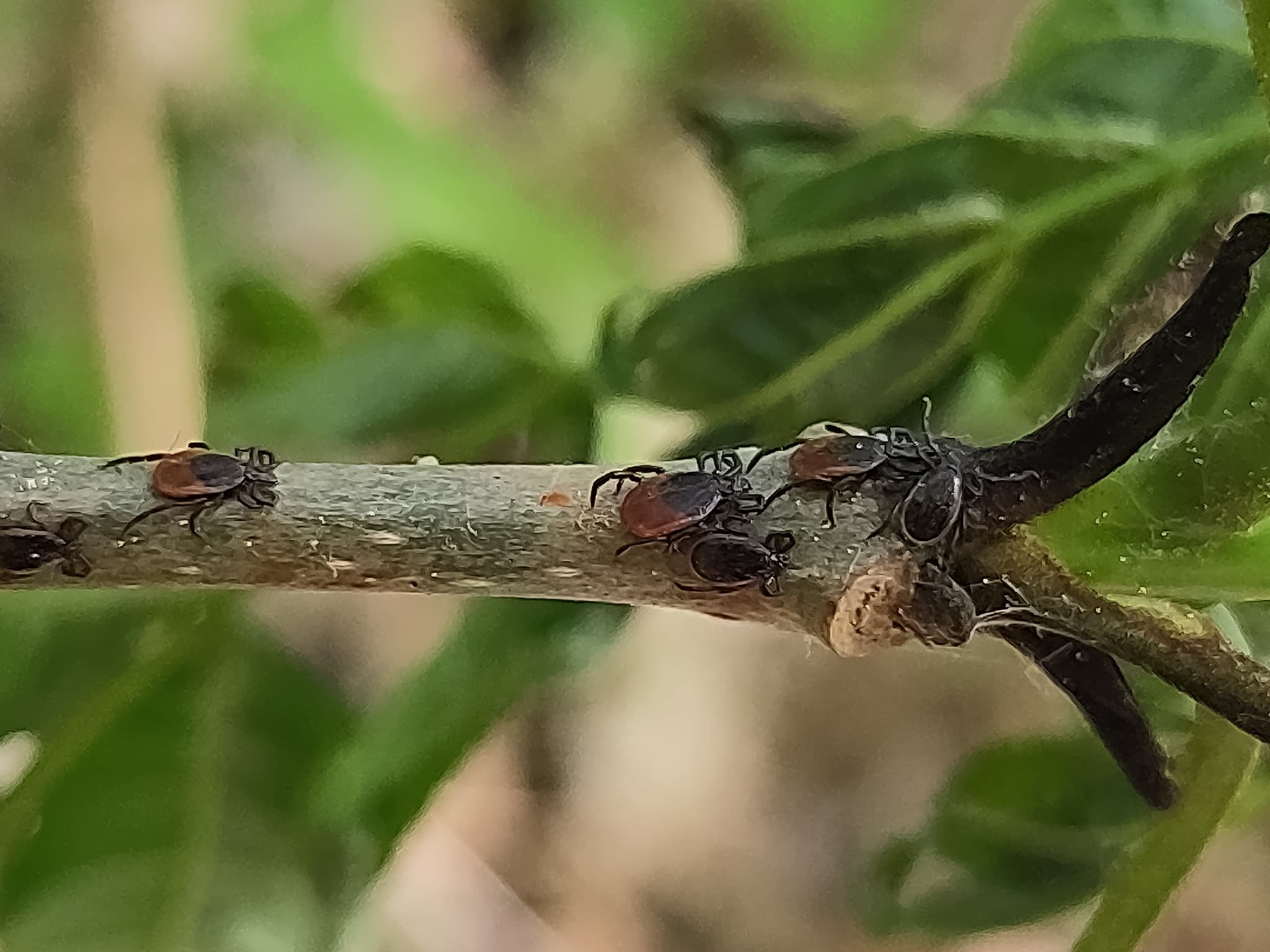
Treatment of high-risk areas against ticks and prevention advice to limit the transmission of Lyme disease and other vector-borne diseases in Île-de-France.
Tick treatment aims to reduce populations in gardens, grassy areas and green spaces, where they wait for a host at the tips of long grass. It combines managing the ground (mowing, clearing scrub, a gravel barrier) with targeted treatment of high-risk areas. In France, the tick is the main vector of Lyme borreliosis.
AntinuisiblePro handles your Ticks and Lyme disease in Champigny-sur-Marne and across the whole Val-de-Marne (94). Discover our service and pick your town.
Treatment of high-risk areas against ticks and prevention advice to limit the transmission of Lyme disease and other vector-borne diseases in Île-de-France.
Ticks transmit Lyme disease, tick-borne encephalitis and other bacteria. The Bois de Vincennes and Bois de Boulogne, parks and grassy gardens in Val-de-Marne are recognised high-risk areas. An undetected bite can lead to joint, neurological or cardiac complications several months after exposure.
The tick neither jumps nor flies: it lies in wait, clinging to the tip of a blade of grass with its front legs outstretched, and grabs a host as it passes. It favours woodland edges, long grass, leaf piles and shaded, damp areas. Its saliva contains an anaesthetic: the bite is painless, which is why it's usually found late. Transmission of Borrelia, the Lyme bacterium, rises sharply with how long the tick stays attached — removing it within the first few hours markedly reduces the risk. The tiny nymphs are behind most human infections, precisely because they escape notice.
Call in a professional if your land borders woodland or a grassy area and you regularly find ticks on yourself or your pets, for a communal green space, a play area or a campsite, or in the event of a brown dog tick infestation inside the home — the only species able to establish itself there long-term. After every outing in a high-risk area, check yourself over: skin folds, scalp, armpits, backs of the knees.
A successful treatment isn't judged on the day itself but a few weeks later. That's why we schedule a follow-up inspection and come back at no cost if the pest reappears during the guarantee period.
The price always depends on the survey: type of pest, surface area, level of infestation, accessibility and the number of visits required. We publish indicative price ranges in full transparency, and every quote is free, itemised and with no obligation.
We use approved acaricide products applied in a targeted way to high-risk areas, respecting bees and beneficial wildlife. We also advise on simple landscaping changes to durably reduce tick presence.
With a tick remover, slid under the tick as close to the skin as possible, turning without pulling until it lets go. Then disinfect, note the date, and watch the area for a month. Don't apply ether, alcohol or a flame before removal: the tick would regurgitate, which increases the transmission risk.
A red patch spreading in a ring around the bite site — erythema migrans — appearing 3 to 30 days later is the characteristic sign of Lyme disease and calls for a medical consultation. A fever, joint pain or unusual fatigue in the following weeks also warrant medical advice, mentioning the bite.
You can't sterilise a piece of land, but you can greatly reduce the pressure. Most of it comes down to how the ground is kept: regular mowing, clearing the woodland edges, removing leaf piles, a strip of gravel or wood chips between the woods and the living areas. Targeted treatment of high-risk areas rounds off that work. Our survey pinpoints exactly which areas to treat and which to rework.
Describe your problem and we'll call you back quickly.
Every job follows the same sequence, from your first call through to the follow-up inspection. You know exactly what will happen in your home before we arrive.
We identify the pest, the extent of the infestation and its access points.
A transparent, no-obligation quote suited to your situation.
Approved, safe treatments applied by certified technicians.
Control visit and advice to prevent any return.
Our technicians are fully trained and hold the Certibiocide certification, which is mandatory for applying professional-use biocidal products.
Based in Champigny-sur-Marne, we cover the whole of the Val-de-Marne. One point of contact, always reachable, who knows the area inside out.
If the pest comes back within the guarantee period, we return at no extra cost until it is completely eradicated.
Unmarked vehicles, discreet visits, and a detailed report after every call-out — essential for business customers.
We operate in many towns across the Val-de-Marne. Select your town:
Climate warming, northward expansion, Tiques & Vous Week 2026: what ANSES, INRAE and Santé publique France say about Ixodes ricinus ticks, and the right reflexes to protect yourself.
Describe your situation in a few lines: we'll call you back quickly with a diagnosis and a free, no-obligation quote.
Request a free quoteOur services