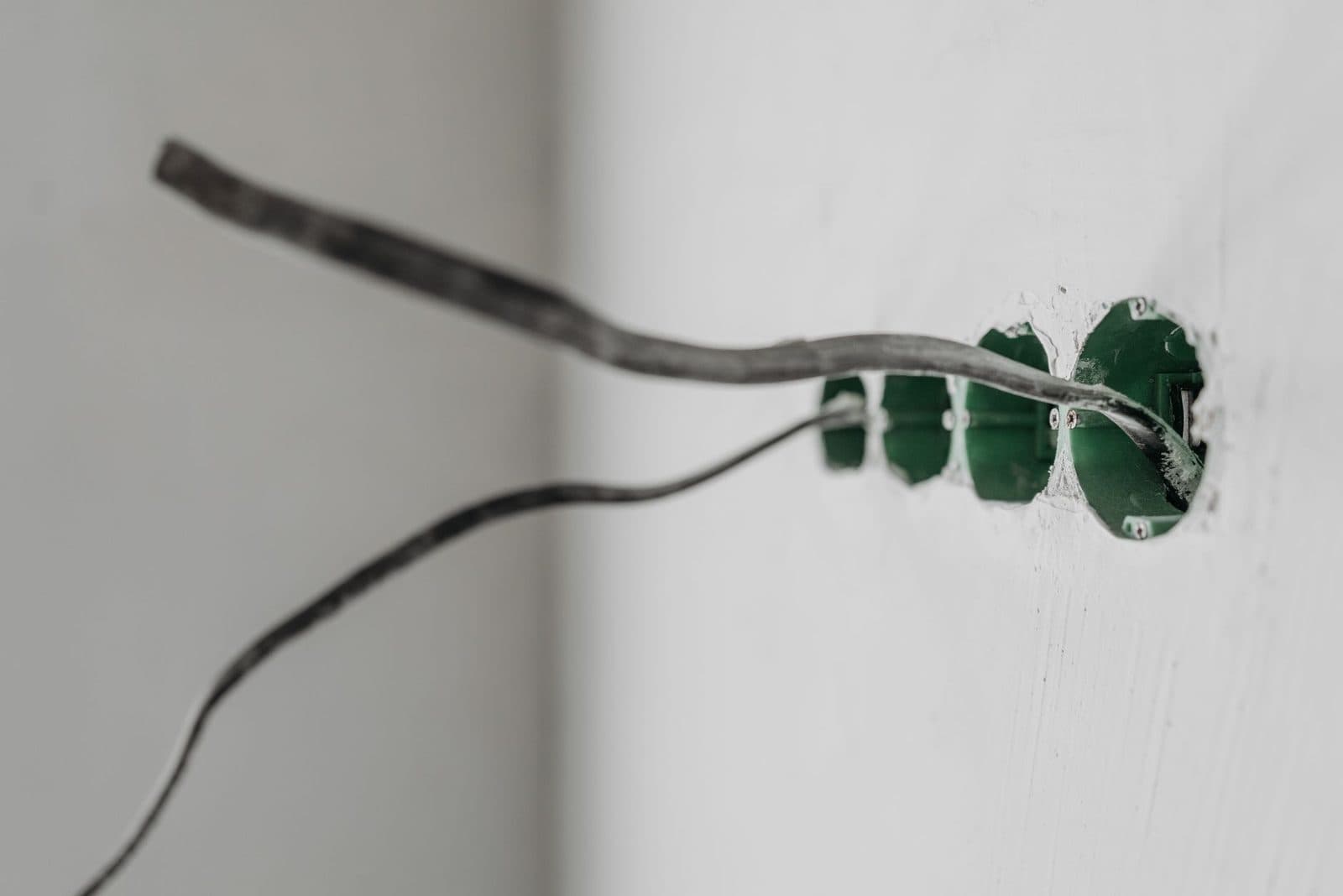
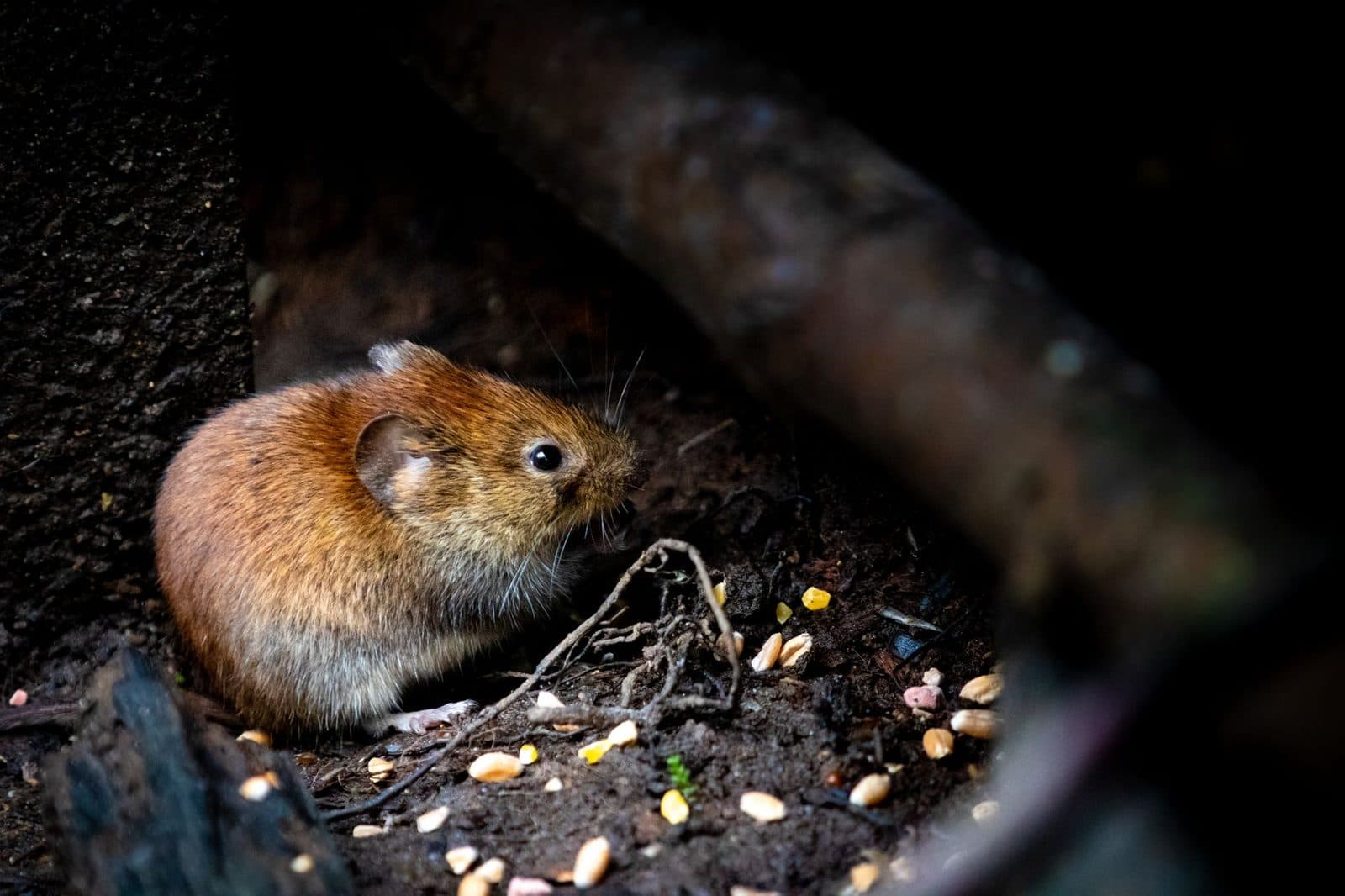
"At first we thought it was a waste-water leak. Then a forgotten dish. After four days, it was impossible to stay in the living room in the evening." This family in Saint-Maur-des-Fossés spent a week searching before they understood: a brown rat had died between the plasterboard lining and the cross wall, level with an electrical socket. The smell had appeared three days after bait was placed in the cellar.
It is the logical sequel almost nobody anticipates when launching a campaign against rodents: an animal that has been baited, or has simply died of old age or cold, decomposes wherever it happens to be — and in a house, "wherever it happens to be" very often means between two partitions, under a floor or in a service duct shaft. This blog has covered live detection at length, from decoding night-time noises to finding the nest within the structure. This article deals with the next, least pleasant stage: how to identify, pinpoint and treat a dead rodent smell without tearing down half a wall.
Recognising the smell: it's not a leak, and it's not damp
Three confusions come up constantly in autumn call-outs.
| Smell perceived | Likely cause | What sets it apart |
|---|
| Rotten egg, sulphur, sewer | Dried-out trap, drain pipe | Constant, stronger near a water point, varies with run-off |
| Cellar, mushroom, wet earth | Mould, rising damp | A "cold" smell, no peak, worsens in rainy weather |
| Sickly sweet, rancid fat, sharp at the back of the throat | Animal decomposition | Builds over 3-5 days, intensifies when the heating is on, confined to 1 or 2 m² |
The chemical signature is well known: decomposition releases sulphur compounds and amines, notably cadaverine and putrescine, which the human nose can detect at minute concentrations. Hence that very distinctive sensation, both sweet and acrid, that you recognise once in your life and never forget.
Two additional and highly reliable clues:
- Flies indoors in November. Blue or green bottle flies (Calliphora, Lucilia) that suddenly appear in a room, settle on the ceiling or circle near a skirting board in the middle of the cold season almost always signal a carcass nearby. They lay eggs in the carcass, the adults emerge and head for the light — windows, light fittings.
- The household pet. A dog or cat that fixates on one spot on a wall, as described in our article on how pets react, pinpoints the area to within a centimetre. The difference compared with a live rodent: there is no more scratching or night-time scurrying, and the animal's interest stays in one place.
How long does the smell really last?
That is the first question asked on the phone, and the answer depends on three factors: the animal's mass, the temperature and the ventilation of the space.
| Situation | Peak odour | Almost complete disappearance |
|---|
| House mouse (20-30 g), dry heated partition | 3 to 6 days | 10 to 14 days |
| House mouse, cold ventilated loft | 4 to 8 days | 2 to 3 weeks |
| Brown rat (300-500 g), damp crawl space | 7 to 12 days | 4 to 8 weeks |
| Brown rat, under a slab or in heated blown insulation | 7 to 14 days | 3 to 6 weeks, with flare-ups |
Three practical rules follow from this:
- With a mouse, you can often wait. Two weeks of discomfort versus opening up a wall lining: the trade-off generally favours patience, especially if the smell stays confined to a hallway or a cellar.
- With a rat, rarely. Mass changes everything. Above 300 g, decomposition fluids soak into plaster, timber and above all insulation, and the smell resurfaces for months with every rise in temperature or humidity.
- A smell that comes back in spring is not a new carcass. It is almost always the old one, whose residues re-emit as the air warms up. A sign that the material has to be removed, not merely perfumed.
Pinpointing the carcass without opening everything up
The classic mistake: cutting at random wherever the smell seems strongest. Inside a partition, air flows carry the odour sideways over several metres, and the smelliest point is often an air outlet (socket, switch, downlight, pipe penetration) rather than the body's location.
The four-pass method
Pass 1 — map it cold, early in the morning. Heating off overnight, windows closed. Walk slowly round the room, nose 20 cm from the skirting boards, then at head height, then at the ceiling. Note three points of decreasing intensity on a sketch. A carcass smell is denser lower down: the compounds released are heavier than air.
Pass 2 — look for the air outlets. Electrical boxes, cable runs, ventilation grilles, hatches, the base of skirting boards, the skirting joint of a floating floor. Holding a hand in front of a socket for ten seconds is often enough to settle the question.
Pass 3 — cross-check with flies and staining. Flies gather on the window nearest the carcass. And on a pale ceiling or wall you can sometimes spot a brownish halo 2 to 10 cm across, greasy to the touch: that is the seepage, and it lies directly below the body, or just under it.
Pass 4 — the tool that prevents 80% of the damage. An endoscopic inspection camera with a flexible probe, inserted through a 10 mm hole drilled in an inconspicuous corner (behind furniture, inside a cupboard), lets you see inside the wall lining, the roller-shutter box or the hollow floor without opening up. It is also the tool for checking service ducts and the voids under a bath. A useful companion: a rechargeable head torch to keep both hands free in a loft or a crawl space.
For lofts and floors on joists, the priority area to probe follows the usual routes: along load-bearing walls, in corners, under insulation recesses. More on this in our article on rodents in lofts and insulation.
Opening up, yes — but in the right place and only once
When opening up is unavoidable (a rat, a smell persisting beyond three weeks, visible seepage), a few principles limit the damage.
- Cut cleanly, don't smash. A rectangular 25 × 25 cm opening, made with a hole saw or a jab saw, can be closed up with a patch plate and filler in half a day. A hole smashed out with a hammer cannot.
- Locate the services before you saw. A cable and metal detector run over the area will keep you clear of the electrical conduit and the heating pipe. In a 1960s-1980s house in the Val-de-Marne, buried services rarely follow any documented logic.
- Choose the least visible side. The back of a cupboard, the garage wall, an existing access hatch: an opening in a utility space is always preferable to one in the living room, even if it means a longer reach.
- Never open a ceiling without protecting the room. Soaked blown insulation falls as dust. Dust sheet on the floor, mask on, room emptied.
With a timber floor, also consider access from underneath where it exists (cellar, crawl space): it is nearly always better to unscrew a board from a basement than to cut into a finished floor.
Removal and disinfection: the no-risk protocol
A rodent carcass is still a biological substrate. The agents involved are documented by Santé publique France (the French public health agency) and the INRS (the French national institute for research and safety at work): leptospirosis (urine, damp environments), hantavirus (via dust from droppings, rare in the Île-de-France region but recorded in France), salmonella, and external parasites — fleas and mites — which leave the dead host and look for a new carrier. It is for this last reason that an old carcass also warrants a targeted insecticide treatment of the area.
The protocol, in order:
- Protective equipment. Disposable nitrile gloves, FFP2 mask as a minimum, goggles if working overhead, long sleeves. No broom, no household vacuum cleaner: both put particles back into the air.
- Dampen before touching. Spray the carcass and its immediate surroundings generously with a disinfectant solution (bleach diluted to 0.5% active chlorine, i.e. roughly one part 2.6% bleach to four parts water) and leave it for 10 minutes. Never handle anything dry.
- Double bagging. Carcass and contaminated materials into a thick plastic bag, sealed, then into a second bag. Household waste. Do not compost, do not bury near a vegetable patch.
- Remove the soiled material. Insulation, glass wool, cardboard, soaked softwood: throw it out. A disinfectant does not "rescue" insulation that has absorbed decomposition fluids — that is the source of odour flare-ups in spring.
- Clean and disinfect the surface. Wipe it, don't just spray: mechanical contact is needed. Then rinse and dry.
- Treat the residual odour. This is where products matter: an enzymatic odour eliminator (or a bacteria-based one) acts on the odour molecules instead of masking them, unlike scented air fresheners, which buy forty-eight hours of respite then an even less bearable mixture. Apply to the area, let it dry, repeat.
- Ventilate mechanically. Two to three days of cross-ventilation. An activated carbon air purifier in the room noticeably speeds up the return to normal; it is the same principle as the carbon cartridges used in kitchen extractor hoods.
Two things to avoid at all costs: drenching the area in neat bleach (corrosion of pipework and wiring, irritant fumes in a confined space) and putting in a powerful air freshener without removing the body — you lose the scent trail, and therefore the location, and the problem comes back three weeks later.
Why it happened — and how to avoid a repeat
A carcass in a wall is no accident: it points to a rodent that was already moving around inside the structure and had its routes there. Two conclusions.
The first: the carcass is never alone. A dead mouse in a partition means, in the vast majority of cases, an active population, not an isolated visitor. Once it is removed, the cause has to be dealt with: sealing entry points with materials that hold, removing watering points and food sources.
The second: the method you choose determines the odour risk. This is the strongest technical argument in favour of mechanical trapping indoors. A trap kills on the spot, somewhere accessible, and the body is removed within the hour. An anticoagulant bait, on the other hand, lets the animal get back to its shelter before dying — and that shelter is, by definition, inaccessible. In a house, the rule of thumb is simple:
- In the living space (kitchen, converted loft, partitions, cupboards): mechanical trapping, set in position and checked every day. See our method for poison-free trapping.
- Outdoors and in utility spaces (surroundings, cellar, inspection chambers): baits still have their place, in secured boxes, following the rules on rodenticide use for private individuals.
A mechanical snap mouse trap or jaw trap, checked daily, remains the cleanest tool in an occupied house. And for spots you need to monitor without visiting every day, an indoor security camera with motion detection facing the run saves pointless trips to the attic.
When to call a professional
Calling in a technician is justified in four specific situations:
- The smell is strong and you cannot locate the source after two or three methodical passes. An operator has endoscopy equipment, experience of typical rodent routes and perspective on local house layouts.
- The carcass is inaccessible: under a slab, in a bricked-in roller-shutter box, in a joisted floor with no hatch, in a mechanical ventilation duct.
- The area is extensive or has been soiled for a long time: entire lofts, soaked insulation, accumulated droppings. That calls for a cleaning and disinfection operation, not a simple pick-up.
- The smell returns after cleaning: material has been left behind, and you need to look for a second carcass or a missed site.
Indicative prices for a call-out, excluding wall reopening work, are set out on our pricing page, with details of the services on services. For the municipalities covered — Champigny-sur-Marne, Saint-Maur-des-Fossés, Créteil, Vitry-sur-Seine, Nogent and the surrounding area — see service areas.
A smell taking hold in a living room will not wait: tell us about the room, how long the smell has been there and what you have already tried via the contact page, or go through emergency if the situation is unbearable day to day. The sooner the source is located, the less the wall suffers.
A pest problem?
Our experts act fast and for good. Request a free assessment.
Request a free quoteOur services