Bed bugs in short-term rentals: a host's number one risk
Why short-term rentals are ideal territory for bed bugs, and how to find them before your guests do.
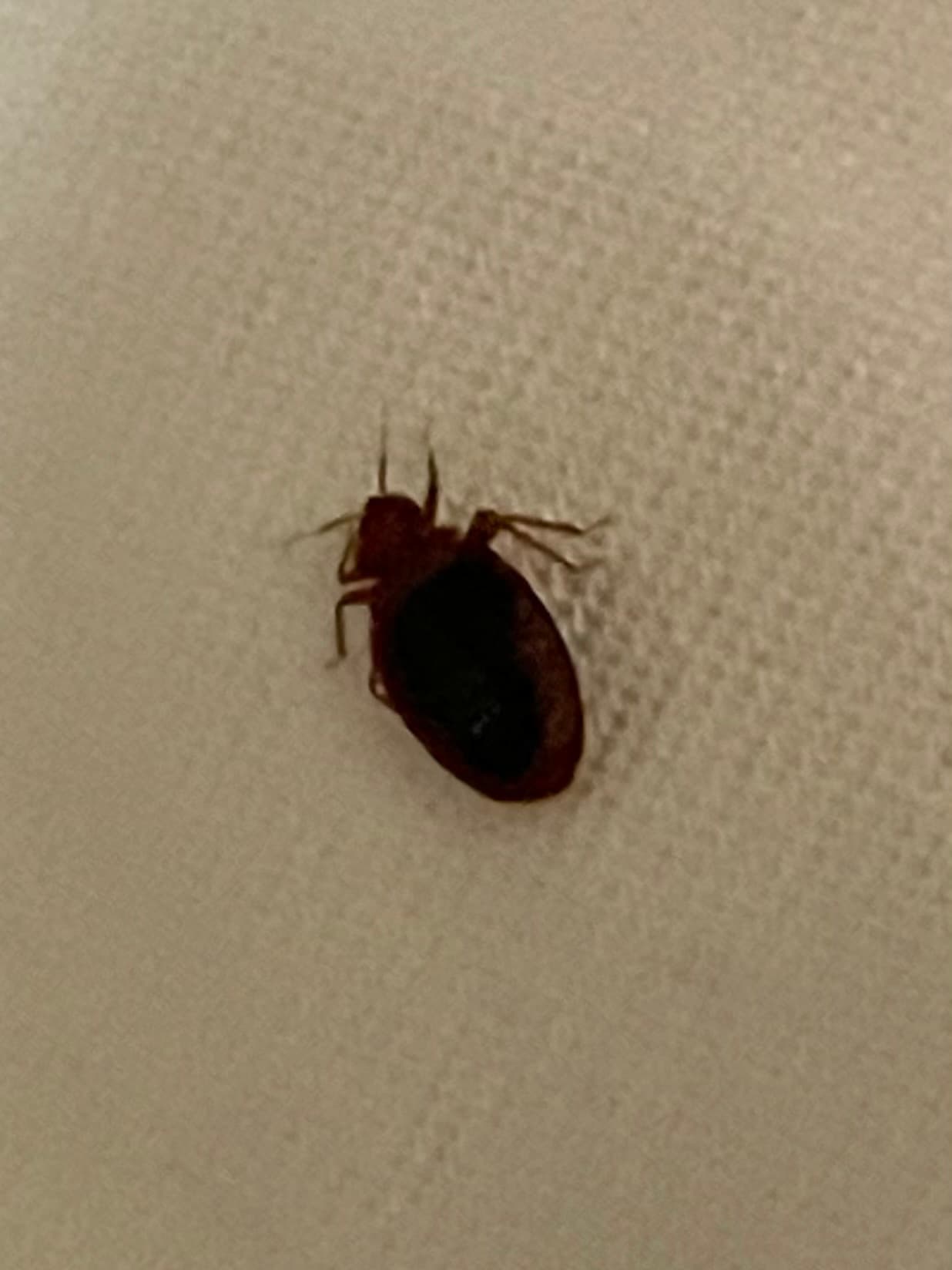
Why short-term rentals are ideal territory for bed bugs, and how to find them before your guests do.
Bed bugs are not a symptom of poor hygiene: they arrive in luggage. A short-term rental taking in new suitcases every week therefore multiplies the opportunities for introduction. A female lays a few eggs a day and the insect survives months without feeding, so a harbourage established during a quiet spell is still there when guests return. The only effective defence is a systematic visual check of sleeping areas at every turnover, followed by professional treatment at the first genuine sign.
The bed bug is a hitchhiker. It travels in the seams of a suitcase, the lining of a bag, a folded garment, and occasionally in second-hand furniture. It has nothing to do with how clean the property is: new, immaculately kept accommodation is affected exactly like everything else.
In short-term rentals, every arrival is an opportunity for introduction, and guests moving between hotels, trains, planes and rentals are statistically the most exposed. The risk is not a defect in your property — it is a normal consequence of the activity, and it has to be managed as one.
Once inside, the insect settles within two metres of the sleeping area: mattress seams and labels, bed base slats and corners, headboard, skirting boards, sockets, picture frames and curtains. That, and nowhere else, is where checks must focus.
Three signs are visible to the naked eye and cost two minutes to check: small dark spots (faecal traces) along seams and on bed base slats, isolated blood spots on sheets, and translucent shed skins in the mattress corners.
Bites are a poor indicator: they appear late, not everyone reacts to them, and they are easily confused with other skin reactions. A guest reporting bites is describing an infestation that is already well advanced — which is exactly why the check must not depend on them.
Build it into the cleaning checklist: protector removed, seams and slats inspected, headboard pulled away from the wall. A cleaning team trained on those three signs will detect an infestation weeks before the first guest message.
Supermarket aerosols and foggers kill the exposed insects and scatter the rest into neighbouring rooms and adjoining flats: a localised infestation becomes a whole-apartment — sometimes whole-building — problem. They also have no effect on eggs.
Professional treatment combines heat or steam — which destroys adults, larvae and eggs with no residue — and, where the layout requires it, a residual insecticide applied to harbourage points. A second inspection confirms eradication, because no method should ever be judged on the absence of bites alone.
Always build that follow-up inspection into your schedule: it is what allows you to reopen bookings safely, and it is what appears on the report you can produce if a dispute arises.
No. They feed on blood, not waste, and they arrive in luggage. A brand-new, perfectly maintained property can be infested by its very first guest. Cleanliness makes early detection easier; it does not prevent introduction.
In the vast majority of cases, no: a properly executed heat or steam treatment treats the mattress in place. Replacement is only warranted for bedding that is already degraded or for a very long-standing infestation. Never dump an infested mattress in a corridor or stairwell — it is the surest way to contaminate the building.
After heat treatment the property is generally usable again once it has cooled and been ventilated. After chemical treatment a re-entry interval applies, and it is given to you in writing beforehand. In both cases we recommend waiting for the follow-up inspection before reopening the calendar widely.
Request a free quote09 83 30 98 07
AntinuisiblePro (BTPNE) is an independent pest control company. Airbnb is a registered trademark of Airbnb, Inc.; we are not affiliated with, partnered with or endorsed by that company. These pages are written for hosts who use the platform.
Describe your problem and we'll call you back quickly.
8 Bis Rue de la Côte d'Or, 94500 Champigny-sur-Marne, France
Monday to Sunday, 8am–8pm
Describe the situation and we will call you back, assess the urgency and offer a slot that fits your booking calendar.
Book onlineBack to the main guide