Introduction: the season when the garden moves into the kitchen
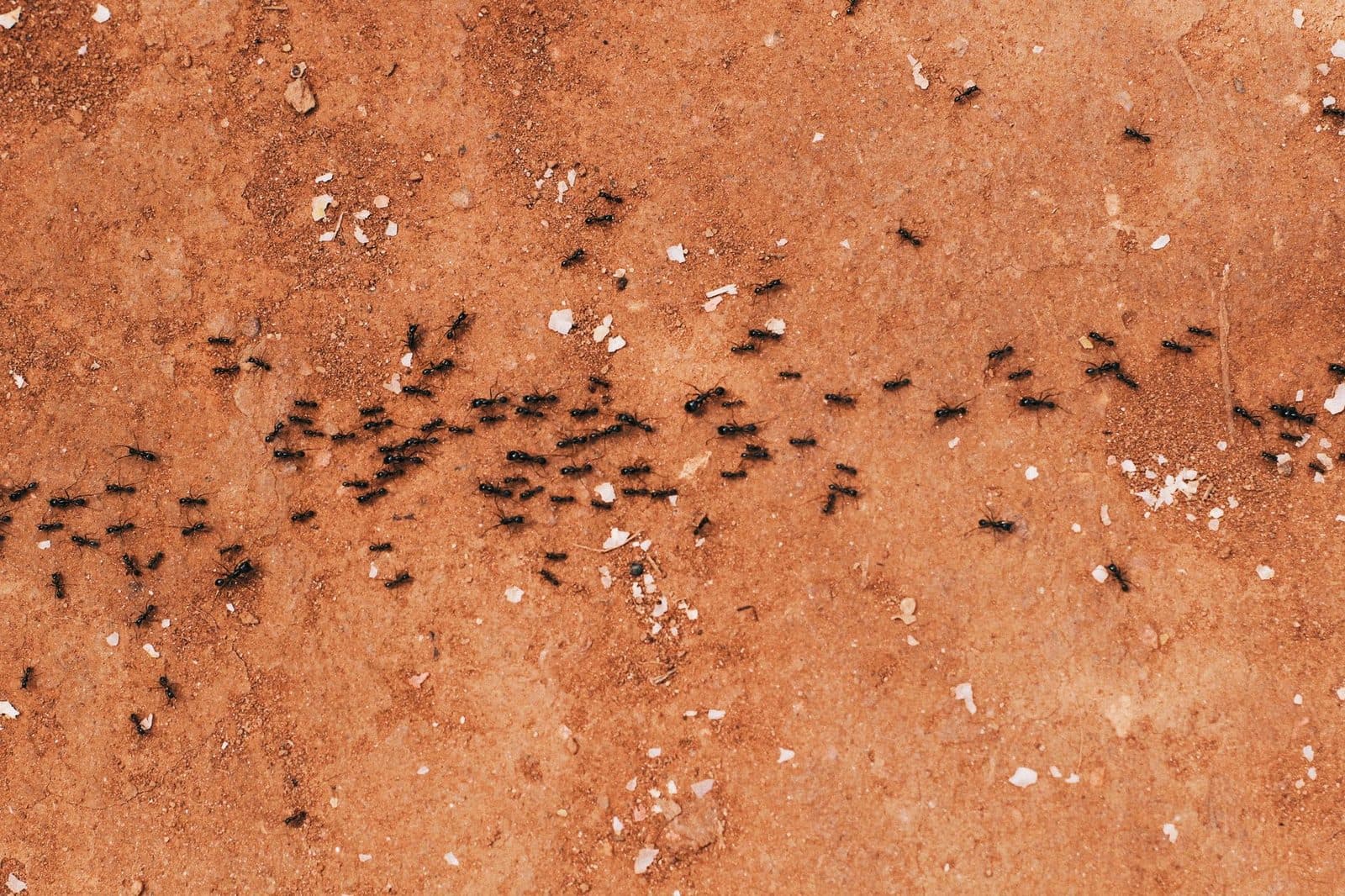
There is a time of year when call-outs for ants change in nature. In spring, people call because they've spotted "a few ants" on the terrace. From mid-August until the first real chill of October, they call because an unbroken column is marching across the worktop, slipping out through a crack in the skirting board and vanishing under the tiles.
This shift is anything but random. At the end of summer, the queen sharply reduces her egg-laying. The larvae, which until then demanded protein (insects, meat crumbs, pet kibble), become scarce. The colony then changes its diet and goes hunting for sugar — a survival requirement for building up energy reserves for winter. At the same time, nights grow cooler, outdoor honeydew sources (aphids) dry up, and the inside of a home becomes the warmest, richest place in the neighbourhood.
Ants are far from the most dangerous pests. But they are the most persistent, and above all the ones we treat most badly: the reflex to reach for a spray makes the problem worse nine times out of ten. This guide explains what is really happening inside your walls, and which method actually works.
Which species actually come into your home?
In mainland France, the vast majority of household infestations come down to a handful of species. Identifying them completely changes the treatment strategy.
| Species | Appearance | Where the nest is | What's at stake |
|---|---|---|---|
| Black garden ant (Lasius niger) | 3–5 mm, matte black | Outdoors: under a paving slab, a low wall, a planter | Food nuisance, very populous colonies |
| Pharaoh ant (Monomorium pharaonis) | 2 mm, translucent yellowish-red | Indoors, in warm ducting, partition walls, insulation | Tropical species, multiple queens, very hard to eradicate |
| Carpenter ant (Camponotus spp.) | 6–12 mm, large, often two-toned | Damp or degraded wood: roof timbers, frames, posts | Possible structural damage to already weakened wood |
| Argentine ant (Linepithema humile) | 2–3 mm, light brown | Supercolonies, Mediterranean coast and South-West | Invasive, wipes out local species |
| Fire ant / Solenopsis invicta | 2–6 mm, reddish | Open ground, mounds | Reported in Sicily since 2023, under watch in Europe |
The special case of the pharaoh ant
This is the one species for which DIY treatment is firmly inadvisable. The pharaoh ant lives in polygynous colonies (several queens) and practises budding: when attacked with a contact insecticide, part of the colony splits off and founds a satellite elsewhere in the building. A single spray in an apartment-block kitchen can turn one focus into five spread over three floors. It is common in heated multi-occupancy housing, hospitals and professional kitchens, and treating it requires coordinated baiting across the entire building.
The case of the carpenter ant
Unlike termites, Camponotus does not eat wood: it hollows it out to house its colony. It is an indicator, not a cause. An established carpenter ant colony almost always means there is a damp patch of wood somewhere: a roof leak, rising damp, a poorly sealed window frame. Treating the insect without treating the moisture guarantees a repeat performance the following year. A small wood moisture meter will quickly pinpoint the saturated area before you call a roofer or a joiner.
Why spraying is the worst response
This is the most counter-intuitive point in ant control, and the one that explains most failures.
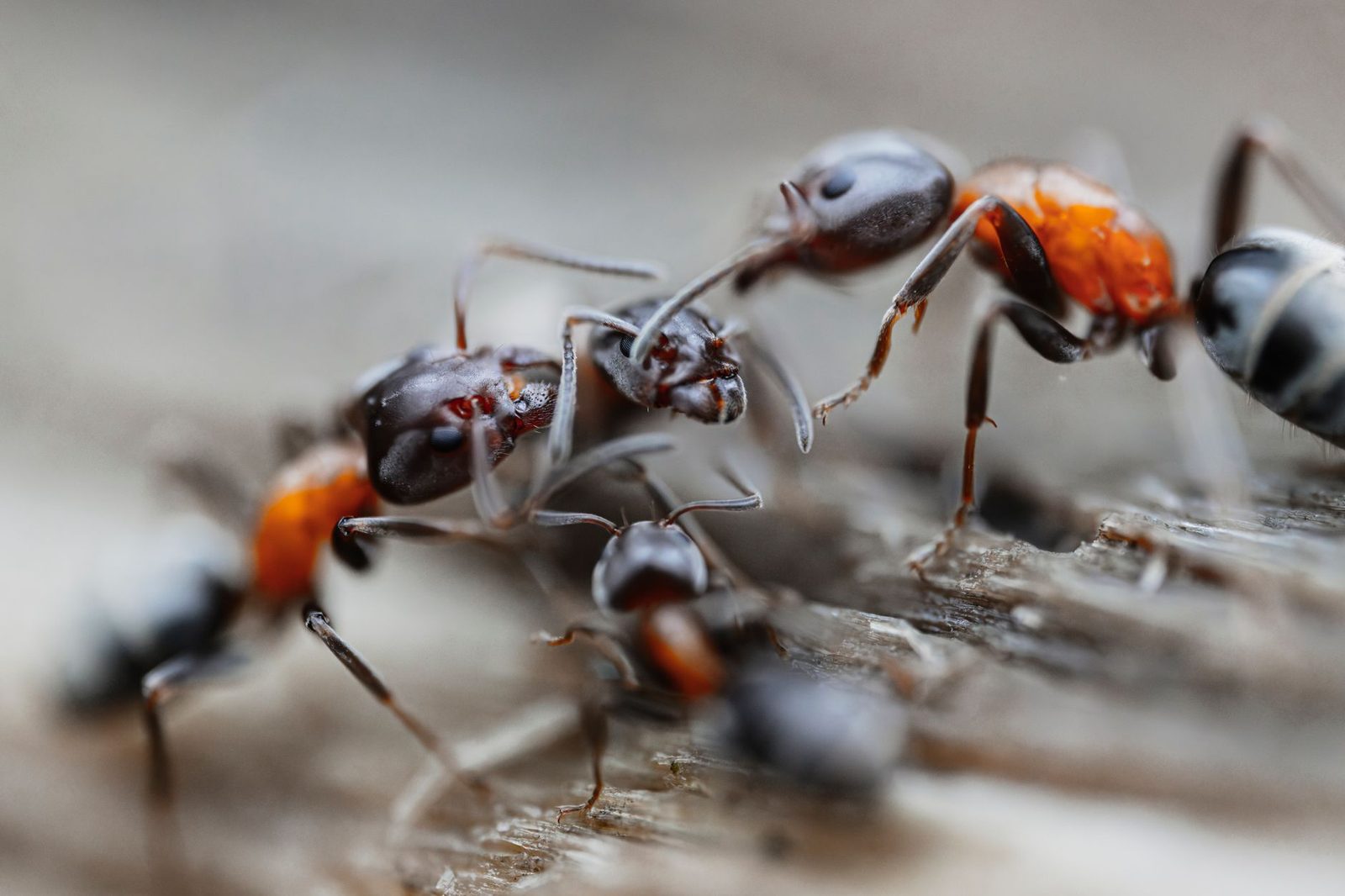
An ant visible on your worktop is a foraging worker. Depending on the species, it represents between 5 and 20% of the colony. The remaining 80 to 95% — including the queen, the only individual capable of reproducing the whole colony — are in the nest, out of sight. Killing foragers with a spray produces three effects:
- Immediate but illusory relief: the colony rebuilds its forager force within a few days.
- A counterproductive repellent effect: pyrethroid residues discourage ants from using the trail again... and therefore from carrying toxic bait back to the nest.
- Possible fragmentation of the colony in polygynous species.
Golden rule: with ants, you don't try to kill what you can see — you try to make what you can see carry the poison to what you can't.
ANSES also points out that aerosol household insecticides contribute significantly to indoor air pollution, and recommends favouring enclosed bait stations or gel formulations, which are more targeted and less dispersive.
The method that works: bait, don't spray
Step 1 — Follow the trail to the entry point
Before any treatment, observe. A column of ants lays down a pheromone trail that its nestmates follow scent by scent. That trail always leads somewhere: a window seal, an electrical conduit, a pipe run under the sink, a crack in the skirting board. Take five minutes, preferably in the evening (peak activity for Lasius niger), and trace the line back.
Note what the ants are carrying: if they're hauling sugary crumbs, the colony is in its carbohydrate phase — typical of late summer. If they're carrying fragments of insects or kibble, it's in its protein phase. This information determines your choice of bait.
Step 2 — Choose the right bait
Effective bait rests on a simple principle: a slow-acting active ingredient (boric acid, borax, fipronil, indoxacarb, depending on the authorised formulations) mixed with an attractant. The slowness is essential: the worker must have time to return to the nest and share its load through trophallaxis — the mouth-to-mouth regurgitation of food that spreads through the entire colony, larvae and queen included.
An ant bait gel in a syringe is applied as lentil-sized micro-drops, directly along the trail, at intervals of 20 to 30 cm. For households with children or pets, enclosed bait stations offer the same active ingredient without direct exposure.
Three mistakes to avoid:
- Cleaning the trail just before laying the bait. You're destroying the very path that would lead the ants to the poison. Clean after activity has stopped, never before.
- Laying too little bait. A Lasius niger colony can number 10,000 individuals; a single dot of gel will be exhausted in one night.
- Panicking at the surge. In the 24 to 48 hours after application, the number of visible ants increases. That's the sign the bait is working. The decline is usually seen between day 4 and day 10.
Step 3 — Seal the house
Once the colony has collapsed, you have to stop the next one getting in. This is the step everyone skips, and yet it's the one that determines whether the problem comes back.
- Fill cracks in skirting boards, pipe openings under the sink and behind the toilet with acrylic or silicone sealant; for wider gaps, use expanding foam and then finish off cleanly.
- Check window and patio-door seals, particularly at the lower corners.
- On uneven thresholds, an adhesive door bottom seal removes a major entry point — for spiders and woodlice too.
- Outside, clear a 30 cm strip of vegetation-free ground against the wall: ivy branches, trained roses and planters pushed up against the façade are ant motorways.
Step 4 — Remove the resources
Ants only settle where there is food. An open packet of cereal, a sticky syrup bottle on the shelf, a permanently topped-up pet bowl are enough to keep a trail going indefinitely.
- Transfer sugar, flour, honey, biscuits and kibble into airtight containers. A set of airtight glass jars solves the ant problem and the pantry-moth problem — both very active at the same time of year — in one go.
- Empty the pet bowl between meals, or stand it in a saucer filled with water.
- Take out the food waste every evening during warm spells; a poorly sealed compost bin three metres from the door is a magnet.