Introduction: the photo doing the rounds on the parents' WhatsApp group
The scenario has become almost ritual. A child mentions seeing "a big brown bug" near the serving counter. A parent representative, attending a meeting, catches sight of an insect darting under a skirting board in the dining hall. A blurry photo circulates that same evening on the class group chat. And within forty-eight hours the question goes public: are there cockroaches in our children's school, and what is the town hall doing about it?
In January 2026, several regional media outlets — including Actu.fr, reporting on a school in the Oise département — covered exactly this kind of story: cockroaches reported by families, concern over school catering, and institutional responses deemed far too slow. It is not an isolated case: the German cockroach (Blattella germanica) thrives precisely where you find constant warmth, humidity, foodstuffs and continuous service ducts — in other words, in any commercial kitchen.
The aim of this article is not to be alarmist. It is to give parents, staff and school management a method: who is responsible for what, which kind of report actually works, what timelines to insist on, and at what point an administrative closure becomes possible.
Why schools are such favourable ground
The German cockroach is the cockroach of heated buildings. Its biology explains everything else:
- Rapid life cycle: a female produces 4 to 8 oothecae in her lifetime, each containing roughly 30 to 40 eggs. In favourable conditions (25–30 °C), the journey from egg to adult takes six to eight weeks.
- Thigmotaxis: the insect seeks contact on both of its sides. It therefore lodges itself in crevices — behind ovens, in dishwasher motors, cold-room seals, skirting board channels, electrical conduits.
- Nocturnal and discreet: seeing a cockroach in broad daylight is never trivial; it usually means the population has outgrown its hiding places.
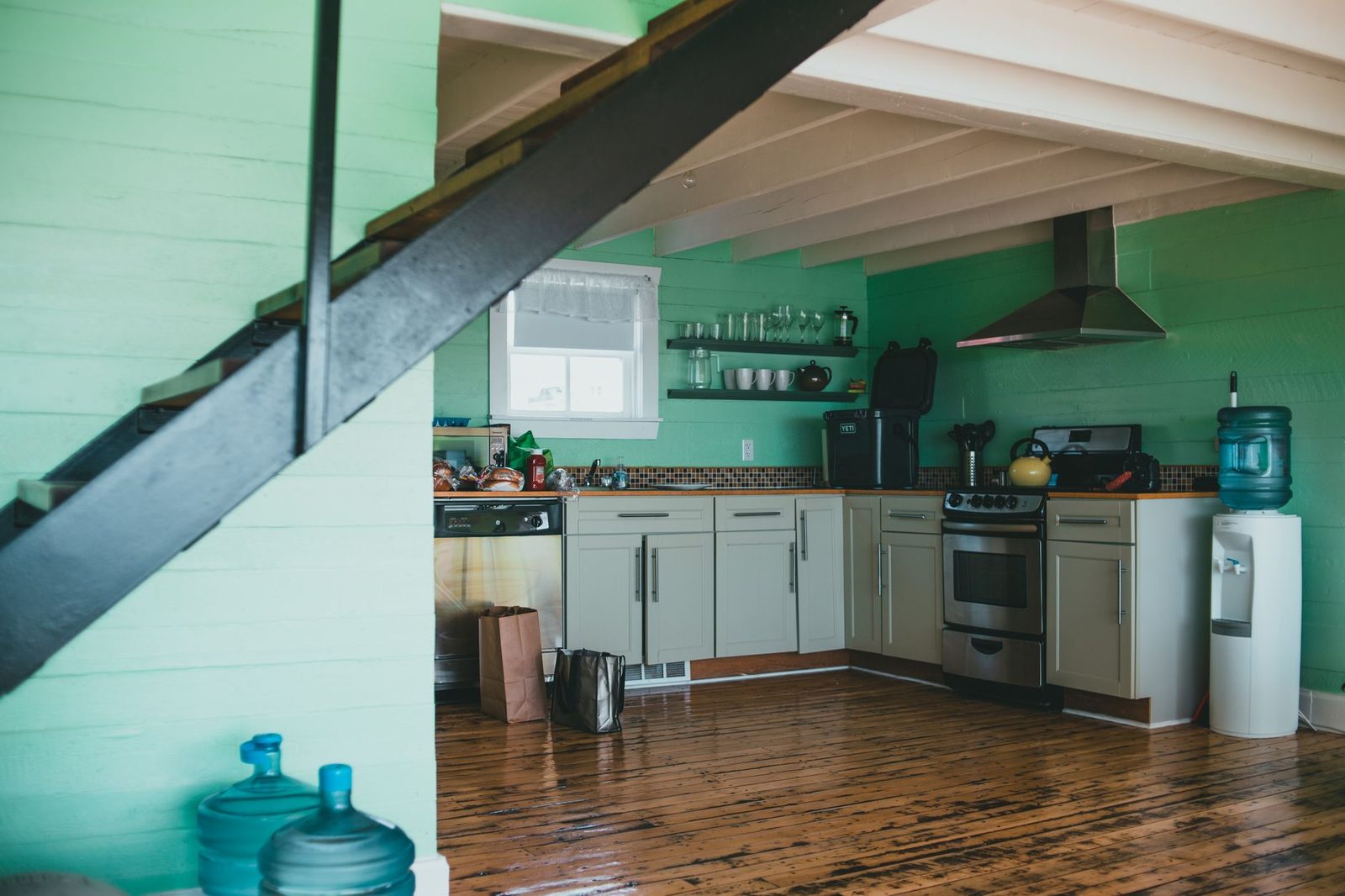
A school combines all these factors: a kitchen or vegetable prep room, a dining hall, storage areas, toilets, suspended ceilings, and often an older building with unsealed cable runs. Add deliveries of food in cardboard boxes — the number one introduction vector, extensively documented by catering professionals — and the picture is complete.
A point often misunderstood: the presence of cockroaches is not proof of poor cleaning. A spotless servery can be infested if the insect has colonised the ducts from a neighbouring dwelling or a bin store. Cleaning limits the food supply; it does not destroy the nest.
The real health risks
Precision matters here, without exaggeration. Cockroaches do not sting and do not transmit disease through bites. The documented risks, notably identified by ANSES and the Institut Pasteur, fall into two categories:
- Indirect food contamination: cockroaches move between waste, drain traps and work surfaces, and can mechanically carry bacteria (salmonella, E. coli, staphylococci) on their legs and in their droppings.
- Respiratory allergens: moult debris and excrement contain recognised allergens, associated with asthma flare-ups in children. This is the best-evidenced risk in a school environment.
To this must be added a dimension that is not medical but very real: disgust and loss of trust, which leads families to withdraw their child from the canteen.
Who is responsible? The exact division of authority
This is the point that stalls most cases, because parents often approach the wrong contact. The French rule is simple in principle: the owner of school premises is the local authority, and it is the local authority that is responsible for building maintenance and sanitary conditions.
| Level | Building and maintenance | Catering |
|---|
| Nursery and primary school | Municipality (or inter-municipal body) | Municipality or contracted provider |
| Lower secondary school (collège) | Département | Département |
| Upper secondary school (lycée) | Region | Region |
| State-contracted private school | The managing body | The managing body |
The head teacher or head of establishment, by contrast, is not the owner: they are responsible for the safety of people and have an obligation to report the problem without delay to the owner. They are a link in the chain, not the budget holder.
Two oversight bodies then come into play:
- The DDPP (departmental directorate for the protection of populations, veterinary services) oversees food hygiene, and therefore the kitchen and dining hall. It is the body that can order corrective measures, or even an administrative closure of the catering facility.
- The ARS (regional health agency) and the municipal hygiene and health service (SCHS), where one exists, deal with the general sanitary condition of the premises.
Since the law of 27 July 2023, known as the "Kasbarian-Bergé law", the legal framework on pests in housing has been tightened, but schools fall under a distinct regime: that of establishments open to the public (ERP) and, for the kitchen, the European hygiene package (Regulation EC 852/2004). The latter explicitly requires operators to have adequate pest control procedures in their food safety management plan (PMS), with full traceability.
In other words: a school kitchen must already have a pest and rodent control contract and an up-to-date logbook. Asking for that logbook is the most effective lever available to a parent representative.
Building a report that gets results: the five-step method
An emotional report achieves nothing. A documented report produces an intervention. Here is the order to follow.
1. Document before raising the alarm
Gather dated and located evidence: sharp photographs with a reference object for scale, time of day, exact room. Record repeat sightings. If you are a member of school staff, placing sticky detection traps — the inert glue boards used in professional monitoring — makes it possible to objectively measure pest pressure within a few nights, with no insecticide and no risk to children. Placed along skirting boards and beneath hot equipment, they turn a rumour into data.
2. Write to the head teacher, with copies
A factual email to the head teacher or head of establishment, copied to the town hall (education or hygiene department) and to the president of the departmental or regional council depending on the level of schooling. Ask for three specific things:
- the date of the last pest control treatment and the name of the contractor;
- a copy of, or access to, the pest control logbook from the food safety management plan;
- the planned intervention schedule.
3. Go through the official bodies
The school council (primary level) or the governing board (collège, lycée) is where the issue becomes official and is recorded in the minutes. An item on the agenda is a written record you can rely on. The health and safety committee, mandatory in vocational lycées, is also competent to act.
4. Refer the matter to the DDPP if catering is involved
If the sightings concern the kitchen, the servery or the dining hall, the departmental DDPP is the competent authority. A report can be made directly, and the national SignalConso platform (DGCCRF) allows a traceable alert to be logged. An unannounced inspection may follow.
5. Go public, as a last resort
Local media coverage works — the cases in the Oise and elsewhere prove it — but it comes at a cost: it sours relationships and sometimes pushes the institution onto the defensive. Reserve it for cases where several months of documented correspondence have gone nowhere.
What a serious treatment must include
Many interventions fail because they are carried out once, with the wrong product, and without follow-up. A professional protocol in a school rests on four pillars.
Diagnosis. Night-time or torch-lit inspection, reading of detection traps, identification of the species. German and oriental cockroaches are not treated the same way: the latter often comes up from drainage systems and basements.
Bait gel, not blanket spraying. In sensitive environments — with children and food present — the professional standard is the targeted application of insecticide gel in a syringe into crevices, out of reach. The mechanism is indirect: cockroaches consume the bait, return to their harbourage and contaminate the population through cannibalism and coprophagy. Aerosol spraying, by contrast, scatters individuals and often makes the situation worse.
Sealing and drying out. Without building works, reinfestation is guaranteed. Sealing duct passages, replacing drain trap seals, expanding foam or mastic in drilled holes, and above all eliminating leaks: a cockroach survives weeks without food, but only a few days without water. A basic moisture meter helps to locate persistent condensation points behind equipment.
Follow-up checks at day 15 and day 30. A single visit is never enough, because oothecae hatch after the treatment. At least two visits, with numerical trap readings, must be written into the contract.
A realistic timeline
| Stage | Expected timeframe |
|---|
| Report → inspection | 3 to 7 days |
| Inspection → first treatment | 7 to 15 days |
| First treatment → follow-up check | 15 days |
| Resolving a moderate infestation | 6 to 10 weeks |
| Long-standing, structural infestation | 3 to 6 months, with building works |
A school that announces "it's sorted" eight days after a single visit has, statistically, sorted nothing.
The sensitive point: school holidays
Closure periods are both the best and the worst window. The best, because you can treat, dismantle equipment and carry out works with no one around. The worst, because the halt in daily cleaning and waste removal sometimes gives cockroaches a period of undisturbed peace — and because switching off the heating does not kill them: they migrate towards service areas that are still warm.
Practical recommendation: schedule the first major intervention for the October half-term or Christmas holidays, but maintain a follow-up inspection within 72 hours of the return to school.
And at home, when the child comes back from school?
This is the question parents ask immediately. The honest answer: German cockroaches being carried home in a school bag is possible but rare. The insect moves by walking and colonises through structural continuity, not by hitchhiking, unlike bed bugs.
Sensible precautions, without paranoia:
- inspect school bags and snack boxes, especially seams and false bottoms;
- do not put the bag down in the kitchen or against a wall shared with a kitchen;
- store dry goods in airtight glass containers, which cuts off the food supply for any cockroach that gets in;
- discreetly place two or three monitoring glue boards under the sink and behind the fridge for a month — it is the best early-warning detector at home.
If you notice signs at home — droppings that look like black peppercorn specks, a sweetish smell, moult casings — treat immediately, before the population establishes itself. Our guide to household pest control products sets out the formulations that genuinely work, and the shop brings together the gels and monitoring traps used by professionals. For a confirmed infestation, going through our services remains the fastest route.
A steam cleaner is also a useful ally in a family kitchen: steam at over 100 °C kills eggs and adults in crevices with no chemical residue — provided it is used as a complement, never on its own.
Key takeaways
- German cockroaches in a school are not a sign of dirtiness, but of structural continuity between warm, damp areas.
- The responsible party is the local authority that owns the building: the municipality for primary schools, the département for collèges, the region for lycées.
- School kitchens have a regulatory obligation to maintain a documented pest control plan: ask for the logbook, it is the decisive lever.
- An effective report is dated, photographed, written, and sent simultaneously to the school and the owner, with the matter raised at the school council.
- The DDPP and SignalConso are the avenues of recourse when catering is involved.
- A credible treatment = diagnosis, bait gel, sealing works, at least two follow-up checks. Allow 6 to 10 weeks, not one week.
Faced with an infestation, the worst strategy remains awkward silence on all sides: the cockroach population, for its part, doubles every six weeks.