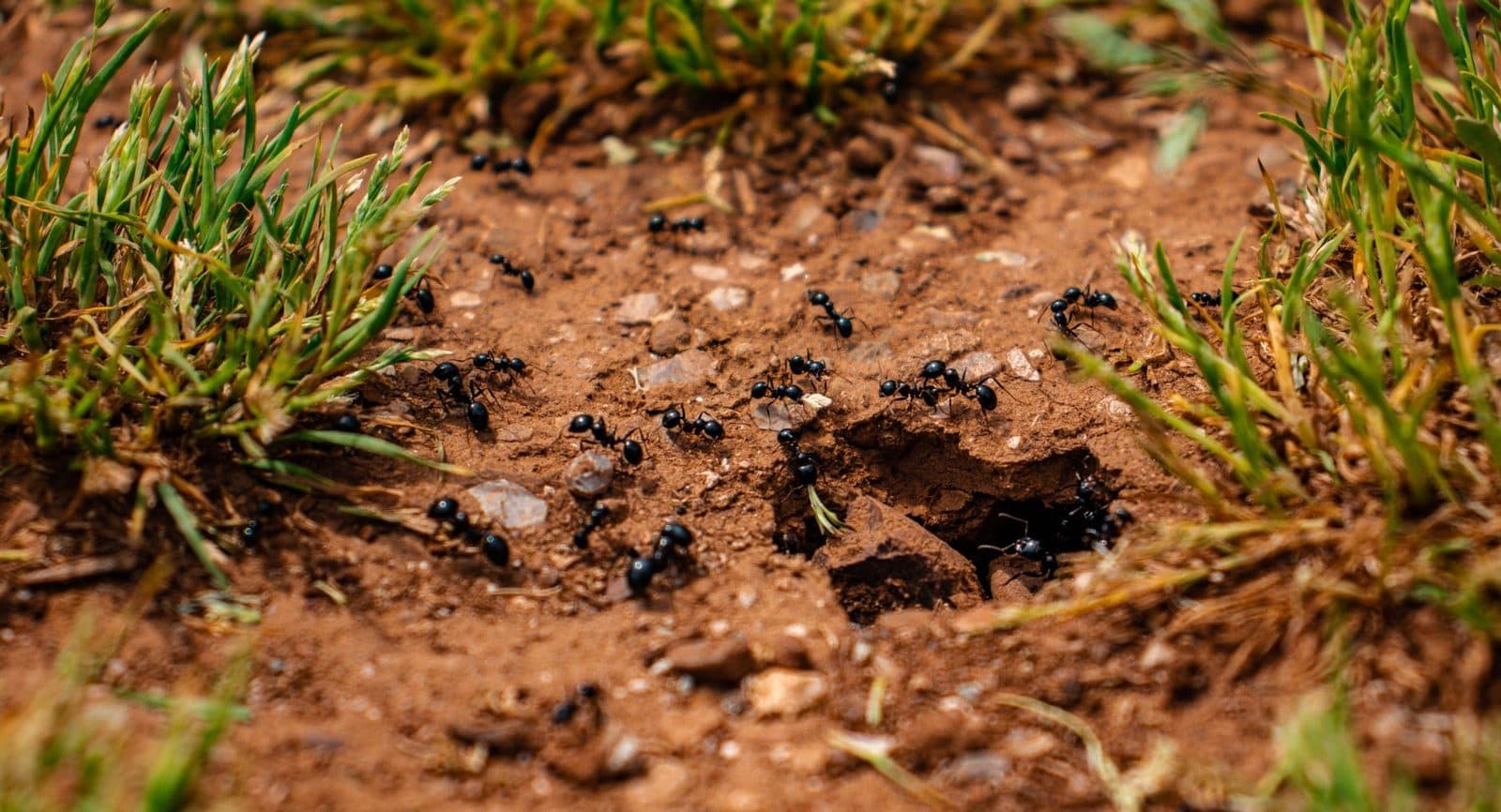
Introduction: the season of stockpiling is also the season of pests
Between mid-September and the end of October, hundreds of thousands of households do the same thing: they bring everything indoors. Crates of apples, squashes set on a shelf, jars of tomatoes, bags of walnuts, grapes, sometimes a few demijohns of must for amateur winemakers. In a matter of days, the storeroom, the cellar, the garage or the cupboard under the stairs goes from empty and dry to a warm, damp and rarely inspected food warehouse.
That is exactly the setting sought out by the vinegar fly (Drosophila melanogaster), the spotted wing drosophila (Drosophila suzukii), the Mediterranean flour moth, the Indian meal moth, weevils and, one notch up, the wood mice and house mice looking for winter shelter. None of these organisms needs spectacular neglect to move in: a single bruised apple forgotten at the bottom of a crate is enough to produce several hundred fruit flies in three weeks.
This article is not about one particular pest, but about a place and a moment: the domestic storage area, in October. The goal is to know how to identify what is flying or nibbling in your home, to trace the real source of the problem — almost never the one you suspect — and to put in place a storage protocol that holds until spring.
Why October concentrates the problems
Three factors overlap
1. The massive influx of fermentable organic matter. Orchard fruit, late-season vegetables, grape pomace, peelings destined for the compost: it all arrives at once. And the yeasts present on the skin of ripe fruit release ethyl acetate and ethanol, two molecules that fruit flies detect from several dozen metres away. To them, a crate of overripe mirabelle plums is a beacon.
2. The drop in outdoor temperatures. Below 10–12 °C, fruit fly activity collapses outdoors, but individuals that have already entered a room heated to 18–20 °C carry on their cycle. In Drosophila melanogaster, the egg-to-adult cycle takes roughly 8 to 10 days at 25 °C, about a fortnight at 20 °C. A female lays several hundred eggs in her lifetime. Translation: a tiny focus established in early October can produce a swarm in November even though nothing more is coming in from outside.
3. The heating being switched back on. It creates thermal gradients in ducts, crawl spaces and party walls. Rodents, for their part, follow warmth and smell. INRAE and plant protection services regularly point out that pressure from field rodents (wood mouse, common vole) peaks in autumn, just when crops are harvested and populations are seeking refuge.
The myth of the cellar being "healthy because it's cold"
A traditional underground cellar sits at around 12–14 °C all year round, with a relative humidity of 70 to 85 %. That is too cold for rapid fruit fly development, but perfectly suited to moulds, silverfish and woodlice, and warm enough for pantry moth eggs to survive in slowed development. Modern cellars, on the other hand, are often semi-basement rooms backing onto a boiler room or crossed by hot water pipes: 18 to 22 °C in winter is easily recorded there. Those are the ones that cause trouble.
Identifying: four families, four logics
The small flies circling above the fruit
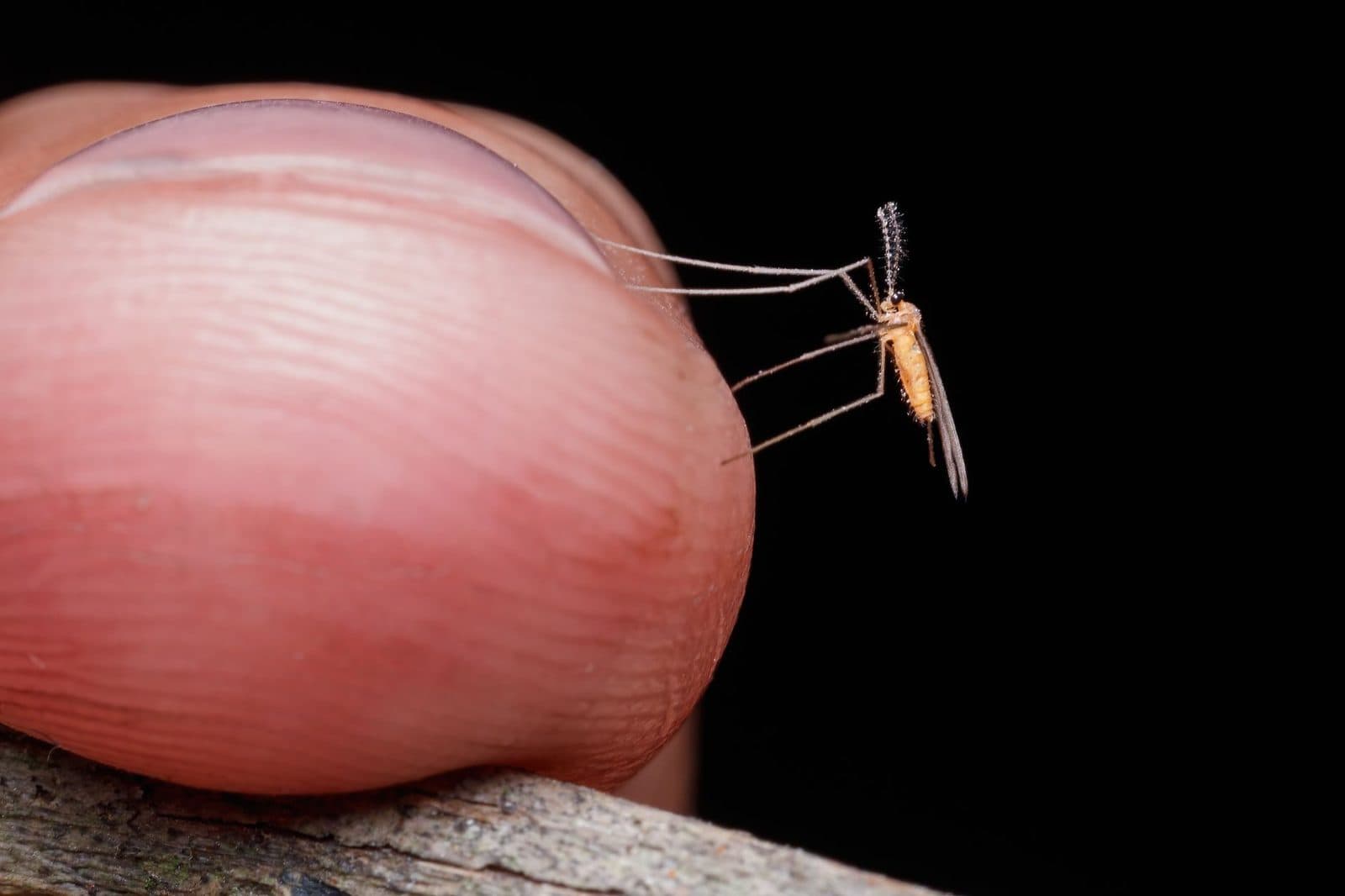
If they are yellowish-brown, 2–3 mm long, with bright red eyes, and take off lazily when you bring your hand near: they are fruit flies. They breed in fermenting matter, not in the air. The focus is therefore always physical and locatable: the bottom of a crate, the trap of a seldom-used sink, an indoor compost bin, the dregs of an opened wine bottle, a juice-soaked cloth, the rim of a bin.
Be careful not to confuse them with:
| Insect | Size | Appearance | Where it develops |
|---|
| Fruit fly | 2–3 mm | Beige, red eyes, slow flight | Fermented fruit, drain traps |
| Fungus gnat (sciarid) | 2–4 mm | Black, slender, long legs | Damp potting compost of houseplants |
| Drain fly (moth fly) | 2–5 mm | Grey, hairy, roof-shaped wings | Pipework, biofilm |
| Phorid fly | 2–3 mm | Humpbacked, runs instead of flying | Decomposing matter, leaks |
The distinction is not academic: if they are fungus gnats, emptying the fruit bowl will change nothing — you need to let the soil of your houseplants dry out.
The discreet moths in the pantry
The Mediterranean flour moth (Ephestia kuehniella) and the Indian meal moth (Plodia interpunctella) announce themselves with small grey or two-toned moths, 8–10 mm long, flying in zigzags in the evening, and above all with silken clumps: threads of silk binding together flour, rice, dried fruit, pet kibble. The infestation almost always arrives in a packet bought already contaminated, the eggs being invisible at the point of purchase.
The stored-product beetles
Rice weevil, grain weevil, mealworm beetle, sawtoothed grain beetle. They bore into grains, leaving a fine dust and hollow kernels that float when placed in water. In a home, they almost always come out of a bag of pulses, semolina or birdseed stored for months.
Rodents
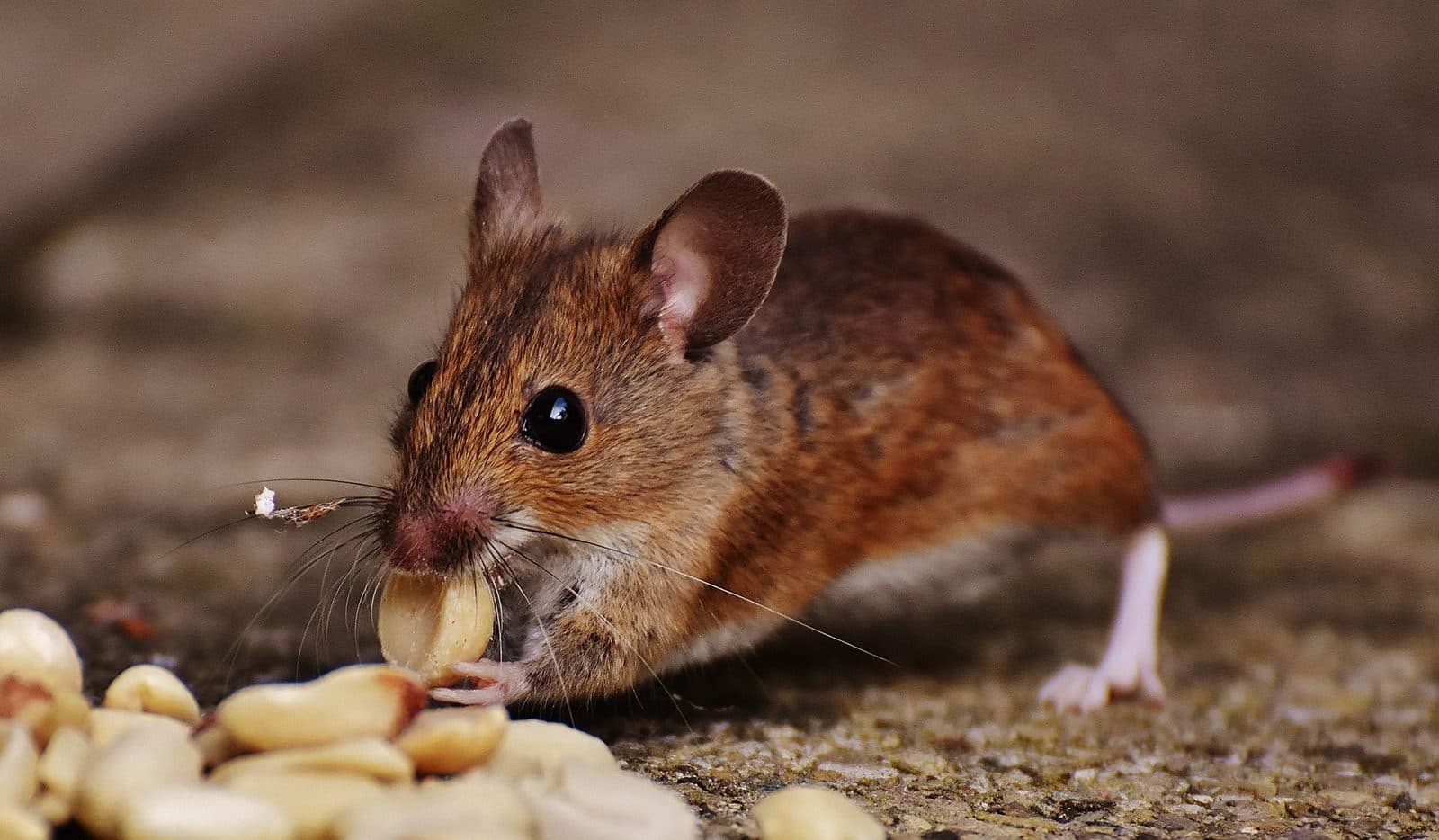
Black droppings 3 to 8 mm long depending on the species, packaging gnawed at the corner, scratching noises in the partition walls at dusk, a persistent ammonia smell. A house mouse gets through a 6 mm opening, a brown rat through 20 mm. On this point, our guide on wood mice and voles in autumn details the logic of perimeter exclusion; here, we focus on protecting the foodstuffs themselves.

The protocol for securing your stores
Step 1 — Sorting "crate by crate"
Take everything out. Literally. A serious inspection of a storeroom takes an hour and is done before the fruit goes in, not after. You are looking for:
- bruised, split or punctured fruit — they are the starting point of 90 % of fruit fly invasions;
- paper or flexible plastic bags containing flour, rice, pasta or semolina, open for more than two months;
- traces of silk, clumped grains, small round holes in cardboard;
- old damp wooden crates, havens for woodlice and mould.
Anything questionable goes. You don't "salvage" a bag of flour containing silken threads: the eggs are already elsewhere in the cupboard.
Step 2 — The airtight container, the only barrier that holds
This is the most cost-effective point of the whole protocol. Pantry moths bore through paper and thin plastic; they bore through neither glass nor steel. Systematically decanting flour, rice, pulses, dried fruit, kibble and seeds into sealed glass jars or airtight storage boxes solves the problem almost permanently and makes any anomaly visible at a glance.
Two practical notes:
- Clip lids with a rubber gasket are superior to cheap screw lids, which leave enough play to get through.
- For pet kibble, often stored in the garage in its original bag, an airtight kibble container prevents both moths and rodent attraction. The kraft paper bag is, from that point of view, an open invitation.
Step 3 — Cold as preventive disinfestation
A proven, free, biocide-free method: place any dry product newly bought in large quantities (flour, dried fruit, rice) in the freezer at -18 °C for 48 to 72 hours. This kills any eggs and larvae before storage. It is the technique long recommended for sensitive foodstuffs, and it completely avoids resorting to an insecticide in a food area — which, in a kitchen, must remain the rule.
Step 4 — Monitor rather than treat
In a pantry, a pantry moth pheromone trap (a sticky board releasing a sex pheromone that attracts males) will not eradicate a population: it acts as an early indicator. Two or three males caught in a week signal an active focus somewhere; zero catches for a month after a thorough clean-out means the sorting worked. Used as a diagnostic tool, it is excellent. Presented as a treatment, it is misleading.
The same logic applies to fruit flies: a kitchen fruit fly trap placed near the fruit bowl reduces the visible swarm and confirms where the focus is, but it never replaces removing the substrate.
Step 5 — Drain traps, the systematic blind spot
In a storeroom or utility room, the trap of a seldom-used sink turns into a greasy biofilm where fruit flies and drain flies lay their eggs. The test: tape a piece of clear adhesive tape, sticky side down, over the drain in the evening. If there are insects stuck to it in the morning, the focus is in the pipework. The solution is not bleach (it slides past without lifting the biofilm) but an enzymatic drain cleaner, left to act overnight, repeated two or three times.
Special case: the wine cellar and home fermentations
Amateur winemaking, cider production, lacto-fermentation jars and sourdough starters create very powerful sources of attraction. A few simple rules:
- An airlock on everything, on any demijohn or barrel in fermentation. A cloth laid over the neck won't stop a fruit fly; and that fly carries acetic bacteria (Acetobacter) which turn wine into vinegar. That is the historic mechanism that gave the insect its French name.
- Immediate cleaning of any must spilled on the floor or the shelves. Dried sugar remains attractive.
- Grape pomace and pressing waste removed the same day, never stored in an open bucket at the back of the cellar.
- A magnetic window screen over the cellar vent window limits the entry of outdoor fruit flies during the grape harvest period, without cutting off the ventilation the cellar needs.
Worth noting: Drosophila suzukii, an invasive species originating in Asia and present in France since 2010, differs from other fruit flies in its ability to lay eggs in healthy fruit still on the tree, thanks to a serrated ovipositor. It is monitored by INRAE and by the surveillance networks of the soft fruit sector. In practice, for a private individual, this means that cherries, raspberries or grapes brought in looking "immaculate" may already contain larvae.
What not to do
Aerosol insecticides in a food storage area are to be avoided entirely. ANSES regularly points out that biocidal products intended for residential premises must never be applied on or in the immediate vicinity of foodstuffs, and automatic diffusers in an enclosed space expose occupants needlessly.
Three other frequent mistakes:
- Treating the air rather than the focus. Killing flying adults while the source keeps producing a generation every ten days is like bailing out a boat with a hole in it.
- Stacking crates directly on the floor against a wall. It is the best possible shelter for a wood mouse and it makes any visual inspection impossible. A metal shelving unit with 15 cm of clearance at floor level changes everything.
- Relying on "natural" repellents alone. Bay leaves, cloves, essential oils: these substances may have a marginal repellent effect on adults, but they destroy neither eggs nor larvae. They have never resolved an established infestation.
Monitoring calendar through to spring
| Period | Action |
|---|
| Mid-September to early October | Complete emptying, cleaning, decanting into airtight containers before the harvest arrives |
| October | Weekly sorting of stored fruit, immediate removal of damaged items |
| November | Check indicator traps, inspect ducts and skirting boards once the heating is on |
| December–January | Check for rodent traces, monitor humidity (aim for < 70 %) |
| February–March | Second thorough clean before insect activity resumes |
An indoor hygrometer costing a few euros, placed in the cellar, provides useful information: above 75 % relative humidity, you will get mould, woodlice and silverfish whatever else you do. The answer then is ventilation or dehumidification, not insecticide.
When to call a professional
Calling in a pest control company is justified in three cases:
- A pantry moth infestation spread throughout an entire kitchen, with cocoons in cabinet grooves and hinges — cleaning alone is no longer enough.
- Confirmed presence of rodents in walls or lofts, especially in a block of flats, where control must be coordinated building-wide.
- A recurrence after two serious attempts, a sign that an inaccessible focus exists (service duct, false ceiling, adjoining bin room).
In all other situations, the protocol described here — sorting, airtight storage, cold, monitoring — resolves the vast majority of domestic cases, at a negligible cost compared with a professional call-out. To gauge typical price ranges or compare solutions, our services and shop pages provide benchmarks.
Key takeaways
- October combines a massive influx of foodstuffs, heating and the shelter sought by rodents: it is the annual window of risk for storage areas.
- Fruit flies never come "out of nowhere": there is always an identifiable fermentable substrate within a few metres.
- Airtight glass and steel are the only reliable barrier against pantry moths and weevils; paper and flexible plastic are not.
- A freezer at -18 °C for 72 hours disinfests dry goods with no chemicals at all.
- Pheromone traps are there to diagnose, not to eradicate.
- No insecticide has any place near foodstuffs.