Brown Marmorated Stink Bug: Stopping It from Overwintering in Your Home

L'équipe AntinuisiblePro · Published on October 11, 2026 · 12 min read
Pile of yellow translucent rubbish bags stacked against a white wall on a cobbled pavement

There is one precise moment, every autumn, when the phone rings for the same reason: "there are bugs all over my front wall, they're getting in through the shutters, and when you squash them the smell is horrible." That moment is the first run of nights below 10 °C. At this signal, the brown marmorated stink bug (Halyomorpha halys) abandons orchards, hedgerows and crops in search of a dry shelter in which to spend the winter. And our homes — heated, full of gaps and facing due south — are exactly what it is looking for.

Unlike the bed bug, it does not bite, transmits nothing and does not breed indoors. But it arrives by the dozen, sometimes by the hundred, slipping into roller-shutter boxes, behind frames, into loft spaces, and makes itself known at the worst possible time: in January, when a ray of sunshine or the warmth of a radiator wakes it up and it starts flying heavily around the living-room ceiling.

This guide explains how to identify it without doubt, how to shut the door on it in the few weeks that remain, and how to get it out of your house without triggering its famous rancid-coriander perfume.

Pile of yellow translucent rubbish bags stacked against a white wall on a cobbled pavement

Why October triggers the invasion

The brown marmorated stink bug is native to East Asia (China, Japan, Korea). Detected in Europe in the early 2000s and reported in France from 2012 in Alsace, it has since colonised most of mainland France: the Rhône valley, the South-West, the Paris region, the Atlantic coast. The Anses, INRAE and plant-health surveillance networks follow it closely, because it causes considerable damage to pome fruit, hazelnuts, soya and maize.

But what matters to the householder is the way it overwinters. The species spends the cold season in diapause: a kind of biological standby, under shelter, without feeding or breeding. In its native range it settles under bark and in cliff faces. In Europe it has found something better: our buildings.

Three factors come together in October:

1. The temperature threshold. As soon as night-time minimums drop steadily towards 8–10 °C, the adults of the last summer generation stop feeding and set off in search of shelter. It is a mass movement, concentrated over a few days — typically the first fine, sunny days after a cold snap.

2. The south-facing wall effect. The bugs gather on the vertical surfaces that are warmest in the afternoon: light-coloured walls, cladding, roof tiles, frames. There they "sunbathe" before looking for the nearest crack. This is why a house can be covered on one side and completely untouched on the other.

3. Aggregation pheromones. The first arrivals release compounds that attract their fellows. A shelter used last year stands a strong chance of being used again: the odour residues persist. This explains the recurrences, year after year, always in the same shutter box.

Remember: the brown marmorated stink bug does not come in to feed or to lay eggs. It comes in to sleep. So the whole challenge is mechanical — blocking the entry points — not chemical.

Identifying the brown marmorated stink bug with confidence

Several stink bugs come into houses in autumn, and the confusion often leads to pointless treatments. Here are the criteria that count.

The signs of Halyomorpha halys

  • Size and shape: 12 to 17 mm, shield-shaped outline, distinctly broader and flatter than an average native stink bug.
  • Colour: marbled brown, greyish, speckled — hence its other name, the marmorated stink bug.
  • The antennae: the most reliable criterion. They bear two clearly visible white bands on the last segments.
  • The edge of the abdomen: a regular alternation of small light and dark bands, like a striped border.
  • The shoulders: the edge of the pronotum is smooth, with no pointed spine or pronounced serration.
  • The smell: very strong when the insect is crushed or stressed, described as coriander, bitter almond or burnt plastic.

The species it gets confused with

SpeciesDistinguishing featuresWhat's at stake
Brown marmorated stink bug (Halyomorpha halys)Antennae with 2 white bands, smooth shoulders, marbled brownMass overwintering, crop pest
Mottled shieldbug (Rhaphigaster nebulosa)Native, slightly more elongated, spine beneath the abdomenAlso enters houses, harmless
Western conifer seed bug (Leptoglossus occidentalis)Very elongated, hind legs widened "like leaves"Also overwinters, impressive but harmless
Southern green stink bug (Nezara viridula)Green, sometimes brownish in winterPest, more discreet overwintering
Italian striped bug (Graphosoma italicum)Striped red and blackNever found in houses

In every case, none of these species stings, bites or transmits disease. They do not attack wood, textiles or foodstuffs. For a precise identification, a pocket entomology magnifier is more than enough to check the antennal bands, and the French insect identification guides published by Delachaux or Belin will settle the question in two minutes.

The real issue: the entry points

A brown marmorated stink bug can squeeze through a gap of 5 to 7 mm. That considerably widens the list of a house's weak points. Here, in order of observed frequency, are the most commonly used entrances.

1. Roller-shutter boxes

The undisputed champion. The inner casing is warm, dry and dark, and connects to the outside through the slot where the shutter curtain passes. The bugs pile up by the dozen between the roller and the wall. The result: they drop into the room as soon as you operate the shutter in mid-winter.

What works: a brush seal for roller-shutter boxes, glued or clipped along the shutter curtain outlet, radically reduces access without hampering operation. The internal inspection hatches must be sealed too.

2. Windows and insect screens

Hardened compression seals, loose glazing beads, drainage holes in the frame, screens with too coarse a mesh or a poorly seated frame. A standard mosquito mesh will let a young stink bug through; a fine mesh, properly tensioned, stops it. Fine-mesh roller insect screens on south-facing windows are the most cost-effective investment under this heading.

3. Air vents and mechanical ventilation

Air inlets in the joinery, cellar ventilation outlets, base-wall grilles: stainless-steel, fine-mesh insect-proof air vent grilles can be fitted in a few minutes and solve the problem for years. Important: you never block an air inlet, you filter it.

4. The roof and loft space

Unscreened roof vents, missing ridge closures, purlin ends, cladding joints. A south-facing unused loft can host several hundred individuals. It is also where, come spring, you find the corpses piled up in the insulation.

5. Service penetrations

Cable runs, air-conditioning entries, electrical conduits, pipework under the sink. Expanding foam — or better still, an acrylic sealing mastic — closes these points off neatly. For large gaps between slab and wall, a strip of fine mesh embedded in the mastic prevents the foam from being nibbled away or degrading.
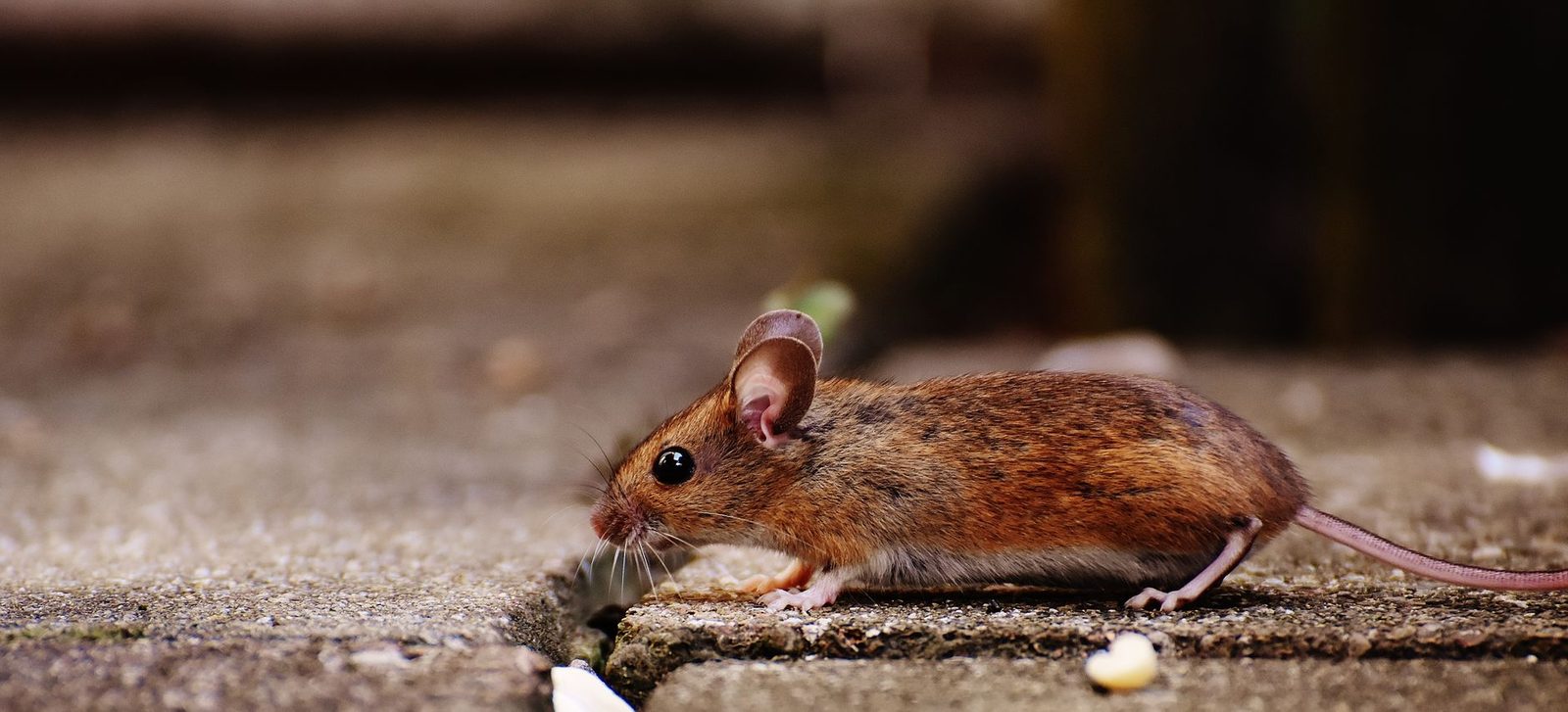
Small brown rodent with reddish fur on a concrete slab, near a crack, outside a building

The action plan from October to November

A few useful weeks remain. Here is the order of priorities.

Week 1 — Surveying the walls

Choose a sunny afternoon: that is when the bugs are visible, sitting on the walls. Walk around the building and note:

  • the faces where they gather (almost always south and south-west);
  • the cracks within a metre of the clusters;
  • the condition of window seals, shutter boxes and vent grilles.

Take photos: they will come in useful next year, because the pattern repeats itself.

Week 2 — Mechanical sealing

This is the decisive step, and it lasts. In order: shutter boxes, joinery seals, air vents, service penetrations, roof vents and ridge closures. Allow half a day for a detached house, materials included.

One often forgotten tip: deal with the garage and the cellar too. Many bugs get in under the sectional door and then reach the living space via the stairwell shaft. A brush door-bottom strip takes care of that.

Week 3 — Managing outdoor shelters

Around the house, reduce gathering areas to within less than two metres of the walls:

  • remove boards, pallets, tarpaulins and stacked pots leaning against the wall;
  • bring in or raise firewood off the ground, and never store an indoor supply, ready to release its tenants, near a radiator;
  • pick up fallen fruit: apples, pears, persimmons and figs are magnets in September and October;
  • trim back laurel, buddleia and hazel hedges touching the wall.

Week 4 — Indoor monitoring

Once a week, inspect warm, dark spots: behind curtains, on top of cupboards, around recessed spotlights, in roof-window frames. Better to remove thirty individuals in November than three hundred in February.

How to get them out of the house — without the smell

First rule: never crush them. The scent glands release highly persistent aldehydes that stain light-coloured fabrics, impregnate a windowsill for weeks and, above all, attract other stink bugs.

The soapy water method

The simplest and most effective. A container of lukewarm water with a few drops of washing-up liquid, held beneath the bug: most of them drop when you approach. The surfactant breaks the surface tension and the insect sinks within seconds. A wide-mouthed jar does the job perfectly.

The vacuum cleaner — yes, but

Vacuuming is quick, but the smell impregnates the filter and the bag, and comes back out the next time you switch on. Two precautions: use a cordless handheld vacuum dedicated to this task, and empty the canister outside immediately — or fit a tightly stretched nylon stocking in the nozzle to collect the insects before they reach the motor.

The home-made light trap

In winter, woken bugs are attracted to light. A desk lamp placed above a basin of soapy water, in a dark room, catches a surprising number overnight. Commercial light traps work on the same principle, with results that vary from room to room.

What to avoid

  • Space-spray insecticides: ineffective against insects in diapause tucked away inside a shutter box, pointless for the occupant, and inadvisable indoors. The Anses regularly points out that domestic use of biocides should remain a last resort, targeted and in line with the label.
  • Foggers and total-release "bombs": they disperse active substance throughout the room without reaching the shelters, and contaminate food surfaces.
  • Blocking an air inlet: inadequate ventilation creates damp problems far more costly than the bugs themselves.
  • Ultrasonic repellents: no demonstrated effectiveness against stink bugs. The DGCCRF has repeatedly called out the claims made for this type of product.

What about the garden? The other half of the problem

If your house is surrounded by orchards, hazel trees or a vegetable plot, the overwintering is merely the consequence of a high local population. A few levers for next summer:

  • Fine-mesh insect netting fitted over fruit trees and rows of beans, tomatoes and peppers prevents the feeding punctures that deform fruit — the signature of Halyomorpha halys (dimpled fruit, corky flesh).
  • Encourage beneficial insects: parasitoid wasps of the genus Trissolcus parasitise stink bug eggs. Trissolcus japonicus, known as the "samurai wasp", is being studied by INRAE and has already been detected spontaneously in Europe. A diverse hedgerow and the absence of broad-spectrum insecticides favour these natural regulators.
  • Pheromone traps: useful for monitoring (finding out whether the species is present and at what level), they should however be handled with care near crops, since they draw bugs into the area. Never place them against the wall of the house.
  • Reporting sightings: citizen-science platforms and regional surveillance networks use reports from members of the public to map the species' spread.

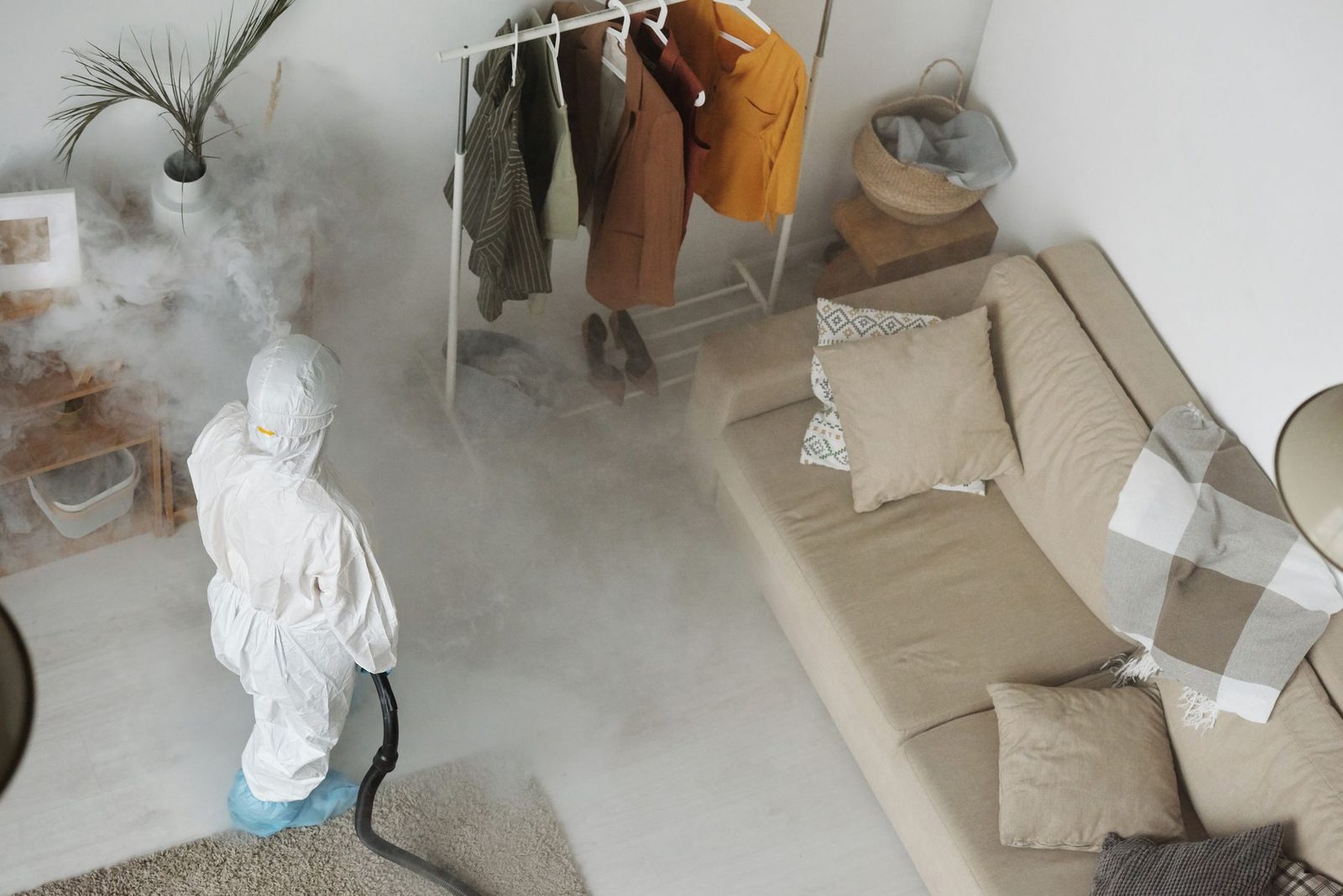
Technician in a white coverall disinfecting a living room with a steam device, vapour filling the room

When to call in a professional

In the vast majority of cases, the brown marmorated stink bug is a matter of DIY and patience. Two situations do nonetheless justify a call:

  1. Very large numbers in loft spaces, cladding or suspended ceilings, which require a building-envelope survey and work at height.
  2. Multi-occupancy buildings where the bugs travel from flat to flat through service ducts, and where treatment has to be coordinated across the whole building.

A reputable professional will begin with a survey of the entry points and sealing recommendations, not with a spray treatment. If you are offered a chemical treatment straight away, with no survey, ask for a second quote. Our benchmarks for comparing offers are set out in our articles on choosing a pest control company and on intervention prices.

The essentials in five points

  • The brown marmorated stink bug comes in to overwinter, not to feed or breed: it is harmless to people, pets and the building.
  • The starting signal is thermal: the first nights below 10 °C, generally between late September and late October depending on the region.
  • Identification comes down to one detail: two white bands on the antennae and smooth shoulders.
  • The only lasting strategy is mechanical: shutter-box seals, fine-mesh insect screens, insect-proof vent grilles, mastic on service penetrations.
  • Indoors, collect them with soapy water, never crush them, and leave the space-spray insecticides alone.

One autumn devoted to sealing is worth ten winters of collecting. And unlike many pest problems, this one can be solved once and for all.


Sources and references: Anses (monitoring and alerts on Halyomorpha halys), INRAE (research on the brown marmorated stink bug and its parasitoids), the French national platform for plant health epidemiological surveillance, DGCCRF (monitoring of repellent product claims). For biocide treatments, always refer to the product's regulatory label.

A pest problem?

Our experts act fast and for good. Request a free assessment.

Request a free quoteOur services

← Back to the blog

CallFree quote