Food bowls, kibble bags and litter trays: how our pets feed winter pests

L'équipe AntinuisiblePro · Published on October 9, 2026 · 12 min read
Man in a yellow t-shirt grimacing with a large cockroach perched on his shoulder, in front of a grey wall

Introduction: the food source nobody declares

When a pest control technician arrives at a home for a mouse or cockroach infestation, they always ask the same question: "where is the accessible food?" And in eight cases out of ten, the client's answer is the same: "nowhere, everything is put away."

Then we open the utility room. There's a 12 kg bag of kibble, already opened, folded over on itself and held shut with a clothes peg. In the kitchen, a half-full bowl that stays on the floor all night "because the cat eats whenever it wants." In the bathroom, a litter tray and its open 20-litre bag. On the balcony, a bag of bird seed. And in the laundry room, a box of hay for the rabbit.

None of these items is perceived as food by the occupants, because none of it is intended for humans. For a rodent or a cockroach, however, these are the richest, most stable and most accessible resources in the entire home. Cat kibble typically contains 28 to 35% protein and 10 to 20% fat: in terms of energy density, that is far beyond anything a pest will find in a closed bin.

This article does not rehash our content on pantry moths, stored-product pests or apartment-building cellars. It covers a specific and rarely documented angle: the "pet" area as the food foothold of an infestation, and how to neutralise it before winter 2026-2027.
Man in a yellow t-shirt grimacing with a large cockroach perched on his shoulder, in front of a grey wall

Why autumn and winter change everything

Rodents shifting indoors

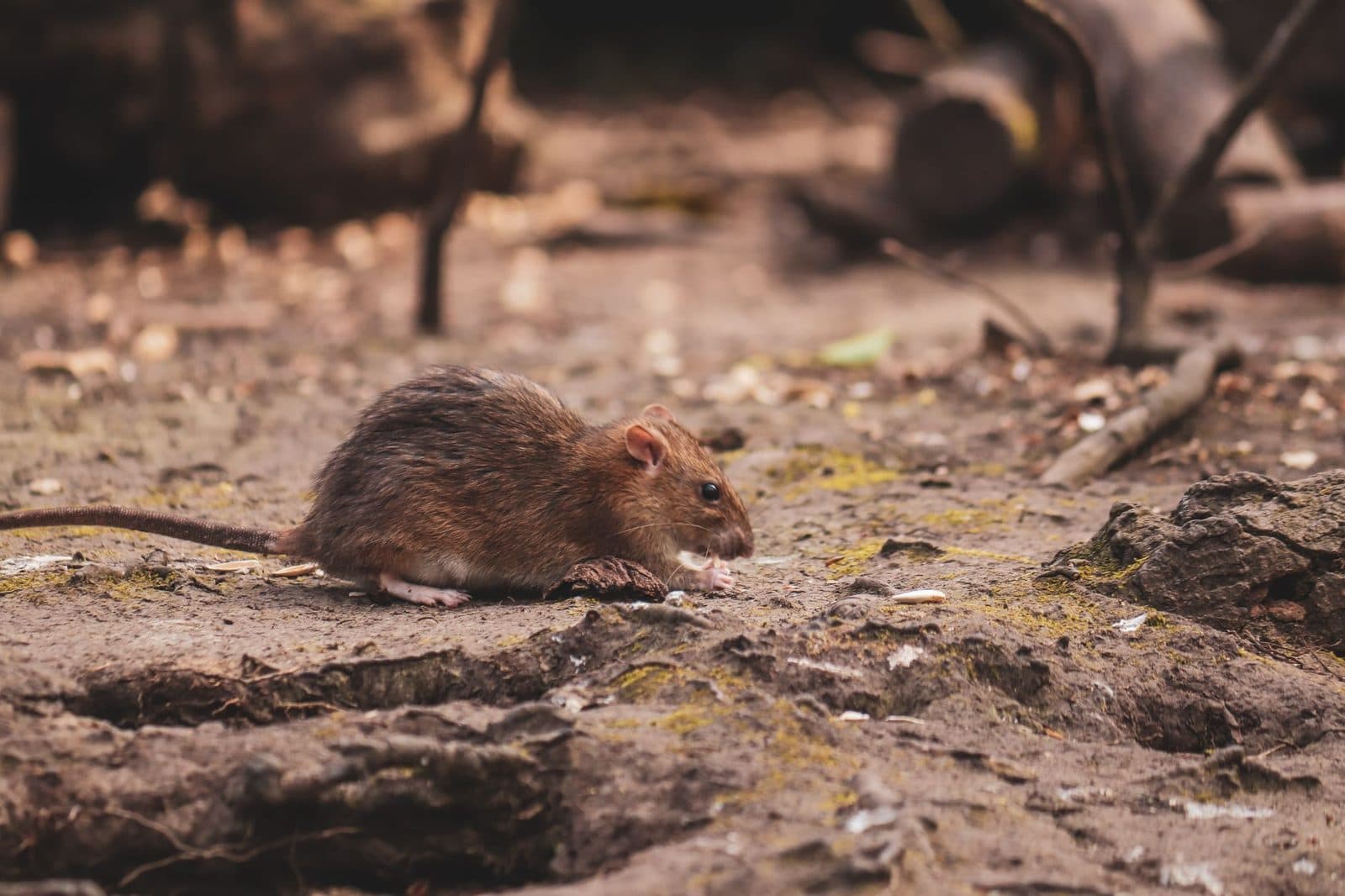
From mid-October onwards, wood mice, house mice and brown rats begin shifting their feeding towards buildings: wild berries and seeds run out, night-time temperatures drop below 8-10 °C, and the risk/reward ratio of venturing into a heated house becomes favourable. A house mouse (Mus musculus) consumes around 3 g of dry matter per day and drinks very little if its food is moist. In other words: a handful of kibble a day is enough to feed an entire colony.

This is the point that is systematically underestimated. A 12 kg bag of kibble left accessible represents, in theory, several thousand mouse-days of food. It is not an occasional source: it is an unlimited resource, one that allows a population to go from "a few individuals passing through" to "continuous breeding indoors."

The heat factor for cockroaches

For the German cockroach, the reasoning is different but converges on the same conclusion. It doesn't come from outside: it is already there, or it arrives via service ducts and parcels. What determines its rate of development is the combination of heat + humidity + fatty food. A bowl that has been rinsed but not dried, sitting near the fridge or the dishwasher, ticks all three boxes at once.

In field inspections, the three zones where German cockroaches are most often found in a family home are: behind the fridge, underneath the dishwasher, and the 50 cm zone around the pet food bowls.

Secondary storage pests

Kibble, hay, seed and rodent pellets are dry goods. They are therefore exposed to exactly the same pests as flour or pasta:

PestPet food targetedVisible sign
Clothes moth / pantry moth (food moths)kibble, seed, pelletssilky threads, clumped masses
Weevil, flour beetlebird seed, cereal pelletssmall white larvae, fine dust
Storage mitesdamp kibble, haysweetish smell, greyish powder
Booklicehay, plant-based littertiny pale moving insects

One detail matters here: storage mites (Tyrophagus, Acarus) proliferate in kibble whose moisture content rises above 12%. They are a documented cause of contact dermatitis and respiratory reactions in both animals and humans, and constitute a health argument in their own right for not keeping an open bag for six weeks in a damp laundry room.

The six most common storage mistakes

1. The folded-over original bag

The multilayer paper/plastic bag is not a storage container. It is designed for transport and retail sale. A mouse chews through it in under two minutes; a food moth lays eggs directly in the fold. Transferring the contents into an airtight kibble container with a silicone seal and clip closure solves the problem in one move, and incidentally protects the fats from oxidation (kibble goes rancid within 4 to 6 weeks of opening).

2. Direct contact with the floor

A bag sitting on a concrete slab absorbs moisture by capillary action and creates an ideal microclimate. Any pet food store must be raised at least 15 cm off the ground, on a metal shelf or a board, and kept 5 cm away from the wall so the surrounding area can be visually inspected.

3. The all-night self-service bowl

This is the most common mistake, and the one with the heaviest consequences. "Free-feeding" left on the floor from 8 pm to 7 am corresponds exactly to the activity window of rodents and cockroaches. There are two solutions, depending on the animal:

  • Cats and dogs: switch to split meals at fixed times, and remove the bowl 20 minutes afterwards. This is also recommended by most vets for weight control.
  • Animals that must eat at night: use a programmable kibble dispenser, which releases only the portion and keeps the rest in a closed hopper.
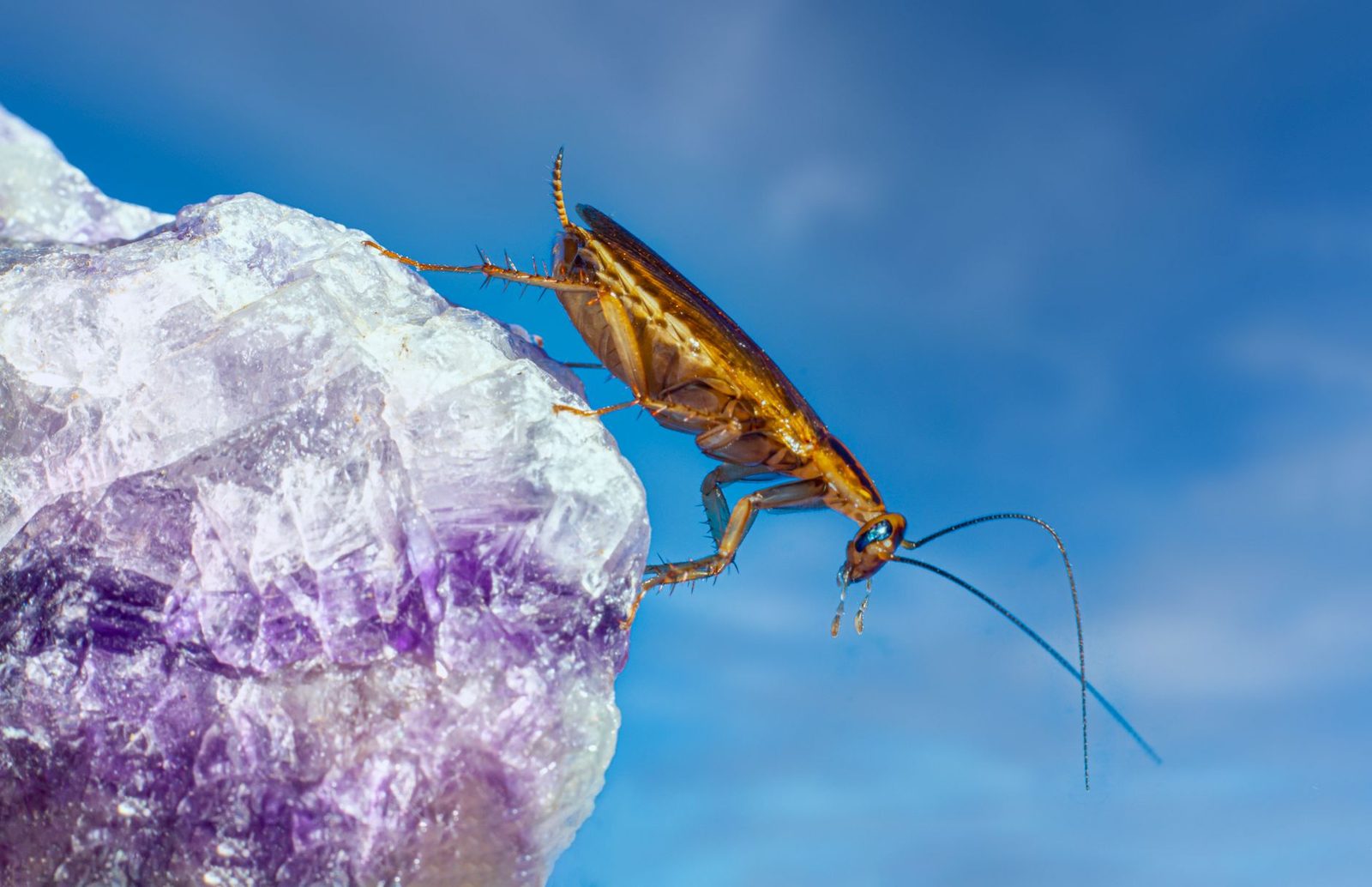
Close-up of a brown cockroach perched on a purple stone against a blue sky

4. Crumbs under and behind the bowl

A bowl is a scatter point. Kibble rolls away, gets wedged under the neighbouring unit, behind the skirting board, under the fridge. These stray pieces are invisible to the occupant and perfectly accessible to pests. A raised-edge feeding mat limits the spread; it should be lifted and washed once a week, and the nearest skirting board inspected at the same frequency.

5. Water left out permanently

The water bowl can hardly be removed — and it shouldn't be. But you need to be aware that it is a source of free water, which lifts the main constraint on rats and cockroaches. A brown rat needs 15 to 30 ml of water a day. Placing the water bowl in an open, visible, tiled area that is cleaned daily, rather than in a dark corner, changes the traffic at that point without depriving the animal.

6. Litter and droppings

Plant-based litters (corn, wood, hemp, recycled paper) are organic substrates. Not only do they attract booklice and flies, they are sometimes eaten. The litter bag must be sealed just as airtight as the kibble, and the tray emptied on a regular schedule, with the waste taken out of the home — not left in a bag sitting in the utility room until Friday. For rodent, rabbit and bird cages, soiled litter and uneaten hay must go out every day: they ferment, heat up and become a fly breeding site.
The special case of outdoor animals and garden birds

Feeding birds: worthwhile, but it needs rules

Winter feeding of songbirds is a legitimate practice, recommended by the Ligue pour la Protection des Oiseaux between November and March. But a poorly designed feeder is, in practice, a seed dispenser for rodents: seed falling to the ground creates a continuous supply line just a few metres from the façade.

The common-sense rules:

  • Hanging feeder, never placed on the ground, at least 2 metres from the house wall and 1.5 metres off the ground.
  • Model with a catch tray, or a rodent-proof feeder with a mesh guard, to limit spillage.
  • Small daily quantities, matched to actual consumption, rather than one large weekly refill.
  • Stop feeding at the end of March, in line with LPO recommendations — and stop immediately if you see signs of rodents.

Chicken coops, hutches and stables

In pest control terms, a chicken coop is high-risk equipment: grain on the ground, open water, animal heat, fermentable bedding. The essential rules come down to four points: grain in an anti-waste feeder, never on the ground, grain stored in a closed metal or rigid plastic drum, coop floor protected by a fine 6 to 13 mm mesh buried in an L-shape to a depth of 30 cm, and daily egg collection (a broken egg attracts rats and martens).

A 45-minute "pet area" audit protocol

To be carried out once before winter, then once in spring.

Step 1 — Map it out (10 min)

Write down every point where pet food, water or substrate exists in the home and its outbuildings: food bowls, water bowls, open bags, sealed reserve bags, treats, supplements, hay, seed, clean litter, soiled litter, the dedicated bin, cages, the aquarium (fish flakes are also a dry good), the outdoor feeder, the neighbour's cat food tub on the landing.

Step 2 — Inspect each point (20 min)

With an adjustable-beam torch, shining it at a grazing angle across surfaces:

  • Rodent droppings: black grains of 3-6 mm for mice, 15-20 mm for brown rats.
  • Kibble that has been moved, piled up in a corner, behind a unit, inside a shoe — the typical signature of rodent hoarding.
  • Round 6-8 mm holes in a bag, with bevelled gnawed edges.
  • Silky webbing and clumps in the kibble: food moths.
  • Fine black specks (droppings) and translucent shed skins near the bowls: cockroaches.
  • Greasy rub marks along the utility room skirting boards.

Step 3 — Repackage (15 min)

The goal: not a single gram of pet food accessible after 8 pm. All stores in rigid airtight containers, raised off the floor. Bowls removed at night, floor washed. Soiled litter taken out. Outdoor feeder adjusted.

Step 4 — Monitor

A homemade flour-patch activity detector does the job perfectly well: a thin layer of flour on a sheet of A4 card, placed overnight behind the kibble cupboard. Footprints and tail drag marks in the morning are as good as a diagnosis. You can also set out monitoring glue traps (unbaited) to objectively measure cockroach presence before and after treatment — they are a measuring tool, not a solution.

Several brown-red plastic cockroaches arranged on a white surface

Treating without endangering your pet

This is the other side of the subject, and it is too often neglected.

Anticoagulant rodenticides

Products based on bromadiolone, difenacoum or brodifacoum are second-generation anticoagulants, toxic to dogs, cats, ferrets, chickens and hedgehogs, both by direct ingestion (primary) and by eating a poisoned rodent (secondary). ANSES and the animal poison control centre regularly point out that canine rat poison intoxications are among the leading reasons for calls.

Non-negotiable rules where animals are present:

  • Never loose paste or blocks, not on a saucer, not behind a unit. Only in a secured bait station that is key-locked, fixed in place, and inaccessible to a snout or a child's hand.
  • Count the blocks placed and removed: a missing block must be accounted for.
  • Keep the product packaging: in the event of ingestion, the vet needs the exact molecule and concentration. An antidote exists (vitamin K1), but you have to know what you are treating.
  • If in doubt: call an animal poison control centre immediately (CNITV in Lyon, CAPAE-Ouest in Nantes), and see a vet without waiting for symptoms — which appear 2 to 5 days later.

Alternatives in households with pets

For low to moderate pressure, the mechanical approach is preferable: covered jaw traps, box traps, enclosed trapping stations, and above all exclusion (5 mm stainless steel mesh over pipe penetrations, brush door seals, sealing holes with mortar packed with steel wool). For cockroaches, bait gel applied as micro-dots inside cabinet hinges and service ducts remains the reference method, but it must be placed entirely out of reach of the animal, never on the floor.

Ultrasonic repellents, routinely sold as "harmless," have to date shown no demonstrated efficacy against rodents in the scientific literature, and may in fact bother dogs and pet rodents whose hearing extends far beyond our own.

Key takeaways

  • In most residential infestations, pet food is the leading genuinely accessible food resource — and the least often declared.
  • A folded-over bag is not storage: only a rigid, airtight container is.
  • Removing the bowls at night is the single most effective measure in this area.
  • Litter, hay, seed and fish flakes are dry goods subject to the same pests as flour.
  • No rodenticide should ever be placed outside a secured bait station in a household with pets; the number of an animal poison control centre should be noted down in advance.

If you see signs of rodents near a pet food store, repackaging alone will not be enough: it cuts off the resource but does not eliminate the established population. Our services include a diagnosis with mapping of entry points and a treatment plan compatible with the presence of pets, and our shop brings together suitable storage, exclusion and trapping equipment. For situations in multi-occupancy buildings, see also our article on how costs are shared between landlords, tenants and co-ownerships.

Sources and references: ANSES (rodenticide and PT14 biocide factsheets), Centre National d'Informations Toxicologiques Vétérinaires (CNITV, VetAgro Sup Lyon), CAPAE-Ouest (Oniris Nantes), Ligue pour la Protection des Oiseaux (winter feeding recommendations), French Ministry of Agriculture and Food Sovereignty (hygiene rules for animal feed).

A pest problem?

Our experts act fast and for good. Request a free assessment.

Request a free quoteOur services

← Back to the blog

CallFree quote