There are few phone calls as tense as this one: "there's a rat in my toilet, what do I do?". The scenario is almost always the same. Someone gets up in the night, switches on the bathroom light, and sees a brown rodent swimming in the bowl or setting its paws on the seat. Sometimes the rat is already out and darting behind the washing machine. Sometimes you don't see it at all: you only hear scratching inside the soil stack, or you find dark, spindle-shaped droppings near the garage floor drain.
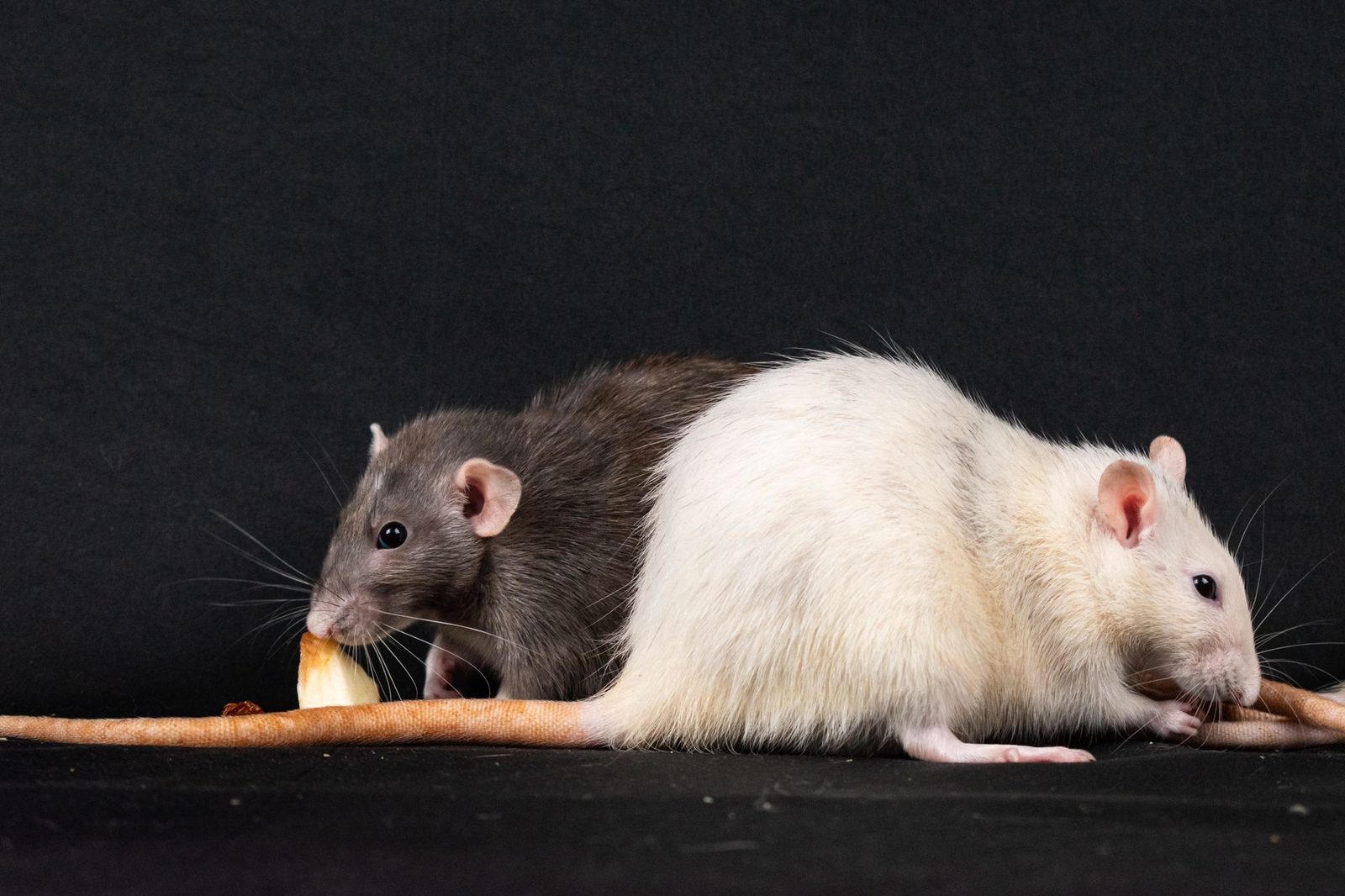
The first thing to know, and it matters: a rat coming up through the drains has nothing to do with how clean your home is. It comes from the drainage network, not from your kitchen. The brown rat (Rattus norvegicus), the species involved in the vast majority of cases in the Île-de-France region, is an excellent swimmer, able to hold its breath for several minutes and to move along a partially surcharged pipe. It doesn't "choose" your house: it follows a pipe, finds an open passage and emerges wherever something gives way.
This guide explains what to do in the first ten minutes, how to tell whether the problem lies in your private connection or in the public network, which equipment really shuts the door, and when it's time to stop improvising.
The first ten minutes: what to do, in order
The panic reflex is to flush and hope "it goes back down". That's a bad idea: a brown rat stuck in a trap full of turbulence will try to get out at the top, not at the bottom.
- Close the lid and put a weight on it. A bucket of water, a toolbox, a crate of bottles: anything from 5 to 10 kg. A rat can lift a light lid, but not a weighted one.
- Get pets and children out of the room and close the door. Slide a rolled-up towel along the bottom of the door if there's a gap.
- Don't try to catch it by hand, even with gloves on. A brown rat's bite is deep and the infection risk is real (see below).
- Wait 20 to 30 minutes before reopening. A rat that finds no way out at the top often ends up leaving the way it came, especially once the room is quiet and dark again.
- If the animal has got out into the room, leave it a route to the outside (garage door, French window) and block access to the rest of the home. A cornered rat bites; a rat with an exit takes it.
- Afterwards, clean with gloves on and a disinfectant: diluted bleach (one part to nine parts water) or a household virucidal disinfectant. Never dry-sweep droppings or dried urine, as this puts particles into the air. A pair of heavy-duty protective gloves and a roll of heavy-duty bin bags kept in the cleaning cupboard will save you improvising at 3 a.m.
Worth noting: if you have been bitten or scratched, wash thoroughly with soap and water, disinfect, and seek medical advice. France's health insurance service (Ameli) points out that an animal bite wound warrants a medical opinion, with a check on tetanus vaccination status and sometimes a course of antibiotics. Make a point of saying it was a rodent: that will steer the doctor towards the question of leptospirosis, whose cases Santé publique France monitors in mainland France and for which rats are the main reservoir.
Why it ends up in your house, and not your neighbour's
A rat doesn't cross a water-filled trap by chance. There is always a mechanical cause upstream. The most common ones, in the suburban housing stock of Val-de-Marne:
- A cracked asbestos-cement, stoneware or old cast-iron pipe. Many houses in Champigny-sur-Marne, Saint-Maur-des-Fossés or Nogent have sewer connections dating from before 1970. A crack or an unsealed joint is an open door onto the soil and onto the network.
- An inspection chamber or connection box without a sealed cover. A cracked cover, or one simply laid in place, is a classic.
- A dried-out floor drain in a garage, cellar or utility room. This is the number one cause of discreet intrusions. If the water in the trap evaporates (little-used room, dry summer, heating), all that's left is an open hole into the sewer.
- A disused soil stack after renovation work: an old WC removed, a cellar sink disconnected, a pipe cut and blocked off with nothing more than a rag or a plastic bag.
- Works on the public network or a jetting operation that abruptly displace an established population. After sewer work, scattered rats look for new access points for several days.
- Flooding or a violent storm that surcharges the network: the animals flee upwards. In an area crossed by the Marne and the Seine, this is a factor worth knowing about, especially in late autumn and winter.
The simple floor drain test
Pour a bucket of water into every floor drain in the house (garage, cellar, utility room, little-used wet room). Come back 48 hours later: if the level has visibly dropped, the trap is draining or evaporating and needs fitting out. Mark the drains concerned — these are your weak points.
The equipment that genuinely closes off the passage
There are plenty of "solutions" that don't last a single night: expanding foam on its own, a plastic bag shoved into a pipe, a slotted plastic grate. The brown rat gnaws through flexible PVC, polyurethane foam and softwood. What holds up is metal and mechanics.
The rodent-proof non-return valve. This is the reference answer when intrusions come up the wastewater pipe. It's a component fitted to the pipe, usually in the connection chamber or on the WC branch, with a stainless steel flap that lets effluent through in the direction of flow and closes behind it. Two points to watch:
- it must be sized to the actual diameter of the pipe (most often 100 or 125 mm for a WC branch);
- it needs access for maintenance. A valve clogged with wet wipes no longer closes and can cause backflow. If you don't have an accessible chamber, this is a plumber's job, not a DIY project.
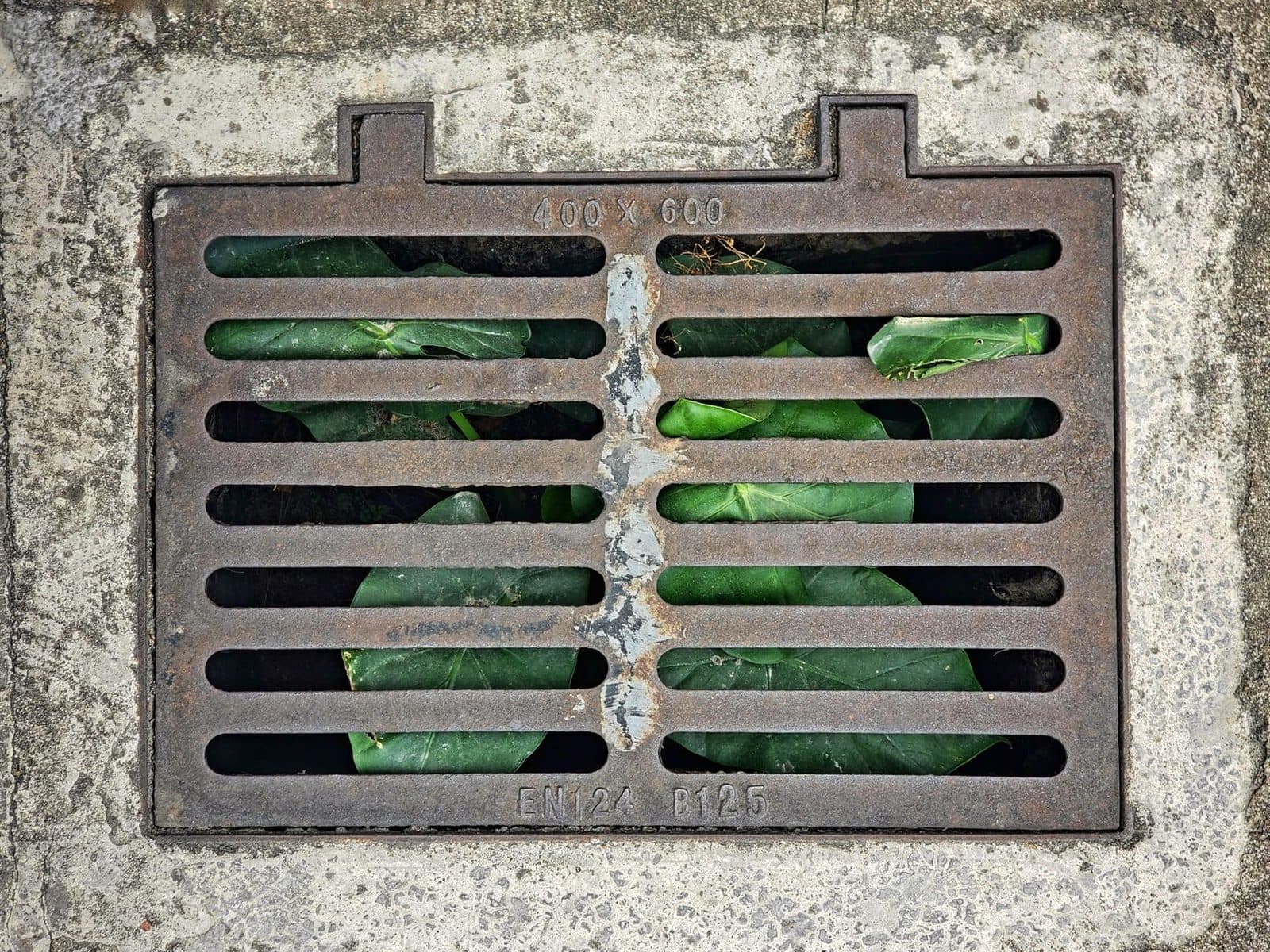
The screwed stainless steel floor drain grate. Replace clip-in grates with a screwed stainless steel model with a tight mesh. A stainless mesh basket dropped into the trap adds a useful secondary barrier in garages. For traps that dry out, there are membrane waste fittings (flexible flap or ball) that stay shut in the absence of flow.
Wire mesh for penetrations. Every pipe penetration through a wall or slab (water supply, washing machine waste, electrical conduit) should be sealed by first packing the opening with crumpled stainless steel wire mesh, then sealing with mortar. A roll of fine-mesh stainless steel mesh of 5 to 6 mm is one of the few consumables that permanently settles a dozen entry points. A rat can't get through a 6 mm opening; a mouse can, so you need to go finer still for mice.
The sealed, locked chamber cover. If your connection box has a cracked cover, replace it. It's an inexpensive part that eliminates a direct access point.
What about toilet stoppers? There are devices designed to be fitted inside the WC pan connector. They are useful as a supplementary measure in a building where you know where the problem is coming from, but they are no substitute for a diagnosis: if the rat is already moving through your private connection, it will find another outlet (a trap, an overflow, a cellar stack).
Working out where it comes from: private or public?
This is the question that determines who pays and who intervenes. The boundary is generally the connection box (the chamber at the property line, often under the pavement or just behind the gate).
| Where the problem is | Who deals with it | What you need to do |
|---|
| Between your appliances and the connection box (private pipework, traps, cellar stack) | The property owner | Have it inspected, repaired, fitted out (valve, grates, sealing) |
| Connection box and link to the public sewer | Depending on local sewerage regulations, often the sewerage service for the part under public land | Report it to the sewerage service of the municipality or inter-municipal authority |
| Public sewer, drain, street network | Sewerage service / municipal hygiene and health department | Report it; request that the rat control campaign be carried out |
| Neighbouring plot, wasteland or abandoned premises at the origin of the population | The landowner, with possible intervention by the town hall's hygiene department | Write to the owner, then file a written report with the town hall |
In practice, for a single-family house, we recommend this sequence:
- Document everything. Photos, dates, times, number of animals seen, precise location (ground-floor WC, garage floor drain, etc.). A small spiral-bound notebook left near the front door is enough, and this log is worth its weight in gold if you later have to write to the town hall, the estate's managing agent or your insurer.
- Report it in writing to the sewerage service and, at the same time, to your municipality's hygiene and health department. Towns across the département run periodic rat control campaigns on the network and at waste collection points; a detailed report from you helps get your street prioritised.
- Have your connection inspected. A camera survey (CCTV inspection) generally costs a few hundred euros and identifies the crack, the collapse or the abandoned connection. It's the most worthwhile investment in the whole case: without it, you're treating symptoms.
- Deal with the population, alongside the sealing work. Sealing without treating leaves animals shut inside the structure; treating without sealing simply lets the next ones in.
What you should not do yourself
The most important point in this article. The use of rodenticides in this context is tightly regulated and often counter-productive for a private individual.
- No baits dropped into pipes, chambers or traps. That is a job reserved for trained operators, with baits and holders designed for wet environments. Throwing a block into a chamber means watching it wash away with the first flow and contributing to contamination of the network.
- Second-generation anticoagulants (bromadiolone, difenacoum, brodifacoum, etc.) are biocidal products regulated at European level. ANSES regularly restates the rules: baits must be in a secured bait station inaccessible to children, pets and non-target wildlife, no outdoor use without justification, and uneaten baits must be collected and disposed of. If you are treating the area around a house, a lockable secured bait station is the non-negotiable minimum.
- Beware of secondary poisoning. Cats, dogs, hedgehogs, owls and corvids are contaminated by eating poisoned rodents. In a garden with a cat or a chicken coop, mechanical trapping is often preferable: snap rat traps set under a protective box, along walls and runways, give fast and verifiable results.
- No off-the-books products. Preparations sold without any mention of authorised uses, "homemade" mixes based on plaster, cement or cola, ultrasonic devices: none of that controls a population connected to a sewer.
A powerful rechargeable torch will serve you better than any miracle product: it lets you inspect chambers, under-sink voids, the tops of partition walls and cellar corners — in other words, find the runs (greasy smear marks), the droppings and the access holes. It's the diagnosis that solves a rat problem, not the amount of bait.

Signs to watch for after the incident
A rat seen in the toilet is rarely a lone animal. Over the following two to three weeks, keep an eye out for:
- dark droppings, 1.5 to 2 cm long, spindle-shaped, clustered along walls or near the floor drain;
- signs of passage: greasy marks on skirting boards, dust swept clear in a cellar corner, footprints in a dusty garage;
- scratching or scurrying noises at night inside a partition wall, a suspended ceiling or a service duct;
- a persistent ammonia smell in a cellar or pantry;
- gnawed cables or pipes: dishwasher supply, electrical conduit, fibre optic cable. Damage to utilities, if properly documented, may fall under your home insurance depending on the cover taken out — all the more reason to photograph everything from day one.
If one or more of these clues is confirmed, the problem is no longer an accidental intrusion but an established population within the fabric of the building.
When to call a professional
Call without delay if:
- you have seen more than one animal, or an animal in broad daylight (a sign of high density);
- the intrusion recurs despite a weighted lid and traps refilled with water;
- you have young children, a vulnerable person or a pet in the home;
- you suspect a collapsed pipe or an abandoned connection: that calls for a diagnosis, not bait;
- there has been a bite or direct contact (alongside a medical consultation).
A serious intervention, in this type of case, always has three strands: a diagnosis of the drainage network and the building (locating access points, testing traps, examining chambers), mechanical proofing (valve, stainless steel grates, sealing) and controlled treatment with secured stations and follow-up visits. Steer clear of jobs that amount to putting down three boxes and driving off.
To understand what the work involves in detail, see our services page and the rat and mouse control page; indicative prices are set out on the pricing page. We cover all the municipalities listed on the service areas page, from Champigny-sur-Marne to Vitry-sur-Seine, by way of Créteil, Saint-Maur-des-Fossés and Nogent-sur-Marne. If a cellar has been flooded or soiled, disinfection rounds out the treatment. A few basic accessories are also listed in our shop.
To go further into rodents' indoor travel routes, read Crawl spaces and service ducts: pests' invisible motorways ahead of winter 2026 and, for the urban angle, Rat proliferation in cities: understanding and responding.
Key takeaways
- A rat in the toilet comes from the drainage network: weight down the lid, isolate the room, wait, then disinfect with gloves on.
- The cause is always mechanical: a dried-out trap, a cracked pipe, an unsealed chamber, a disused stack.
- What lasts over time: a correctly sized rodent-proof non-return valve, screwed stainless steel grates, mortared-in wire mesh, a sealed chamber cover.
- The private/public boundary is settled at the connection box: document, report in writing to the sewerage and hygiene services, and have a camera survey carried out.
- Rodenticides are not something to improvise: secured stations are mandatory, and the risk to pets and wildlife is real.
A rodent coming up through the drains is a problem that can be solved, but rarely with a single action. If the intrusion has happened more than once or you don't know where it's getting in, contact us for a diagnosis. In an immediate situation — an animal in the home, a bite, an infested cellar — go straight to our emergency page.