Carpenter Ants and Wood-Boring Insects: The Timber Survey to Do Before Autumn 2026

L'équipe AntinuisiblePro · Published on August 23, 2026 · 12 min read
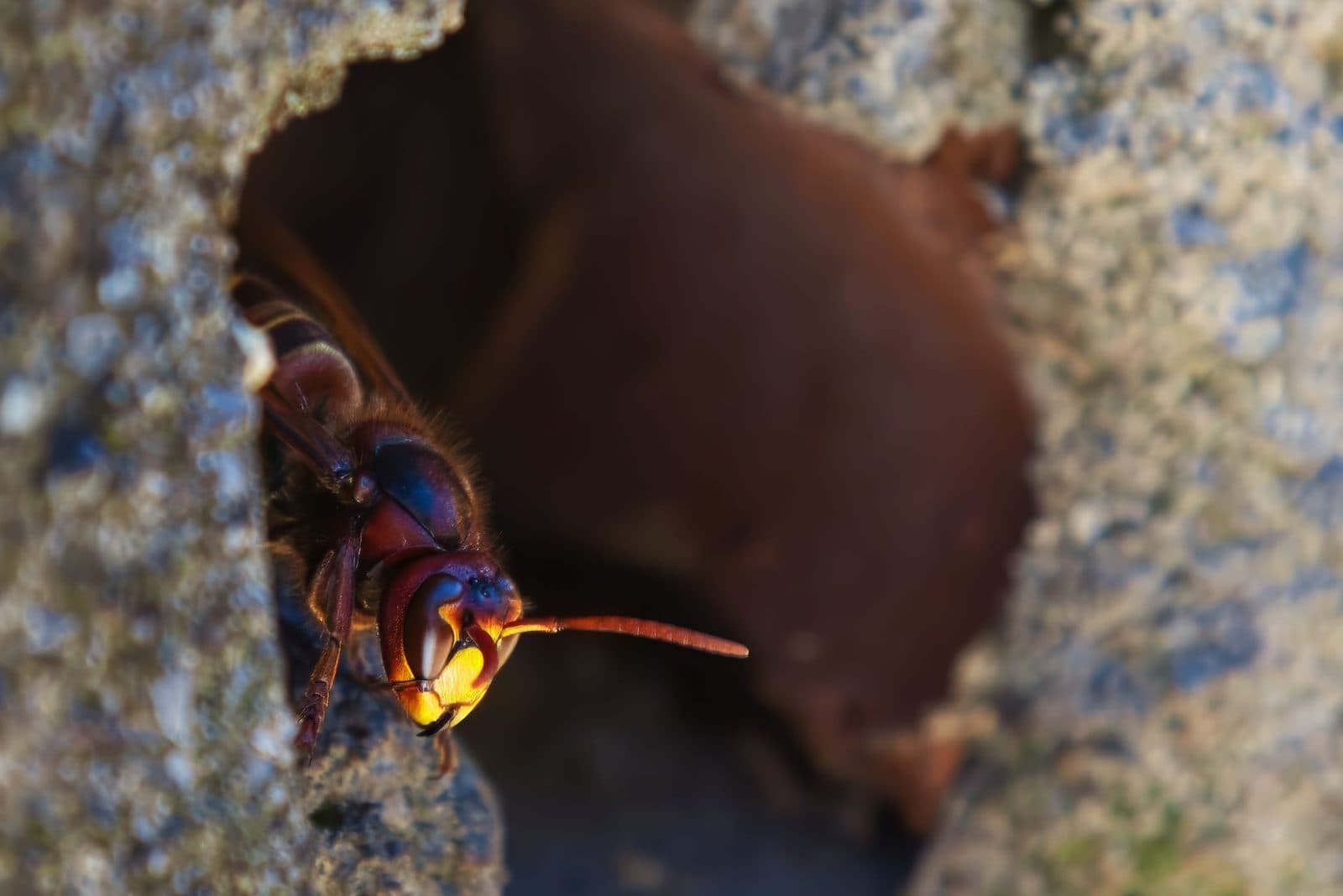
Close-up of a hornet emerging from a cavity in a stone wall

Introduction: the pest that doesn't sting, but costs the most

There is an unspoken hierarchy in the way people rank household pests. At the top, the ones that bite or sting: tiger mosquitoes, bed bugs, hornets. In the middle, the ones that disgust: cockroaches, rats, flies. And right at the bottom, almost invisible, the ones that eat the house itself.

Yet it is this last category that generates the heaviest bills. A bed bug infestation can be dealt with for a few hundred to a few thousand euros. A roof structure weakened by twenty years of house longhorn beetle activity runs into tens of thousands of euros of structural repair — before you even count the scaffolding and stripping the roof covering.

The end of summer is the ideal moment for this survey. Lofts are dry and accessible, the low raking light of August and September picks out surface relief on beams, and above all: carpenter ant swarming and the emergence of adult wood-borers have just taken place. The evidence is fresh and still readable. In three months' time, dust and damp will have blurred everything.
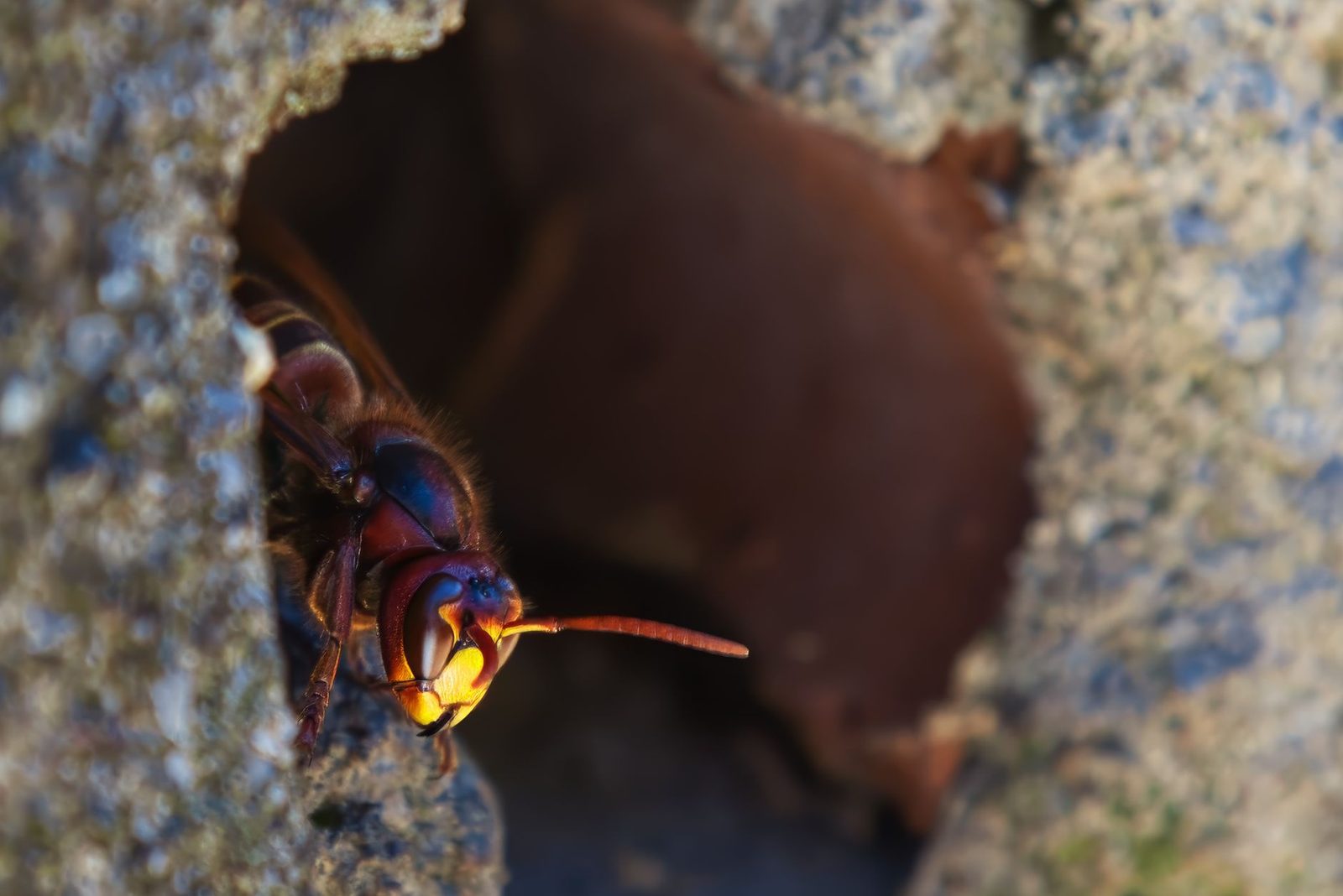
Close-up of a hornet emerging from a cavity in a stone wall

The four suspects: know what's eating your timber

Before any treatment, you have to identify the culprit. Strategies differ radically from one species to another, and aiming at the wrong target means spending money for nothing.

PestWhat it attacksCharacteristic signSpeed of damage
Carpenter ant (Camponotus spp.)Wood that is already damp or decayedCoarse sawdust in piles, mixed with insect corpses, rustling at nightSlow but continuous
House longhorn beetle (Hylotrupes bajulus)Softwoods, sapwood in new to moderately old roof timbersOval holes 6–10 mm, audible gnawing soundVery severe, invisible for a long time
Common furniture beetle / woodworm (Anobium punctatum)Hardwoods and softwoods, furniture, floorboardsRound holes 1–3 mm, frass as fine as talcModerate
Subterranean termite (Reticulitermes spp.)All timber, paper, plasterboardEarth tubes, hollowed-out wood with no surface holesFast and discreet

The carpenter ant: a widespread misunderstanding

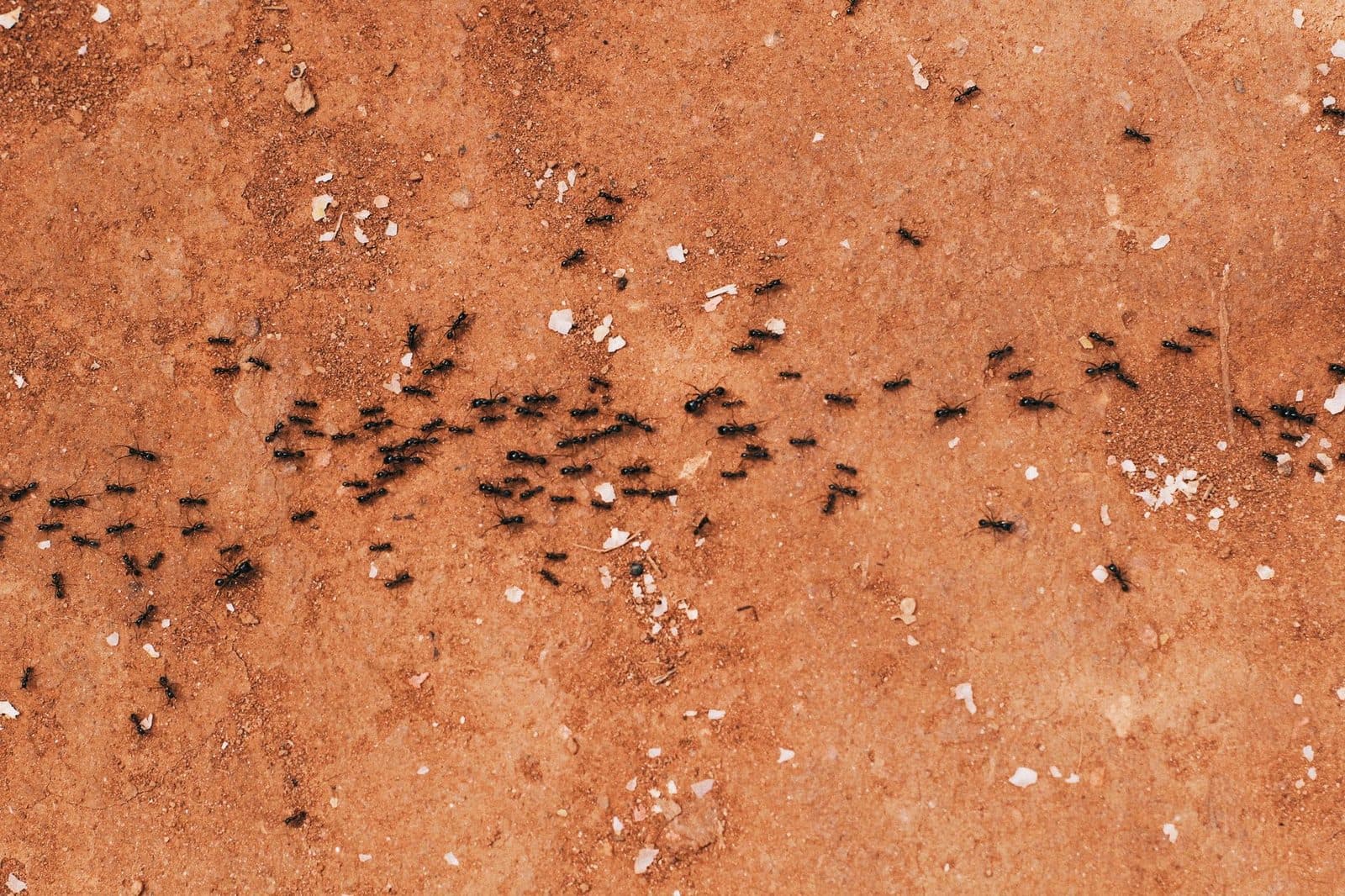
Contrary to popular belief, the carpenter ant does not eat wood. It excavates it to build its nesting galleries, pushing the shavings out. That is a fundamental difference: it almost never attacks sound, dry timber.

Its presence is therefore first and foremost a symptom. Wherever it settles, there is moisture: an old roof leak, an overflowing gutter, a post base in contact with damp masonry, a poorly protected window lintel. Treating the ants without treating the damp is mopping the floor without turning off the tap.

Camponotus is the largest ant in mainland France: 6 to 15 mm depending on the caste, black or two-tone black and red depending on the species. It is most often noticed in spring and summer during swarming: dozens of winged individuals suddenly appear indoors, often near a window. Winged ants coming out from inside the house — rather than getting in from outside — signal a nest established within the structure.

The house longhorn beetle: the most formidable

If one single insect warrants a serious inspection of your roof structure, this is it. The larva of Hylotrupes bajulus develops over three to ten years in the sapwood of softwoods, boring galleries that can reduce a beam to a shell while the surface remains perfectly smooth.

The adult only emerges at the end of its cycle, cutting an oval exit hole 6 to 10 mm across. In other words: by the day you see the holes, the attack is already several years old. The earliest sign is acoustic: in warm weather, in the silence of a loft, you can distinctly hear a steady rasping, like a fingernail on cardboard. A wide-beam head torch and a moment of absolute silence are often enough to confirm it.

Woodworm: discreet but persistent

Anobium punctatum leaves round holes 1 to 3 mm across and extremely fine, almost floury frass. It readily attacks old floorboards, furniture and panelling. The death watch beetle (Xestobium rufovillosum), rarer, prefers hardwoods already attacked by fungus and produces a curious tapping courtship signal in spring.

Beware the classic trap: holes do not mean an active infestation. Timber attacked sixty years ago still shows its holes. The sign of activity is fresh, light-coloured frass that reappears after you have cleaned the area.

Termites: the only case governed by law

Subterranean termites are subject to a specific regulatory regime. The French Construction and Housing Code requires, in zones defined by prefectural order, a termite presence report when a built property is sold, valid for six months. Declaring any confirmed presence to the town hall is also compulsory. The départements concerned are listed by the Observatoire national termite and by the prefectures; the South-West, the Garonne valley, the Loire valley and part of the Atlantic seaboard are particularly exposed.

Crucial point: termites do not open holes at the surface. They consume the wood from the inside, leaving a thin outer skin intact. Timber that sounds hollow when tapped with a hammer, a skirting board that a screwdriver pierces without resistance, earth tubes running along a cellar wall: these three signs should prompt an immediate call to a certified professional.

The inspection protocol: two hours, a torch and a screwdriver

Here is the method used by surveyors, adapted for a methodical homeowner.

1. Get your kit together. A powerful head torch with an adjustable beam is tool number one: it frees both hands and, held to cast raking light, reveals relief that is invisible head-on. Add a sturdy flat-head screwdriver, a light mallet, a tape measure and a notebook.

2. Start with the damp areas. The underside of the roof covering around chimneys and valleys, post bases, wall plates in contact with masonry, dormer surrounds. Statistically, these are the dominant entry points for carpenter ants and for wood-decaying fungi.

3. Sound the timber. Strike the beam with the mallet every 30 cm. A dull, muffled sound, different from the clear ring of sound timber, indicates loss of material. Then push in the tip of the screwdriver: if it penetrates more than 5 mm effortlessly into dry softwood, there is a problem.

4. Look for fresh frass. Vacuum beneath the suspect beams, note the date, and come back a fortnight later. New sawdust = active attack. A pin-type wood moisture meter is a useful complement to the reading: above 20 % moisture content, wood becomes attractive to ants and vulnerable to fungi.

5. Photograph and date everything. Every suspect area, with an object for scale. This file will serve you when dealing with a contractor, an insurer or a seller.
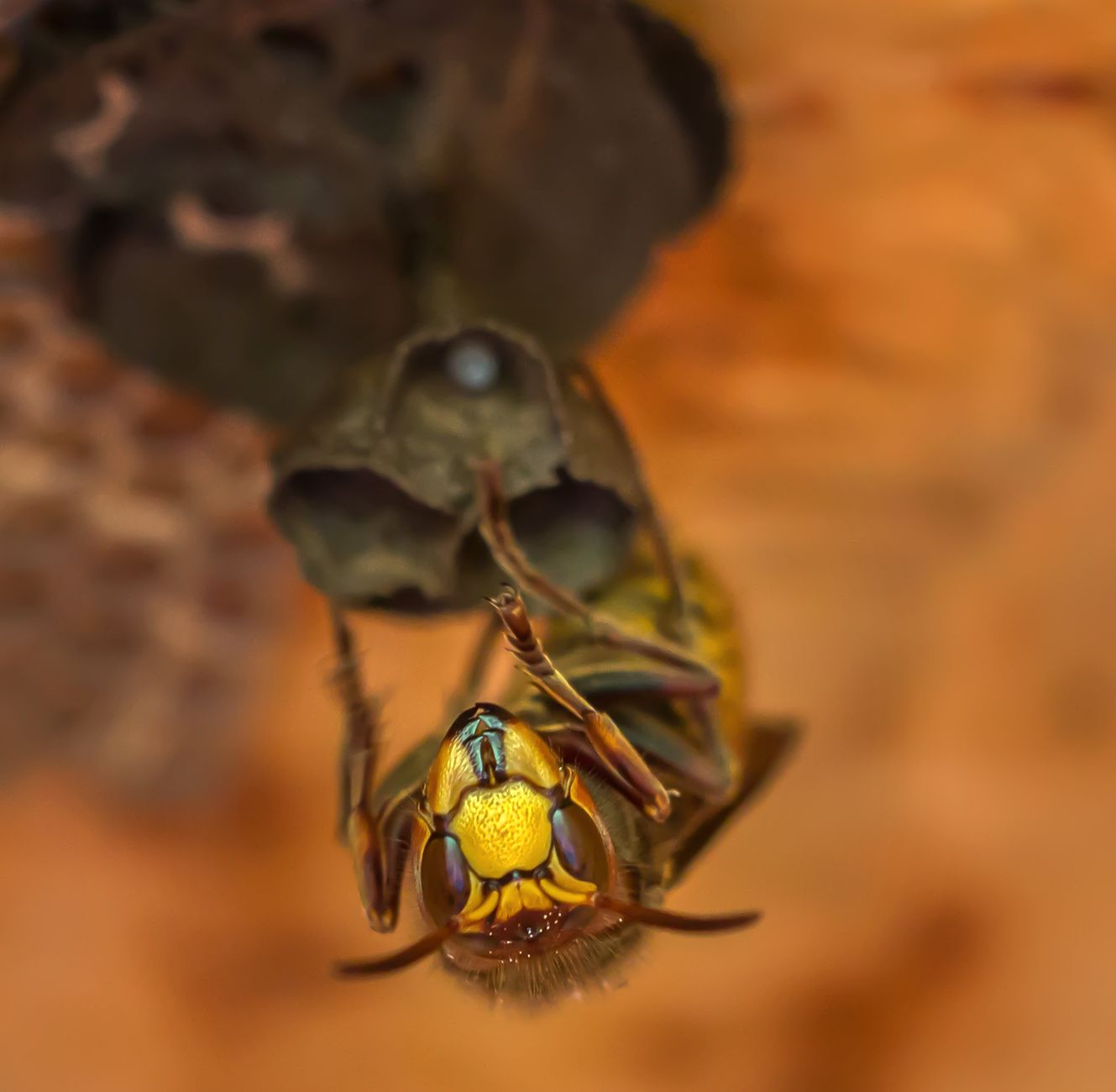

Macro close-up of a yellow-faced wasp clinging to the underside of a paper nest

What works, and what doesn't

False good ideas

An insecticide spray applied to a beam penetrates no more than a millimetre into the wood. The larvae live two, three, sometimes five centimetres deep. The aerosol kills a few passing adults and creates the illusion of action.

The same logic applies to over-the-counter "ant killer" products used as sprays: they kill the visible workers, which pushes the colony to fragment its nest — a budding phenomenon well documented in several ant species, which multiplies the number of nests instead of reducing them.

For carpenter ants: bait plus drying out

The effective strategy has two parts.

First, remove the source of moisture: fix the leak, clear the gutter, ventilate the loft, break the contact between timber and damp masonry. Without that, any treatment is temporary.

Then use gel ant baits with delayed action rather than sprays. The principle is trophallaxis: the workers carry the bait back to the nest and share it with the larvae and the queen. You have to accept seeing more ants for a few days — that is the sign the bait is being taken. Allow two to four weeks for an average colony to collapse. A refillable ant trap placed on the trails (along a skirting board, on a window sill) lets you track the drop in activity objectively.

Finally, cut the vegetation bridges: a branch touching the roof is a motorway. Keeping 1.5 m between plants and the façade greatly reduces re-colonisation.

For structural timber borers: curative treatment

A serious curative treatment of a roof structure always follows the same sequence:

  1. Chiselling out: exposing sound timber by removing degraded material with a gouge.
  2. Thorough dust removal across the structure.
  3. Injection of product into holes drilled every 30 to 40 cm in a staggered pattern, using valve injectors.
  4. Surface spraying in two passes.
  5. Replacement of members whose remaining cross-section is insufficient — that is a structural calculation, not a judgement by eye.

This kind of work is for a qualified firm. Insist on a ten-year (décennale) guarantee on the treatment, a detailed intervention report with quantities and the trade name of the product used, and its marketing authorisation number. Wood treatment products fall under the European Biocidal Products Regulation (PT8), assessed in France by ANSES: a professional should be able to hand you the safety data sheet without hesitation.

For a homeowner wanting to protect a small structure preventively — garden shed, cladding, decking, new posts — a preventive wood treatment product brushed onto dry, bare timber remains relevant, provided you respect the drying times and the respiratory protection recommended by the INRS.

What it costs, and who pays

Typical figures observed on the French market in 2026:

ServiceIndicative range
Wood-borer survey / parasitic condition report by a professional€100 to €250
Termite presence report (for a sale)€90 to €180
Curative roof timber treatment (chiselling + injection + spraying)€25 to €60 per m² treated
Anti-termite treatment by perimeter chemical barrier€3,000 to €10,000 depending on the linear metres
Replacement of roof structure membersOn quotation, often > €5,000

As for responsibility: structural treatment of the roof timbers falls to the owner, never the tenant, since it concerns the building envelope. In a block of flats, shared roof timbers are the responsibility of the owners' association. A tenant who notices carpenter ants or fresh frass would be well advised to report it in writing, with dated photographs, to protect their rights.

Household multi-risk insurance policies rarely cover damage caused by wood-boring insects, which is treated as progressive lack of maintenance. In the case of a sale, however, the discovery of a concealed infestation may amount to a hidden defect or a breach of the duty to inform — hence the importance of keeping a full record of your observations and quotations.

Technician in a white coverall, mask and gloves spraying a product onto a table in a living room

Prevention: five habits that change everything

  • Ventilate the loft. A ventilated loft stays below 18 % moisture, the threshold under which neither ants nor wood-decaying fungi thrive. An indoor hygrometer left in the loft for a season will tell you very quickly whether your roof breathes.
  • Never stack firewood against the house. It is the number one reservoir of longhorn beetles, woodworm and ants. Minimum distance: 3 metres, on a raised support.
  • Remove stumps and dead wood from the garden. A decaying stump 5 metres from a wall is a Camponotus colony waiting to move house.
  • Check the gutters twice a year, in April and October. Almost every carpenter ant infestation begins with chronic overflowing.
  • Inspect the roof structure every two years. Fifteen minutes, torch in hand. It is the best time-to-savings ratio in the whole of domestic pest prevention.

When to call a professional without delay

Three situations allow no procrastination:

  1. Suspected termites — earth tubes, hollowed-out timber, presence in a zone covered by a prefectural order. Declaration to the town hall is compulsory.
  2. A load-bearing beam sounding hollow over more than 30 cm of its length. The risk is structural.
  3. Mass swarming of winged ants indoors two years running, a sign of a mature, established colony.

For everything else, a survey carried out properly at the end of summer will give you the right answer: either you close the loft hatch reassured for two years, or you commission a quotation fully informed, before the job doubles in size.

To go further on the other pests found in the home, see our prevention advice and our overview of treatment services. A selection of detection and treatment equipment is also available in the shop.

Sources and references

  • ANSES — assessment of PT8 biocidal products (wood preservation).
  • French Construction and Housing Code, articles relating to parasitic condition reports and termite control.
  • INRS — guidance sheets on preventing risks associated with wood treatment products.
  • Observatoire national termite / prefectural orders delimiting contaminated zones.
  • CTBA / FCBA — technical standards on curative treatment of timber in service.

A pest problem?

Our experts act fast and for good. Request a free assessment.

Request a free quoteOur services

Back to the blog

CallFree quote