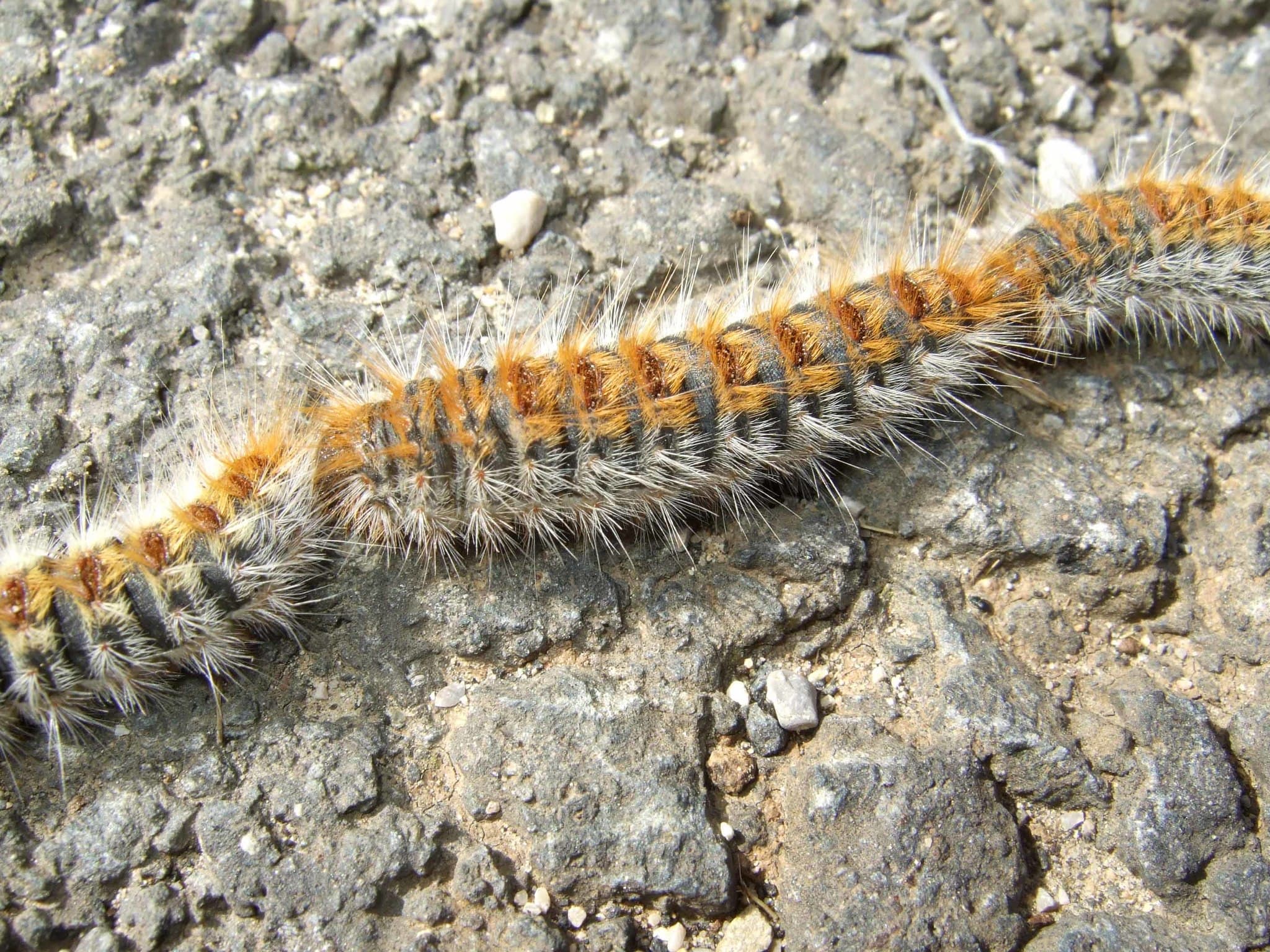
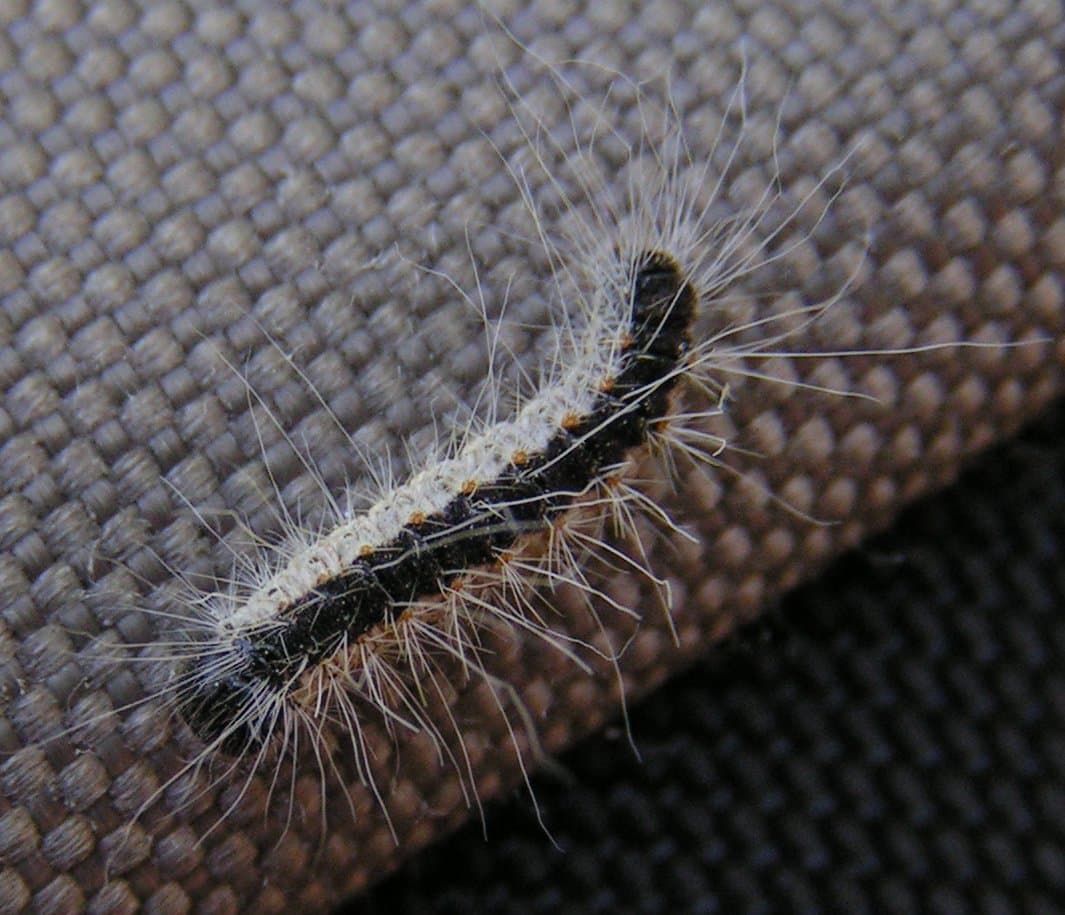
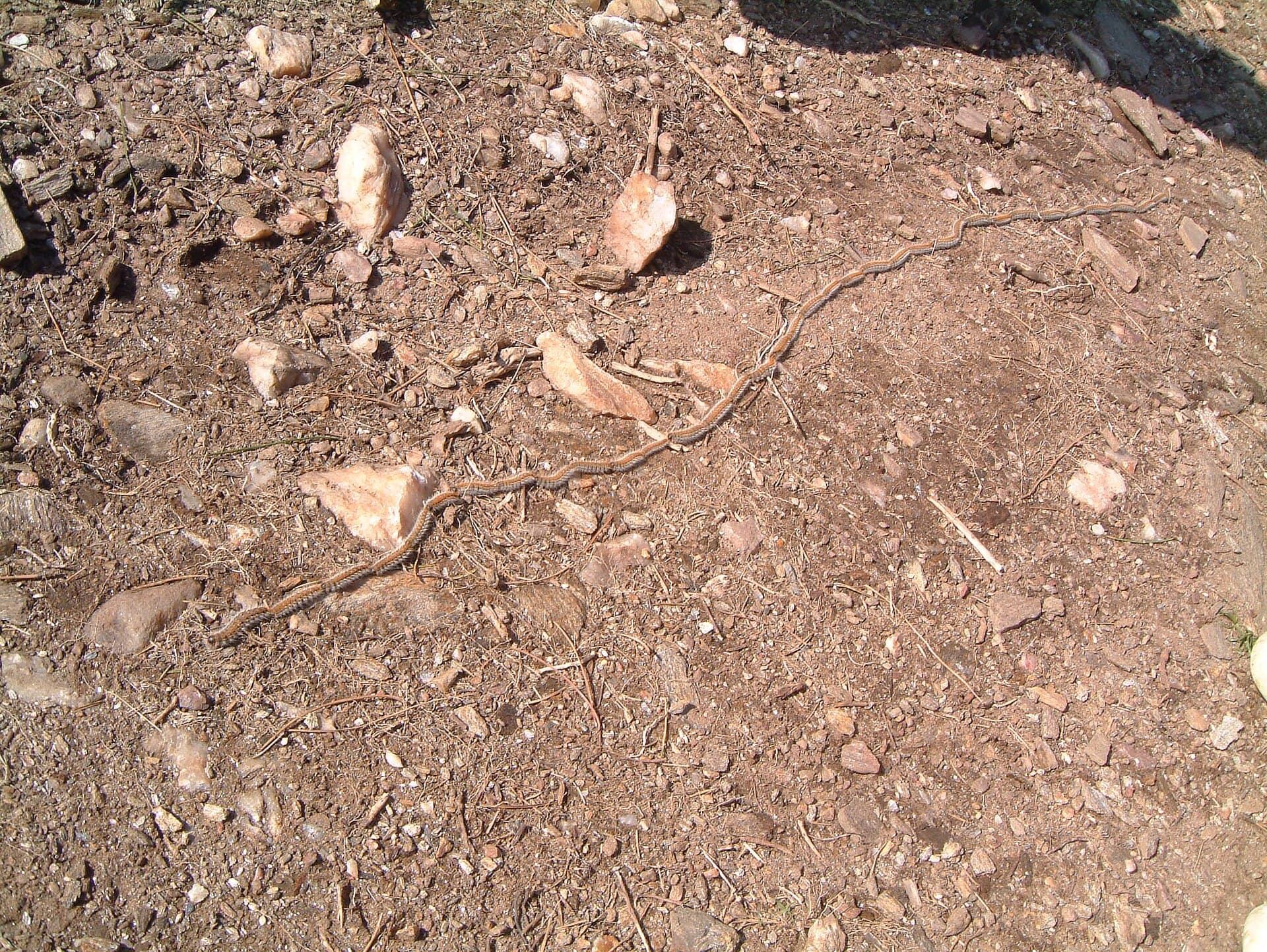
On 17 July 2026, La Dépêche du Midi reported a most unusual experiment: in Saint-Jean, a suburb of Toulouse (Haute-Garonne), municipal agents used paintball guns to fire, into the canopy of pine trees, biodegradable micro-beads soaked in synthetic pheromone. The goal: to saturate the air around the trees and disorient the male moths, preventing the reproduction of the pine processionary caterpillar (Thaumetopoea pityocampa). Three pilot sites were treated: the Marie-Louise-Dissard school, the chemin de Belbèze kiosk, and the Tuilerie lake. This initiative, part of a broader biological and integrated pest management strategy, has reignited the debate on alternatives to chemical insecticides. Here is the full picture.
Mating disruption, what is it?
The technique is no field fantasy: it is a biocontrol method validated by INRAE (the French National Research Institute for Agriculture, Food and Environment) and deployed by the FREDON network since the early 2010s against the pine processionary moth.
The principle is simple. The female moth releases a sex pheromone — the (+)-disparlure — to attract males and mate. By continuously diffusing this same molecule into the air at high concentration, a "chemical fog" is created that masks the female's olfactory trail. The male circles endlessly, cannot find the female, and fertilisation never happens. No eggs, therefore no caterpillars the following season.
INRAE and FREDON document mating reduction rates of 80 to 99% in well-treated zones, on continuous plots of at least 5 to 10 hectares. Below that, the edge effect — males coming from outside — limits effectiveness.
Why did Saint-Jean choose paintball?
Saint-Jean did not invent the method but sought to adapt it to its urban fabric. The town has many pines (umbrella pines, Aleppo pines) right next to schools, parks, and pedestrian paths: aerial treatments (helicopter, drone) are impossible there, and classic ground treatments (Btk spraying) are time-consuming and expose agents to tricky shooting heights.
The paintball solution allows pheromone diffusers (biodegradable beads containing the active molecule) to be propelled several metres high, into the crown of the pines, where moths come to circle in early evening. Agents stay on the ground, with no cherry picker, no ladder, no risk of falling, and no direct exposure to urticating nests.
The experiment is not isolated: pheromone bombing by cannon or paintball has already been tested by other southern French communes and by some Mediterranean forest owner syndicates. It still faces three known limitations: the size of the zone (below 1 hectare, the edge effect cancels effectiveness), wind (above 15-20 km/h, the pheromone disperses too quickly), and the timing (diffusion must cover the entire moth flight period, which in Occitanie runs from May to October depending on altitude).
Why this news matters in July 2026
Saint-Jean's choice fits into a context of resurgence. The 2026 season confirms what Santé publique France (the French public health agency) and ANSES (the food safety agency) have been flagging for three years: the pine processionary moth continues its expansion northwards (now reported as far as Île-de-France, the Pays de la Loire and Normandy), driven by milder winters that limit the winter mortality of colonies.
In Haute-Garonne and the Toulouse metropolitan area, nest reports to town halls and the ARS Occitanie have risen steadily since 2020. Exposure cases — children touching a nest, dogs licking a caterpillar, municipal agents inhaling urticating hairs while pruning — remain common each summer. Several agents hospitalised for ophthalmological issues in neighbouring communes in 2024 and 2025, and at least two cases of tongue necrosis in dogs documented in the region in 2025, convinced local elected officials that they had to diversify their methods.
Paintball pheromones here are a complementary tool, not a miracle solution. In Saint-Jean, it is added to controlled burning (banned by the prefecture when there is a risk, due to hair dispersion), great tit nest boxes (a natural predator of the caterpillar, already installed in several parks), and pheromone traps placed around trunks to capture males.
What the method changes (and what it does not)
To fully understand the scope of the experiment, here is what you should take away.
What mating disruption does well
- It kills caterpillars? No. It prevents moth reproduction, reducing the next generation. The effect is multi-year and cumulative: fewer moths one year means fewer matings, hence fewer nests two years later.
- It replaces chemical control? In continuous blocks, yes. In discontinuous urban fabric, it remains a complement to other methods.
- It protects other insects? Yes. The (+)-disparlure is specific to the pine processionary moth. It does not affect bees, non-target butterflies, or other beneficial insects.
What it does not do
- It does not remove existing nests: they must still be removed by an equipped professional, in dry, windless conditions, to limit hair dispersion.
- It does not act on other processionaries: the technique has been studied for the pine processionary. The oak processionary (Thaumetopoea processionea), active until August, responds to a different pheromone blend and requires specific diffusers.
- It cannot be improvised: diffuser density, deployment dates, entomological monitoring by trapping — an uncontrolled deployment can give the illusion of action with no measurable result.
The right reflexes to keep in July 2026, wherever you are
The Saint-Jean experiment is not only relevant for southern communes. The processionary is expanding, and the right reflexes apply across France, from private gardens to forest estates.
1. Never touch a nest with bare hands
Whether in the forest, a city park or your garden: a processionary caterpillar nest — a white cottony nest at the tip of a pine branch, or a beige silky plaque on an oak trunk — contains several hundred caterpillars, each carrying 500,000 to 700,000 urticating hairs. Simply shaking the branch or mowing underneath can disperse these hairs over several metres. Keep children and pets away, and call a professional for removal.
2. Watch over your pets
Dogs are the first victims. A single licked caterpillar can cause tongue necrosis within hours and, without rapid care, death by asphyxiation. If your dog drools, paws at its mouth or refuses to eat after a walk, contact the 3115 veterinary emergency line (24/7) or your vet immediately. Do not rub, rinse with clear water without pressure.
3. Report nests
Many communes, ARS offices, and departmental FREDON bodies maintain participatory mapping of reported nests. A report (photo, geolocation, tree species) helps target treatments and alert neighbours. Some town halls list their reporting channels on their website or through a mobile app.
4. Protect yourself in case of confirmed exposure
In case of skin or eye contact: rinse thoroughly with clear water without rubbing, wash clothes at 60 °C, and see a doctor if the reaction spreads or you develop breathing difficulties. Children, elderly people, and asthma sufferers should be closely monitored during the first 24 hours.
5. Get professional support
A diagnosis by a certified company — such as AntinuisiblePro — helps identify the species (pine, oak, other), assess pressure (number of nests, area affected), and define an action plan combining mechanical nest removal, biocontrol treatment (Bacillus thuringiensis var. kurstaki — Btk — in early autumn, or pheromones depending on the season), and multi-year prevention (tit nest boxes, male trapping, undergrowth management).
The bottom line: innovation yes, but with method
The Saint-Jean experiment has the merit of moving beyond "all chemical" without falling into announcement effect. Mating disruption is a serious technique, supervised by INRAE and FREDON, that has proven itself on large forested areas. Its paintball adaptation in an urban setting is clever, but it must be designed as a brick in a global strategy: diagnosis, treatment, prevention, monitoring.
For individuals and co-owners, the key remains to not improvise: have nests removed by an equipped professional, protect yourself from urticating hairs, and consult at the first signs. For local authorities, it is also an opportunity to coordinate actions at the intercommunal level, the only way to cover large enough areas for mating disruption to deliver its full potential.
Have you spotted a nest in your area, on a pine or oak? Contact AntinuisiblePro for a free diagnosis — our technicians operate across Haute-Garonne, Occitanie, and the neighbouring departments. For an emergency (nest accessible to children or pets, confirmed exposure), our emergency pest control service is available 7 days a week, 24 hours a day. You can also explore our processionary caterpillar treatment services, our shop of traps and repellents, and our 2026 indicative pricing.
To go further, read our full briefing on processionary caterpillars: a urticating pest classified as a health hazard and our recent article on the oak processionary caterpillar, the summer 2026 health risk.