Ants in Eure-et-Loir: in Ermenonville-la-Grande, the July 2026 heatwave triggers a massive invasion

L'équipe AntinuisiblePro · Published on July 28, 2026 · 8 min read
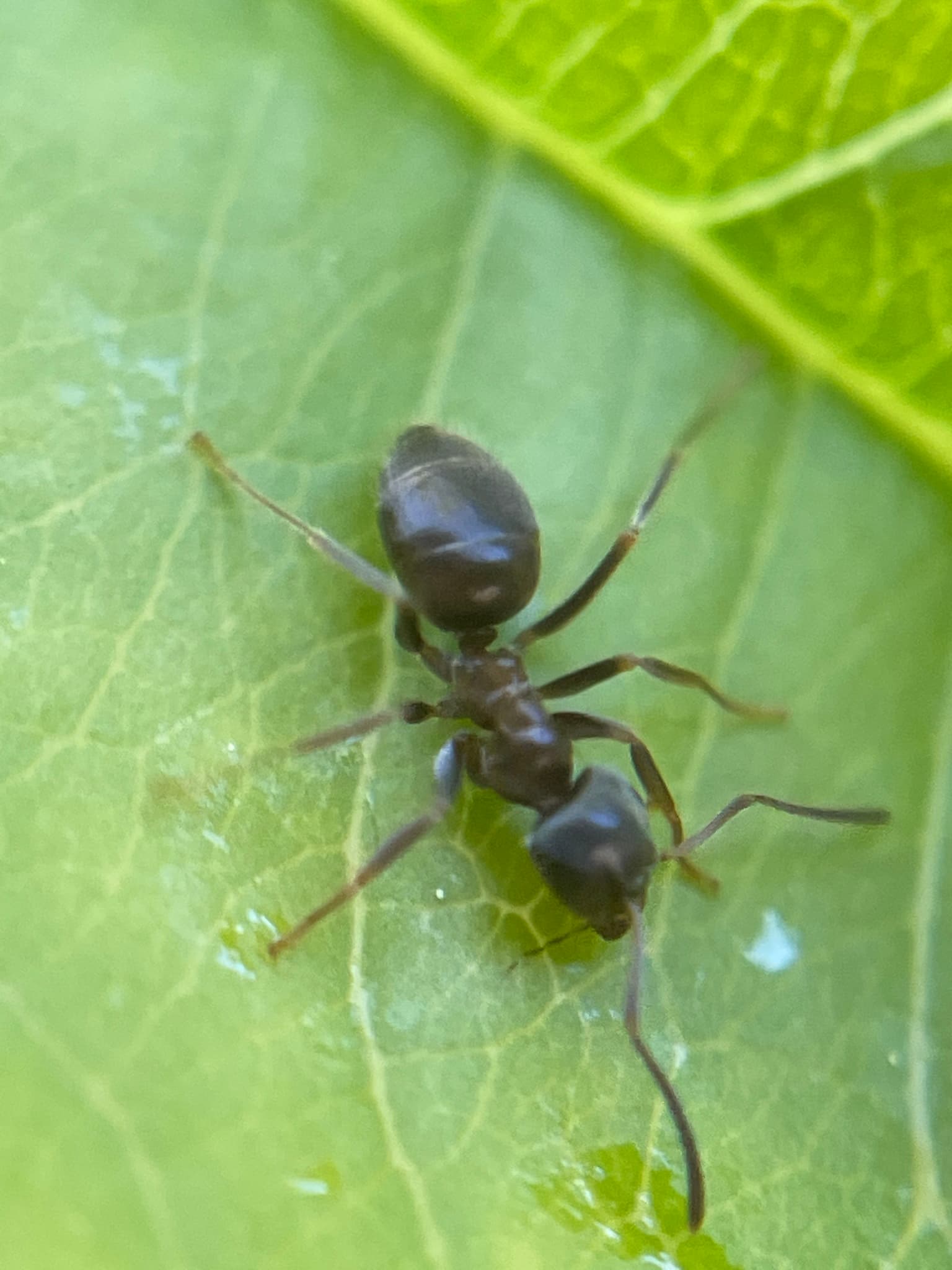
Macro close-up of a black garden ant (Lasius niger) on a green leaf, with a clearly outlined silhouette

In the small village of Ermenonville-la-Grande (Eure-et-Loir), some twenty homes in a single residential neighbourhood have been facing an ant invasion of unprecedented scale since mid-July 2026. Reported by Le Parisien on 16 July 2026, then picked up by Ouest-France, L'Écho Républicain and Le28.tv, the situation has turned a previously quiet neighbourhood into a genuine "anthill": electrical outlets, light switches, toilet flushes, car dashboards, kitchens, terraces... the insects get everywhere. For Antinuisible Pro, this news story is emblematic of a mechanism too often forgotten: the successive heatwaves of summer 2026 mechanically trigger insect surges that take human dwellings for refuge.

What happened in Ermenonville-la-Grande

Ermenonville-la-Grande is a village of about 330 inhabitants located in the north of Eure-et-Loir, in the Centre-Val de Loire region. According to press articles published between 16 and 22 July 2026, it is a recent residential neighbourhood, built some twenty years ago on former agricultural land, that concentrates the bulk of the reports: 22 to 30 homes affected, sometimes whole houses whose residents can no longer use their kitchen or bathroom.

The mid-July 2026 heatwave episode (peaks at 36-38 °C in the department, orange heatwave alert across the Centre-Val de Loire region) acted as a trigger. Le Parisien thus quotes the testimony of Lilie, a resident: "They come out of everywhere, it's horrible! The village has become a real anthill." Another resident, Ariane, sums up the futility of over-the-counter treatments: "We treat, it calms down for a day and then it starts again." The mayor, Fabrice Pelletier, confirms: "It's true that it's disgusting."

Source: "Ça sort de partout": à Ermenonville-la-Grande, tout un quartier en proie à une invasion de fourmis réveillées par la canicule, Le Parisien, 16 July 2026.

A resident named Simona dug up her garden and discovered, at 30 cm depth, a genuine "underground metropolis": a network of galleries, thousands of eggs and several brood chambers, according to the account reported by L'Écho Républicain. This observation is consistent with the biology of the species: the black garden ant (Lasius niger), the most common species in France, builds colonies of several thousand individuals over a few years, with a gallery network that can reach several square metres.
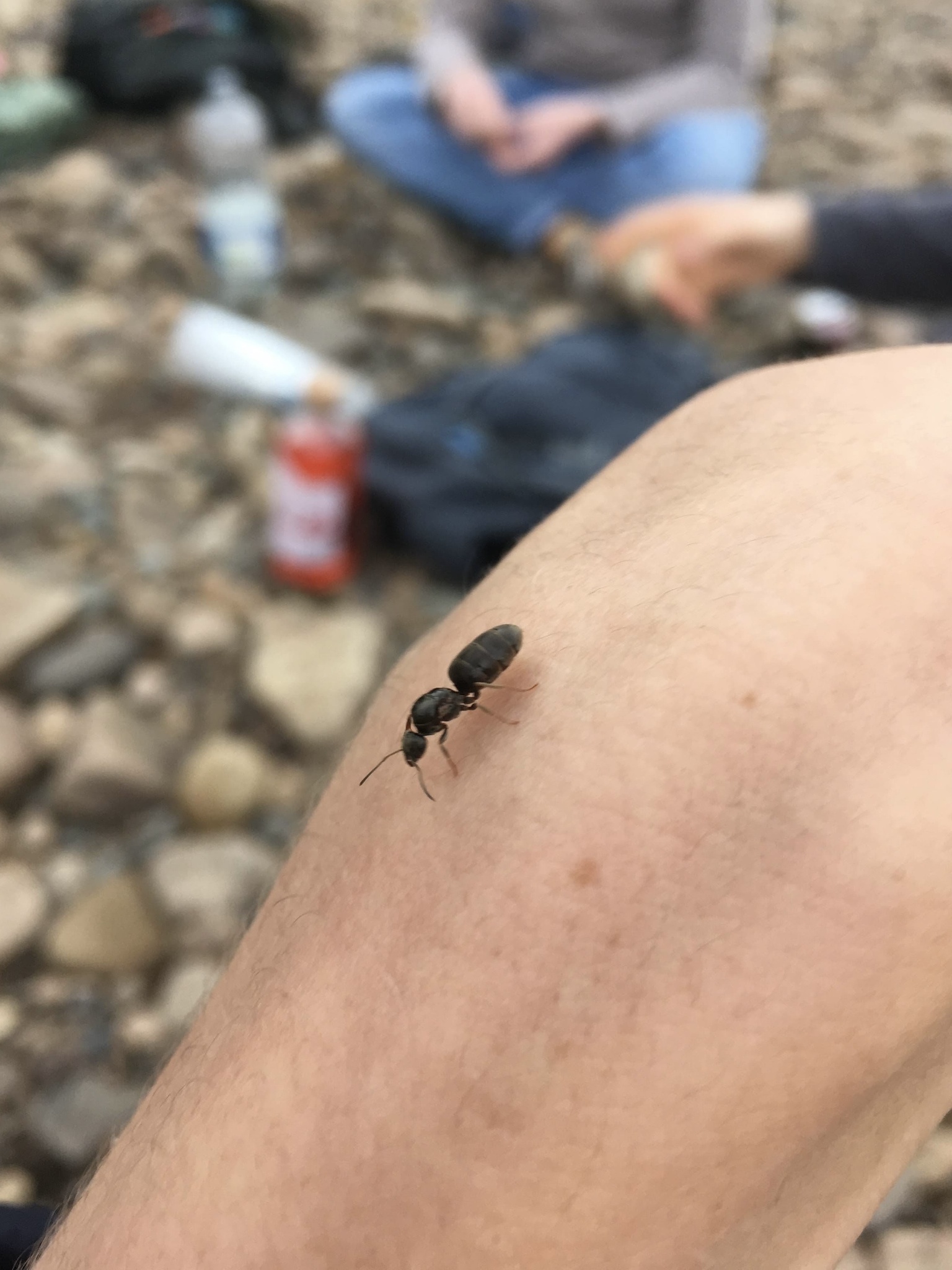
Single black ant on a human arm outdoors, illustrating an ant bite in summer

The species responsible: the black garden ant

The identification was confirmed by several experts, including Guillaume Géranton (Eden Vert 3D company) cited by Le Parisien and Ouest-France: it is indeed the black garden ant (Lasius niger), and not an invasive exotic species like the electric ant that is causing concern on the Var coast. This is an important point: the Ermenonville-la-Grande invasion is a local surge phenomenon triggered by weather conditions, not the arrival of a new species.

A few useful characteristics to understand the situation:

  • Size: workers 3 to 5 mm, queens up to 9 mm, uniform brown-black colour.
  • Habitat: meadows, gardens, hedgerow edges, wall bases, paved areas. The nest is in soil, under a stone, a slab, a flowerpot, or directly in the lawn.
  • Diet: opportunistic omnivore — aphid honeydew, nectar, dead insects, crumbs, sweet substances in homes. This is what attracts them into kitchens in summer.
  • Reproduction: a single annual nuptial flight, generally in July-August (swarming of winged females and males), which coincides precisely with the period of the Ermenonville-la-Grande episode.
  • Bite/sting: the sting is rare (the black ant bites more than it stings) but can cause local reactions — redness, swelling, itching — especially in sensitised people.
  • Colony longevity: a queen lives up to 15 years, which explains why a problem neglected one year can worsen in the following ones.

Why the heatwave changes everything

The heatwave does not create the ant: it is already present in the soil, all over France, at densities that go unnoticed most of the time. What heat modifies is the balance between the colony and its environment:

  1. Hydric stress: heat dries out the surface layers of the soil, and ants go deeper — or move up into homes seeking humidity. This is the main mechanism at work in Ermenonville-la-Grande.
  2. Food search: scorched vegetation deprives ants of aphid honeydew and nectar. They fall back on concentrated sources: bins, pet bowls, crumbs in kitchens.
  3. Swarming: the July-August nuptial flights release hundreds of winged ants that infiltrate through windows and doors left open at night to stay cool.
  4. Network stability: a nest installed under a slab on a sand bed (a typical case for 2000s constructions) stays at a stable temperature while the surface burns: the colony thrives instead of slowing down.

The result is clear: where one used to see "a few ants" each summer, one ends up with several thousand individuals visible per day, and this until the end of the Indian summer. Without targeted intervention, the colony stays in place and the phenomenon recurs the following year, amplified.
What not to do

The most common mistake, repeated by the residents of Ermenonville-la-Grande, is to buy pyrethroid-based insecticide sprays at the supermarket and spray them in the kitchen. This gesture:

  • does not reach the underground colony: the queen, the eggs and the larvae are safe under the slab;
  • scatters the workers to other rooms, or even to neighbouring homes;
  • selects pyrethroid-resistant ants, as has already been documented for other household insects;
  • unnecessarily exposes the occupants, children and pets to toxic substances.

The local rumour of an exotic tree brought back from holiday at the origin of the problem, mentioned by several residents, has been denied by professionals: these are indeed indigenous black ants, favoured by the nature of the soil and the weather conditions.

The method recommended by professionals

Guillaume Géranton (Eden Vert 3D), cited by Le Parisien and Ouest-France, recalls that "ants are there and they will stay": the goal is not to eradicate the species, but to protect the home and to bring the pressure down to an acceptable level. The method combines several levers, to be implemented in order:

  1. Identify the entry point(s) in the house (expansion joints, slab cracks, pipe passages, door bottoms, ventilation grilles) and seal them with acrylic mastic or expanding foam.
  2. Create a perimeter insecticide barrier all around the house, applied by a Certiphyto-certified professional: residual biocide product, on a 30 to 50 cm strip along the outer walls, thresholds and base walls.
  3. Install delayed-action baits (gels, micro-granules) inside, or preferably outside along the ant trails. The bait is carried back to the colony by the workers and slowly contaminates the queen: this is the only method that can durably push the population back.
  4. Remove attractant sources: do not leave pet food outside, close bins tightly, clean up crumbs immediately, take pet bowls in at night.
  5. Eliminate moisture sources: repair leaks, ventilate wet rooms, check drainage manholes.
  6. Treat aphids on trees and shrubs close to the house: ants farm aphids for their honeydew and protect them from predators. Breaking this "partnership" deprives the colony of a major food source.
  7. Indicative cost: a complete treatment by a professional is between 300 and 400 € for a house, depending on the area and the level of infestation.

Source: "Les fourmis sont là et elles le resteront", Guillaume Géranton, Eden Vert 3D, cited by Ouest-France, 19 July 2026.

A signal that goes beyond Eure-et-Loir alone

The Ermenonville-la-Grande episode is not isolated. The local press has documented, over the same July 2026 period, comparable surges in several regions: an invasion of flies in Brittany after the June heatwave, a multiplication of tiger mosquitoes in 83 departments, the spread of the brown marmorated stink bug in the south, harvest mites more numerous in gardens, not to mention the proliferation of rats in cities favoured by the heat. The message is clear: curative pest control is no longer enough, and every heatwave summer adds a line to the professionals' dashboard.

ANSES (fact sheet on Lasius niger) and INRAE have underlined for several years the positive dynamic of ant populations in metropolitan France under the effect of climate change: milder winters, longer summers, more frequent episodes of extreme heat. Ants, like many insects, take advantage of the wider thermal window to produce more generations per year.

When to call in a professional

The case of Ermenonville-la-Grande shows it: when the invasion affects more than two rooms in the house, when over-the-counter treatments fail, and when the entry points are hard to locate, the intervention of a Certiphyto-certified technician is the safest solution. The professional:

  • accurately identifies the species and the location of the main nest;
  • sets up an integrated control plan (barrier + baits + removal of attractant sources);
  • uses professional-use products banned from sale to the general public, which are more effective and more targeted;
  • offers follow-up (regular visits) until stabilisation.

Antinuisible Pro operates in Eure-et-Loir (Chartres, Dreux, Châteaudun, Nogent-le-Rotrou) and throughout France. For an ongoing invasion, contact us via our emergency page or request a free diagnosis with a technician near you. You can also consult our intervention zones, our indicative pricing and our disinsestation services. To prepare the first steps yourself, discover our selection of household pest control products.

To go further, also find our file on the electric ant, the little fire ant that is spreading in France, another distinct threat, not to be confused with the black garden ant.

A pest problem?

Our experts act fast and for good. Request a free assessment.

Request a free quoteOur services

Back to the blog

CallFree quote