Brown marmorated stink bug: the silent 2026 summer invasion in France

L'équipe AntinuisiblePro · Published on July 19, 2026 · 9 min read
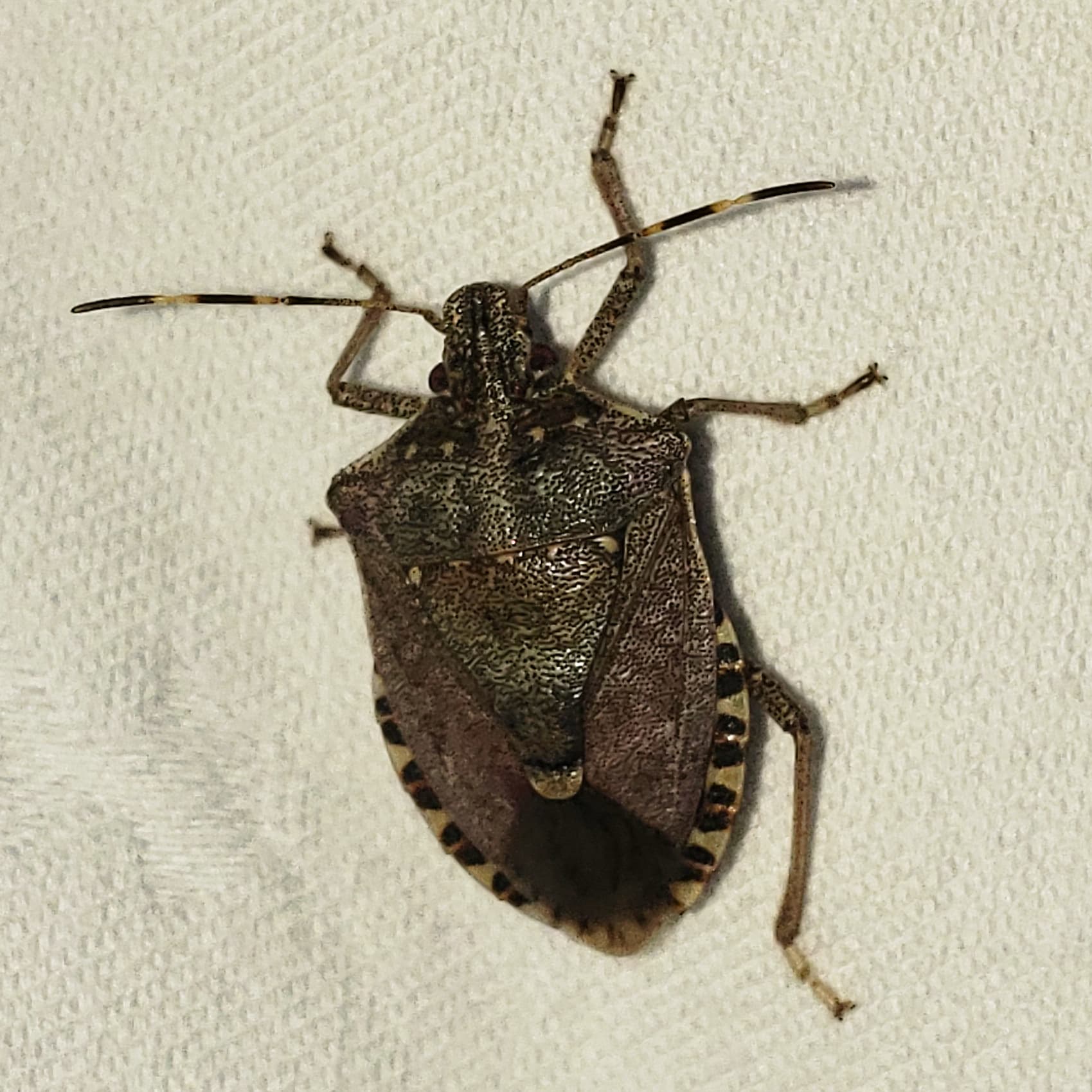
Top view of an adult brown marmorated stink bug, marbled brown body and characteristic pale bands on the antennae

It does not bite, sting, or transmit disease. Yet the brown marmorated stink bug (Halyomorpha halys) has become in just a few years one of the most dreaded pests for gardeners, orchard growers, and now owners of individual houses. Originally from East Asia, this marbled invasive bug is now reported in more than 78 French departments in early 2026, and both INRAE and FREDON France describe continued spread northwards and westwards: after colonising the Mediterranean arc and the Rhône Valley, it is well established in Île-de-France, Nouvelle-Aquitaine, Occitanie and Grand Est. The 2026 summer, hot and humid, is especially favourable to its demographic explosion.

Why are we talking about an "invasion" in 2026

Several factors combine to explain the strong expansion of the brown marmorated stink bug in mainland France:

  • A reproduction cycle shortened by global warming. Egg incubation drops from 12-14 days to 6-8 days above 25 °C, and a female can lay up to 250 eggs per season, distributed across about a dozen "clutches" of around thirty eggs each, glued under the leaves.
  • The absence of effective natural predators in Europe. No equivalent of the parasitoid Trissolcus japonicus, used in biological control in Italy and the United States, is yet authorised at scale in France. Birds and ladybirds do attack the eggs, but not enough to regulate populations significantly.
  • A highly opportunistic polyphagous pest. More than 300 host plants are on record: apple, pear, peach, apricot, kiwi, hazelnut, soy, maize, bean, tomato, pepper, grapevine, and many ornamental trees (tree of heaven, plane tree, black locust). A single plot can therefore act as a year-round reservoir.
  • Globalised trade. The bug travels in packaging, pallets, second-hand vehicles and luggage. That is how it was introduced into the United States in 1998, Switzerland in 2004, Italy in 2012, and continues to extend its range across Europe.

In France, FREDON (the regional federation for the control of harmful organisms) and ANSES placed the brown marmorated stink bug on the list of emerging-risk harmful organisms as early as 2019. The expansion is now documented by the INRAE epidemiological surveillance network and by the weekly Plant Health Bulletins (BSV) published during the summer period.
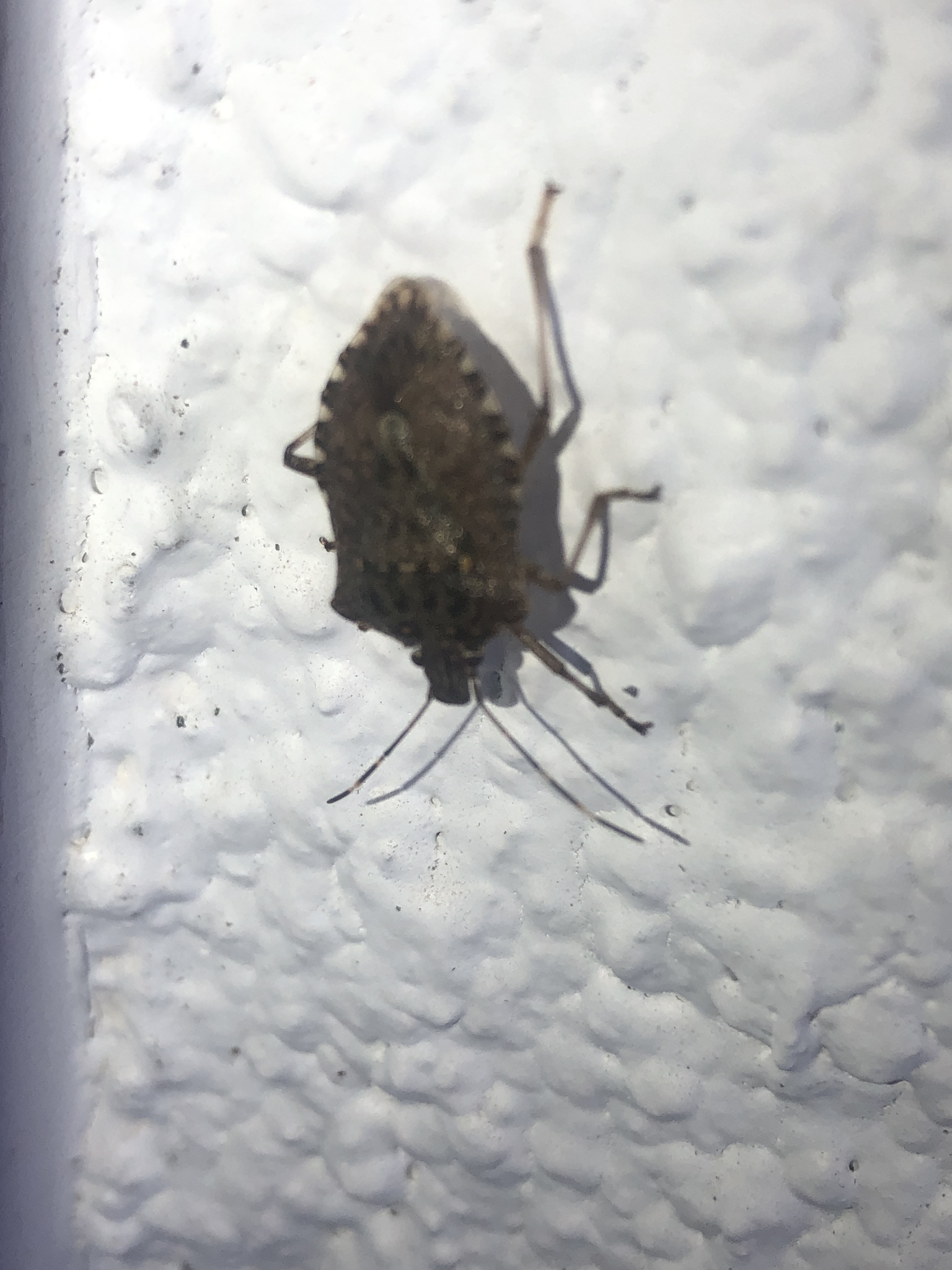
Adult brown marmorated stink bug resting on a light wall, side view with marbled markings and banded antennae

How to recognise the brown marmorated stink bug

Confusion is common with the European shield bug (Rhaphigaster nebulosa), which is also very common in France during summer. A few identification criteria make it possible to tell them apart.

1. Body shape. The brown marmorated stink bug measures 12 to 17 mm as an adult, has a shield-shaped (pentagonal) body, and is distinguished by rounded "shoulders" without lateral points. The European shield bug, in contrast, has small pointed spines on the sides of the thorax.

2. Colour and patterns. Halyomorpha halys displays a fairly dark marbled brown, with small black punctures on the back. The ventral side is pale, cream-white to beige. The shield bug, which is larger, has a more uniform appearance, grey-green to brown-green.

3. The antennae. This is the most reliable criterion: the brown marmorated stink bug carries a very contrasted white band on the second and third antennal segments, whereas the shield bug has uniformly dark antennae. This detail can be seen with the naked eye on a specimen at 20 cm.

4. Behaviour. The brown marmorated stink bug is very mobile in summer, flies easily (several kilometres), and often settles on warm walls in full sun. As autumn approaches (September-October), it tries to enter homes to overwinter and is then found on curtains, window frames, in suspended ceilings or attics. When disturbed, it emits a strong smell produced by scent glands — hence the English name "stink bug".

5. Eggs and larvae. Eggs are laid in hexagonal clutches of 25 to 30 eggs, cream-white to pale pink, glued under the leaves. The larvae go through 5 instars, yellow-orange to brown with black punctures; they are often gregarious at first.

In case of doubt, photograph the specimen (top view + close-up of the antenna) and send the photo to your regional FREDON office or via the online INRAE reporting application.

Damage to gardens, orchards and homes

The brown marmorated stink bug causes damage of three different kinds that need to be clearly distinguished.

Damage to fruit and vegetable crops. Adults and larvae pierce the fruit with their rostrum to feed on the sap. The bites cause localised depressions, spongy areas, colour changes (browning of the flesh under the skin) and deformations. On apple, pear, peach, kiwi and hazelnut, losses can reach 30 to 60 % of the harvest under heavy pressure. In viticulture, the bug is responsible for the "stink bug taint" of wines, an organoleptic defect now well documented.

Ornamental and forestry damage. Lines of tree of heaven (Ailanthus altissima) — themselves invasive — form a major reservoir of the bug in urban environments. It is also seen on laurel hedges, lime trees, horse chestnuts and even rose bushes. Repeated attacks weaken young plants.

Domestic and olfactory damage. In autumn, when temperatures drop, the adults seek shelter to overwinter and make their way into houses, flats, garages, attics and outbuildings. Unlike bed bugs, the brown marmorated stink bug does not reproduce indoors and does not bite humans: its nuisance is mainly olfactory (the smell lingers for days on fabrics and walls) and psychological (persistent presence, the mistake of crushing one triggers the smelly secretion).
What to do in the garden: prevention and gentle methods

Managing the brown marmorated stink bug in the garden combines monitoring, prophylaxis and gentle control methods. Chemical synthetic insecticides are largely ineffective against this pest (documented resistance, harm to beneficial insects) and banned in amateur gardens since the Labbé law.

  • Inspect the underside of leaves regularly from May to September, on the sensitive crops (tomato, bean, squash, apple, pear, kiwi). Hand-pick adults and egg clutches into a jar of soapy water.
  • Install insect-proof netting (mesh < 1 mm) on fruit trees at the start of the season. The technique is labour-intensive but very effective on small surfaces.
  • Set up pyramid sticky traps (for example the "Halyo" trap) with aggregation pheromone, at a rate of 1 trap per 100 m². Mass trapping reduces populations but does not eliminate them: it is complementary to manual control.
  • Encourage natural enemies: great tits, house sparrows, swallows, and also some native parasitoid wasps. Plant flowering strips (yarrow, phacelia, marigold) along the vegetable patch to attract pollinators and generalist predators.
  • Avoid tree of heaven and limit other ornamental host plants near the vegetable garden.

Stopping the autumn invasion of homes

From mid-September, the adults try to overwinter. A few simple jobs can cut entries into the home by 80 %.

  1. Seal the gaps around windows, doors, technical ducts, mechanical ventilation openings and cable passes. A silicone joint or expanding foam is enough for cracks wider than 2 mm.
  2. Fit fine insect screens (mesh < 1.5 mm) on roof windows, vents and air inlets. Aluminium models are more durable than PVC.
  3. Repair door seals and install a door sweep on garage, cellar and outbuilding doors.
  4. Switch off exterior lighting as close as possible to openings: light attracts the bug at night and guides it to entries.
  5. Reduce outdoor shelters in the immediate vicinity of the house: wood piles against the wall, dense vegetation, garden furniture too close to patio doors.

Once inside, do not crush them: the smelly secretion stains fabrics and impregnates walls. Use a vacuum cleaner (dispose of the bag immediately afterwards), or a jar with a little soapy water into which you drop them. Then wash the areas where they rested with a water + white vinegar mix (1/3 – 2/3).

When to call a professional

A Certibiocide-certified technician's intervention is justified in three situations:

  • Heavy pressure in the orchard or in professional market gardening, with proven economic losses: the professional uses biocontrol treatments (orange essential oil, kaolin, Ooencyrtus nematodes pending approval) and can set up pheromone trapping at the scale of a plot.
  • Massive domestic invasion despite sealing work, often a sign of an important outdoor reservoir (infested tree against the house, wood pile, abandoned outbuilding). Localised treatment of façades and outdoor shelters by a licensed operator may be necessary.
  • Confusion with another species or suspicion of a bed bug infestation: a visual diagnosis avoids the mistake, because the treatment methods are completely different. Our complete 2026 guide on bed bugs details the right reflexes.

Summer 2026 is the year the brown marmorated stink bug has moved from anecdote to a public health concern in several regions. Early action by households, local authorities and agricultural professionals remains the best response to this silent invasion.

You are seeing a significant presence of brown marmorated stink bugs in your garden, on your façade or inside your home, and you want a diagnosis and a tailored treatment? Our team operates across Val-de-Marne, Paris and the whole Île-de-France region to identify the species, map the shelters and set up an integrated pest management protocol. Discover our pest control services, our intervention rates and our service areas to check coverage of your area.

To go further, read our tiger mosquito article on heightened surveillance for summer 2026 and our guide on how to choose a reliable pest control company. If the invasion persists, do not let the situation settle in: contact our experts for a free diagnosis or request an emergency intervention before the first cold spells concentrate the bugs inside the home.

In summary — The brown marmorated stink bug (Halyomorpha halys) is an invasive species of Asian origin now established in more than 78 French departments, favoured by hot summers and the absence of natural predators. It causes significant damage to orchards, vegetable gardens and vineyards, and invades houses in autumn to overwinter. The right reflexes: manual inspection, sealing of entries, insect-proof netting, pheromone traps in the garden, and vacuuming (never crushing) indoors. In case of heavy pressure or confusion with another species, a professional Certibiocide diagnosis allows the treatment to be adapted and avoids costly mistakes.

A pest problem?

Our experts act fast and for good. Request a free assessment.

Request a free quoteOur services

Back to the blog

CallFree quote