Introduction: the pest that was waiting for you at home
There's one scenario every pest control technician knows by heart come September. A family gets back from three weeks away, picks up the cat from the neighbour or the cattery, opens the living room door — and gets bitten around the ankles within the hour. The reflex is immediate: "the cat brought fleas home".
It's almost always wrong. In the vast majority of cases, the fleas were already in your home before you left, in the form of perfectly motionless cocoons tucked into carpet fibres, the grooves of the parquet and the gap between the skirting board and the floor. They were waiting for one thing only: vibration, carbon dioxide and warmth — in other words, your return.
The cat flea (Ctenocephalides felis) alone accounts for more than 95% of the fleas found in mainland France, including on dogs and in homes with no pet at all. It's the household pest people take least seriously and, paradoxically, one of the most poorly treated: because everyone fixates on the animal when 95% of the flea population is in the environment, not in the fur.
Why late August and September concentrate infestations
Three factors stack up at the start of the new season, and it's this convergence that creates the annual peak.
1. Summer was an egg factory. The complete flea cycle — egg, three larval stages, pupa, adult — takes 17 to 21 days at 25-30 °C and 70% humidity. Below 15 °C, it stretches out over several months. July and August conditions, especially in homes in the south and along the Atlantic coast, allow four to five consecutive generations. A female lays 20 to 40 eggs a day, up to 2,000 in her lifetime. The eggs don't stick to the hair: they fall to the floor, wherever the animal sleeps, rolls around or passes most often.
2. The empty home put the cocoons on pause. This is the part nobody anticipates. Once pupation is complete, the adult flea stays sealed inside its silky cocoon, able to survive there several months without feeding. It only emerges in response to a stimulus: floor vibration, a passing shadow, body heat, exhaled CO₂. Three weeks in a closed-up flat = a stock of primed cocoons that all hatch at once on the day you come back. Hence the impression of an instant invasion.
3. The heating restarts what autumn would have slowed down. From mid-October, switching the heating back on maintains an ideal temperature in the living areas. In a heated home, there's no longer a dead season for the flea: the cycle runs all year round.
Practical takeaway: if you get bitten when you come back from holiday, don't look for where the fleas came from. Look for where the cocoons are.
Recognising an infestation: the reliable signs
The adult flea measures 1.5 to 3 mm, is dark brown, flattened side-on and jumps — up to 20 cm high, about 100 times its own size. You rarely see one. Indirect clues tell you far more.
| Sign | What it indicates | Reliability |
|---|
| Clustered bites on ankles and calves | Fleas emerging from the floor, starving adults | Very high |
| Small black grains in the fur or the bed | Droppings (digested blood), turn red on damp cotton | Decisive |
| Cat nibbling at the base of its tail | Favourite spot, often before any other sign | High |
| White salt-like grains in the bed | Eggs, a sign of active reproduction | High |
| White socks trapping fleas at floor level | The technician's empirical test | Good |
The simplest test costs nothing: run a fine-toothed metal flea comb along the animal's back and hindquarters over a damp white sheet of paper. If black grains land on it and spread a red-brown halo, that's digested blood: the infestation is confirmed, even if you haven't seen a single live flea.
What the bites actually cause
In humans, a flea bite produces a small red papule with a haemorrhagic point at its centre, intensely itchy, often lined up in twos or threes. It transmits practically no disease in mainland France — contrary to what you sometimes read. The real risk, documented by ANSES and highlighted by vets, concerns the animal: flea allergy dermatitis (FAD), the leading cause of chronic itching in cats and dogs, and transmission of the tapeworm Dipylidium caninum when the animal swallows a flea while grooming.
In children and atopic individuals, scratching can lead to a bacterial superinfection. Ameli and Vidal recommend seeing a doctor in that case, particularly if the lesions weep or if an area becomes hot and painful.
The mistake that drags the infestation out for three months
Here's the typical sequence seen in the field:
- A flea spot-on treatment is applied to the cat.
- You vacuum and wash the pet bed.
- Two quiet days.
- The bites start again after a week.
- You conclude that "the product doesn't work" and switch brands.
Yet the product works perfectly well: it kills the adults that climb onto the animal. The problem lies elsewhere. The eggs, larvae and above all the cocoons present in the home are unaffected. Cocoons are impervious to insecticides — that's their defining feature. Every day, a new wave emerges from the floor. Until the stock is exhausted, the feeling of infestation persists.
Treating only the animal is like emptying a bathtub with a teaspoon while leaving the tap running. You have to treat the animal AND the home, at the same time, over at least three months.
The full protocol, step by step
Step 1 — Treat every animal in the household, on the same day
Not just the one that's scratching. An asymptomatic cat harbours fleas that are laying eggs. The molecules available in France fall into two useful families:
- Adulticides (fipronil, imidacloprid, selamectin, isoxazolines in tablet form): kill the fleas present on the animal.
- Growth regulators (lufenuron, S-methoprene, pyriproxyfen): sterilise egg-laying or prevent larval development.
Adulticide + regulator combinations are considerably more effective once an infestation is established. Ask your vet for advice: prescription veterinary products are generally better dosed than those on the pet shop shelf. Absolutely critical: permethrin-based products intended for dogs are toxic to cats and cause fatal seizures. Never transfer one to the other.
Stick to the stated frequency — most often monthly — for a minimum of three consecutive cycles.
Step 2 — The vacuum cleaner, your best insecticide
This is the most underrated and most rewarding action of all. Vacuuming:
- removes eggs, larvae and some of the cocoons;
- the vibrations trigger the emergence of adults, which then become vulnerable to treatments.
Vacuum daily for two weeks, then every other day for a month. Focus on the places insecticide won't reach: under sofas, along skirting boards, between parquet boards, under beds, and above all around the animal's sleeping spots. A bagless cordless stick vacuum with a HEPA filter makes the job realistic day after day — the main obstacle in any flea protocol is consistency. Empty the bin outside, immediately, into a sealed bag.
Step 3 — Washing at 60 °C
All washable textiles go into the machine at 60 °C minimum: pet bed cover, throws, sofa blankets, bath mats, sheets if the animal sleeps on the bed. At 60 °C, eggs, larvae and adults are destroyed. Anything that can't be washed and isn't delicate can spend 30 minutes in the tumble dryer on a high setting: dry heat is just as lethal as hot water.
The bed itself, if it's plastic, can be washed with very hot water and ordinary detergent. If it's old, made of wicker or of saturated foam, it's more effective to replace it than to try to save it.
Step 4 — Treating the environment
This is the step that makes the difference. Two approaches, depending on the scale.
Moderate infestation (a few bites, a single focus): a pyriproxyfen household insecticide spray applied in a targeted way to resting areas, skirting boards, under furniture and on carpets. Pyriproxyfen is a growth regulator that blocks larval development for several months: it's what breaks the cycle, even more so than the adulticide it's paired with.
Widespread infestation (several rooms, daily bites): the automatic diffuser, known as a fogger. You need to know its limits: the mist penetrates neither under low furniture nor into the deep fibres of fitted carpets. It must therefore complement a targeted treatment, never replace it. Mandatory protocol: remove pets, plants and occupants, cover the aquarium and switch off its pump, put crockery away, air the place thoroughly for 30 minutes after the exposure time, and never set off several devices in an unventilated space.
A second application 10 to 14 days after the first is almost always necessary: it targets the adults emerging from cocoons that hadn't hatched during the first round.
Step 5 — Don't forget the car and the overlooked areas
The car that took the animal on holiday is a classic secondary focus: boot carpet, under the seats, floor mats. The same goes for the cellar, garage, conservatory and the thresholds of French windows where the cat likes to settle. An infestation that "comes back for no reason" usually comes from an area that was never treated.
And if you don't have a pet?
A more common case than people think, and often misdiagnosed. The usual origins:
- A home previously occupied by an animal: cocoons survive for months in an empty flat. Taking over a tenancy is a classic trigger.
- Neighbourhood or stray cats sleeping on a ledge, in a cellar or in a shared bin store.
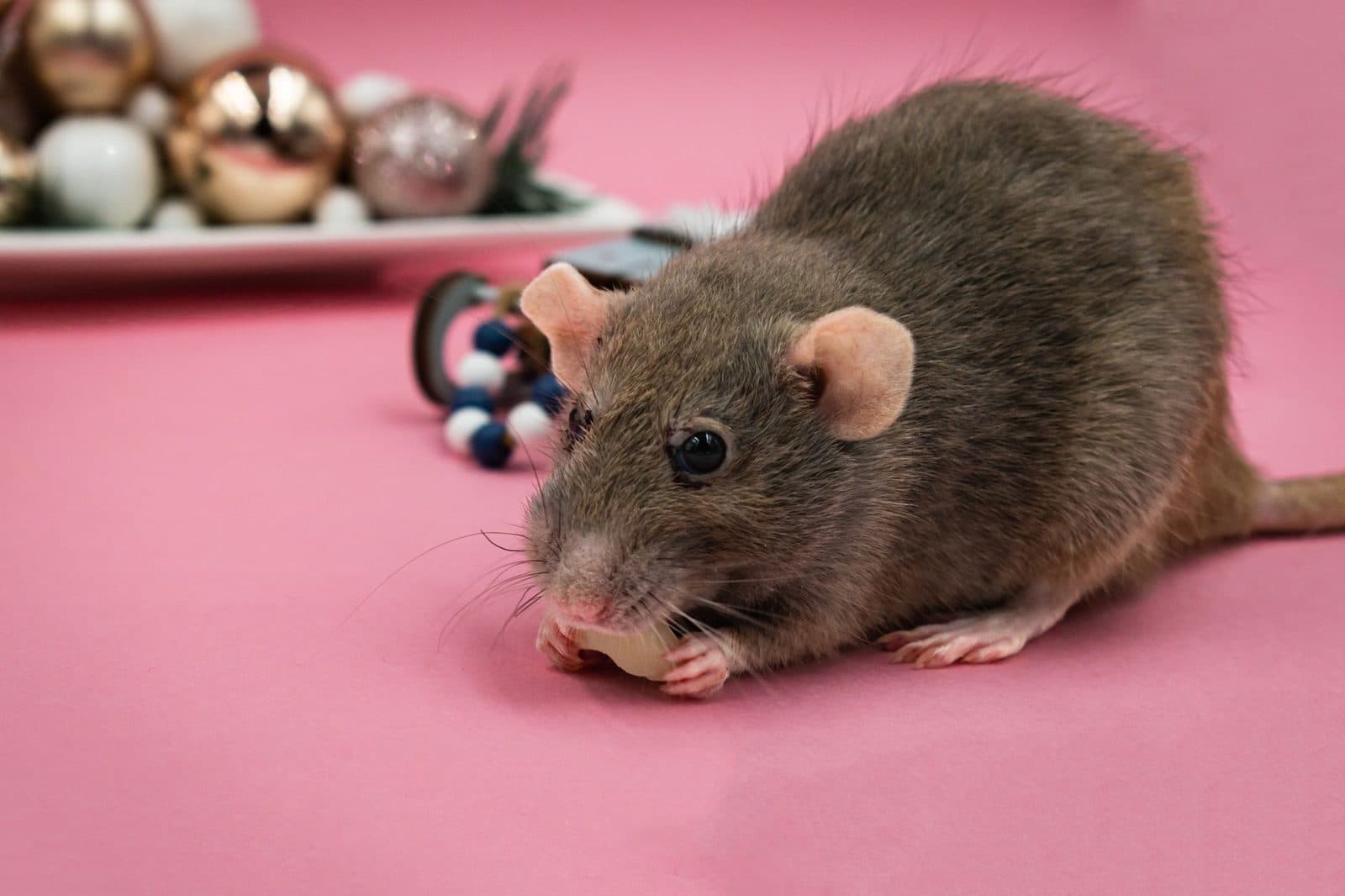
- Rodents: rats and mice host fleas (Nosopsyllus fasciatus, and Ctenocephalides too). When the rodent is eliminated or leaves the premises, its fleas look for a new host — sometimes you. In that case, treating the fleas without dealing with the rodent infestation means starting over every season.
- Hedgehogs settled under a terrace or in a garden shed.
If the bites return despite a correct protocol and with no pet in the house, look for the reservoir. This is typically the point at which a professional diagnosis saves you months.
Diatomaceous earth, essential oils: what actually works
Food-grade diatomaceous earth has a genuine, mechanical action: the silica powder abrades the insect's cuticle, which then dies of dehydration. It's useful as a complement, dusted very lightly into gaps, under furniture, in lofts and crawl spaces. Three conditions: apply it in an invisible layer (insects avoid a thick one), in a dry environment (it loses all effect when damp), and wear a mask while applying it, as the dust irritates the airways.
Essential oils (lavandin, geranium, lemon eucalyptus) have a partial and short-lived repellent effect. They destroy neither eggs nor cocoons, and above all: cats can't metabolise phenols and terpenes. Many essential oils are toxic to them, including through simple atmospheric diffusion or licking their coat. Never apply essential oil to a cat, or diffuse it continuously in a closed room where it lives.
Ultrasonic collars: no demonstrated efficacy against fleas. The available studies are uniformly negative.
Preventing next season
Once the infestation is broken, prevention comes down to a handful of things:
- Continuous parasite treatment for the animal, including in winter in a heated home — that's when most owners let their guard down and the cycle restarts.
- Weekly vacuuming of sleeping areas, more effective in the long run than any product.
- Regular combing: a cat combed once a week will never develop a silent infestation.
- Checks before and after holidays: treat the animal a fortnight before departure, and vacuum as soon as you get back, before you even unpack the suitcases.
- Vigilance about rodents: sealing entry points remains the best indirect prevention. You'll find the detail of the methods in our article on rat proliferation, and a selection of products in our shop.
When to call in a professional
Calling on a Certibiocide-certified company is justified in four situations:
- The infestation persists beyond six weeks of rigorous protocol.
- The home is large, furnished with rugs and fitted carpets, or has converted loft space.
- It's a holiday rental, a veterinary practice, a boarding kennel or a block of flats: the risk of complaints and cross-reinfestation is high.
- You suspect an inaccessible animal reservoir (rodents in the walls, cats under the floor, hedgehogs under the terrace).
Professional treatment generally combines targeted residual spraying with a growth regulator, plus a follow-up visit at 15 days. For a two-bedroom flat, expect a figure of the same order as a cockroach treatment; our services set out how an intervention unfolds and the guarantees that come with it.
Key takeaways
- September is the annual flea peak because the cocoons formed over the summer all hatch when the occupants return.
- 95% of the population lives in the home, not on the animal: treating the cat alone never solves anything.
- The winning protocol comes down to four simultaneous actions: veterinary parasite treatment, daily vacuuming, washing at 60 °C, household insecticide with a growth regulator, plus a second round at 10-14 days.
- Cocoons are impervious to insecticides: that's why three months of patience is essential.
- With no pet in your home, look for the reservoir: previous occupant, neighbourhood cats, rodents.
Sources and references: ANSES (opinion on veterinary antiparasitic products), Ameli (insect bites, what to do), Vidal (flea bite dermatitis), Santé publique France (vector surveillance), ESCCAP France (parasite control recommendations).