Introduction: the thermostat is a biological accelerator
We tend to talk about pest seasonality in terms of outdoor weather: August heat for wasps, the first cold nights for rodents. But there is a seasonal factor that is strictly indoors, triggered by the occupants themselves, and whose impact is widely underestimated: turning the heating back on.
Between 1 October and mid-November, most French homes shift from fluctuating temperatures (16-19 °C at night in September) to a steady regime of 19 to 22 °C, round the clock, in every room. In buildings with central heating, firing up the boiler simultaneously warms the risers, service ducts, refuse chutes, cellars and bin rooms — precisely the corridors used by German cockroaches.
For a cold-blooded insect, this switch is not a matter of comfort: it is a change of metabolic regime. The development time of a bed bug, how often a German cockroach lays eggs, how fast a population doubles: it all depends on temperature. In other words, just when we think pest season is over, we hand the two hardest insects to eradicate their best environment of the year.
This article does not repeat the general eradication protocol. It deals with a specific mechanism — the thermal effect of heating — and with the next six to eight weeks: what changes in insect biology, where to look first, and which mistakes cost the most.

What temperature really does to insects
The "degree-day" rule
Insects do not develop according to a calendar but according to an accumulated sum of heat. Below a threshold (the "developmental zero"), growth stops; above it, it accelerates almost linearly up to an optimum. This concept, used in applied entomology and crop protection, applies perfectly to a heated flat.
In practical terms, for the two species we are interested in:
| Species | Development threshold | Optimum | Effect of heating |
|---|---|---|---|
| Bed bug (Cimex lectularius) | ~13-15 °C | 25-30 °C | Egg → adult cycle cut from several months to 5-7 weeks |
| German cockroach (Blattella germanica) | ~15 °C | 28-33 °C | Almost continuous egg-laying, shortened incubation |
A bed bug kept at 15 °C enters near-dormancy: it can survive many months without feeding, but it barely reproduces. The same bug, in a bedroom at 21 °C, feeds every 5 to 10 days and the female lays 1 to 5 eggs a day. Over eight weeks of heating, the difference between a home at 16 °C and one at 22 °C is not 30 % more insects: it can be a factor of 5 to 10.
The special case of German cockroaches
The German cockroach is even more temperature-dependent, because it is tropical in origin and cannot survive outdoors in our climate. It lives exclusively in heated buildings. Its ideal habitat: 25-30 °C, humidity, darkness, food less than 3 metres away. In other words: behind a fridge, under a dishwasher, the duct of a hot water pipe, the roller shutter box next to a radiator.
A female carries an egg case (ootheca) containing 30 to 40 eggs, and can produce 4 to 8 of them in her lifetime. At 30 °C, incubation takes around twenty days; at 20 °C, it can exceed two months. Heating means shortening the interval between generations.
A simple principle to remember: in an unheated home, an infestation stagnates. In a heated home, it is exponential. October does not create the infestation — it activates it.
A building's thermal circuits: the real collective problem
Service ducts, warmed-up motorways
In a block of flats, it is not the flats that spread the infestation, it is the vertical penetrations: plumbing ducts, soil stacks, cable runs, ventilation shafts, old refuse chutes. When the communal boiler restarts, these spaces gain several degrees and become, from basement to top floor, a continuous corridor at an even temperature.
The typical result, observed by professionals every autumn: a cockroach focus confined in September to a single ground-floor flat is reported in November in three or four flats spread along the same riser. This is no coincidence: it is the building's thermal behaviour that opened the way.
The priority points to watch in a block of flats:
- pipe penetrations behind the sink and under the bath, often poorly sealed
- roller shutter boxes, warm and never cleaned
- voids under skirting boards and floorboard gaps along external walls
- bin rooms and boiler rooms, where temperature no longer drops below 18 °C
- fitted kitchens, whose kick boards are never removed
The perverse effect of airtightness
Energy retrofits improve thermal performance, but they also remove the draughts that used to dry out nooks and crannies. A very airtight, heated room where laundry is dried and the mechanical ventilation is clogged combines the three conditions cockroaches favour: heat, humidity, still air. An indoor hygrometer placed in the kitchen and bathroom costs a few euros and provides useful information: above 60 % relative humidity on a permanent basis, you are in the comfort zone for cockroaches, silverfish and dust mites.
On this specific topic, our articles on silverfish and autumn humidity and on the blind spots of cellars and car parks are a useful complement.
Bed bugs: why October-November is a critical window
The bedroom switches to incubation mode
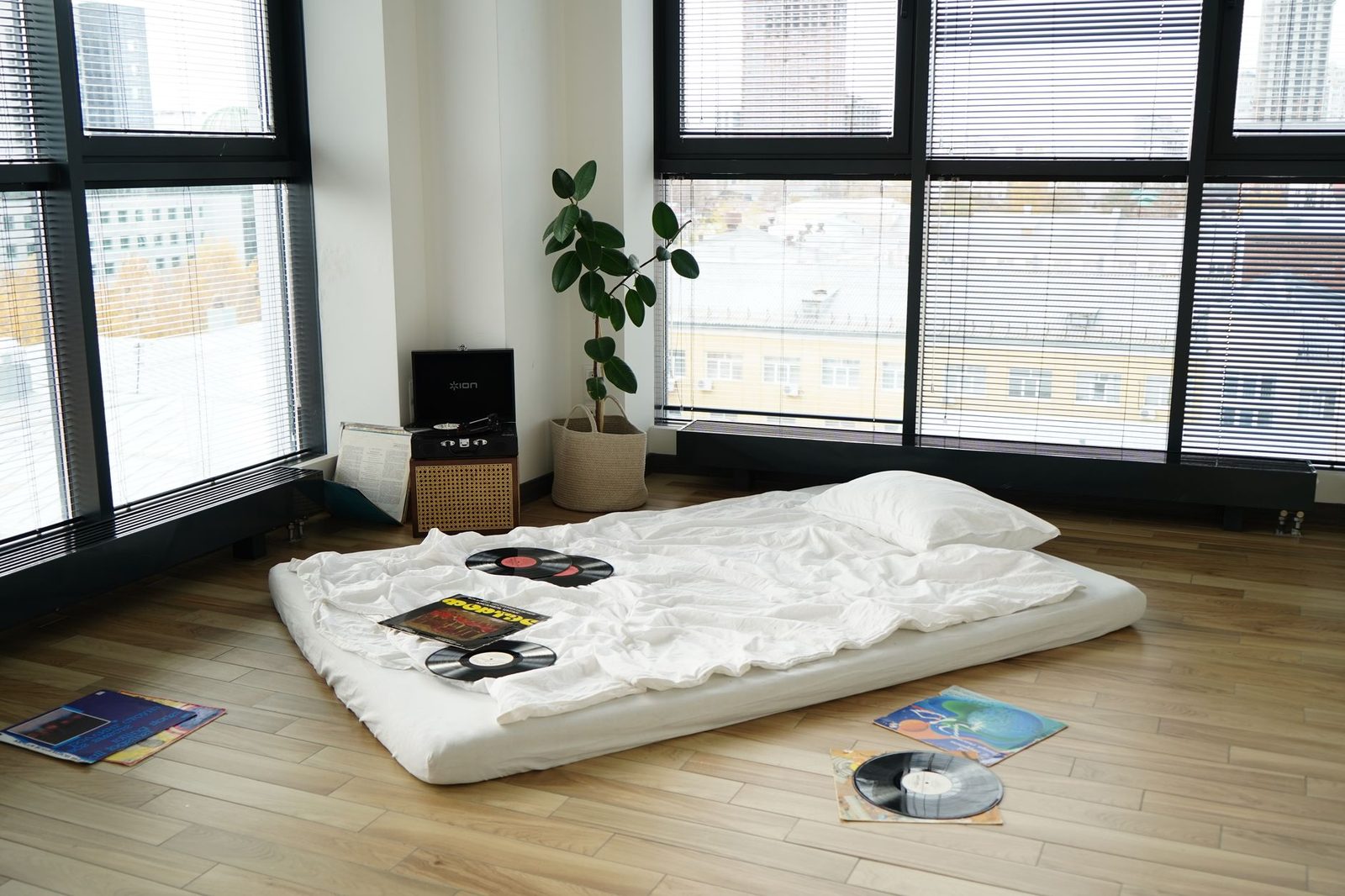
The bed bug lives a few centimetres from its host. And the bedroom is precisely the room whose temperature we stabilise most in autumn: we close the window, turn up the thermostat, add a thick duvet. Between the bed base, the mattress and the headboard, you easily reach 22 to 26 °C in the microclimate — the zone of maximum acceleration.
Two practical consequences:
- An infestation brought back from holiday this summer, still discreet in September, becomes visible in November. That is why reports do not follow the travel curve with a one-month lag, but with three to four months.
- Poorly finished treatments start up again. A September intervention that left 10 % of the eggs in place will produce, at 22 °C, a complete new generation before Christmas.
The early signs to look for now
The October check is the most profitable of the year, because it comes before the population explosion. What to inspect, in this order:
- Mattress seams and piping, especially the corners at the head of the bed: look for black dots 0.5 to 1 mm across (droppings), brown stains on the sheet, translucent shed skins.
- The bed base turned over, the webbing, the screws, the metal brackets.
- The headboard and the wall behind it, particularly if it is upholstered or wall-mounted.
- The 30 cm of skirting board on either side of the bed, and the nearby electrical sockets.
- The bedside tables, drawers removed, under the runners.
A powerful white-light torch radically improves the quality of this inspection: bed bugs flee light, and droppings in the seams show up far better under a grazing beam than under the ceiling light. Some professionals also use bed bug detection traps placed under the bed legs: they treat nothing, but they provide objective evidence of the presence or absence of insects over two to three weeks, which avoids both panic and denial.
What does not work, and what October makes tempting
- Turning the heating down to slow bed bugs: below 15 °C they become dormant but do not die. The lethal threshold is far lower (several consecutive days at -18 °C at the core of the item) and an occupied home never reaches it.
- "All-insect" aerosol insecticides: they scatter bed bugs into neighbouring rooms and select for resistant individuals. ANSES regularly points out the high prevalence of pyrethroid resistance in Cimex lectularius.
- Dumping the mattress on the pavement: this is the main way infestations move between flats in the same building.