Introduction: 15 October, an invisible thermal event
In most French apartment blocks, the heating is switched back on between 1 and 15 October — a date set by the building's rules or by the maintenance contract, rarely by the weather. For residents it's a non-event: the radiators warm up, the fans get put away. For pests, it's the start of the best season of the year.
Within days, a building goes from being thermally uniform to a network of micro-climates: riser ducts at 28 °C, radiator bases at 35 °C, crawl spaces warmed by pipework, a boiler room at a constant 25 °C. This network links every floor, runs through every flat and operates without interruption until April. German cockroaches, rodents, silverfish and garden ants need nothing more.
That is why pest control companies see a clear rise in reports in November and December, with a typical lag of four to eight weeks after the heating goes on. This article explains the mechanism, then sets out a practical preparation protocol, ideally carried out before the boiler restarts — in other words, now.
What heat really changes for a pest
Temperature governs the breeding cycle
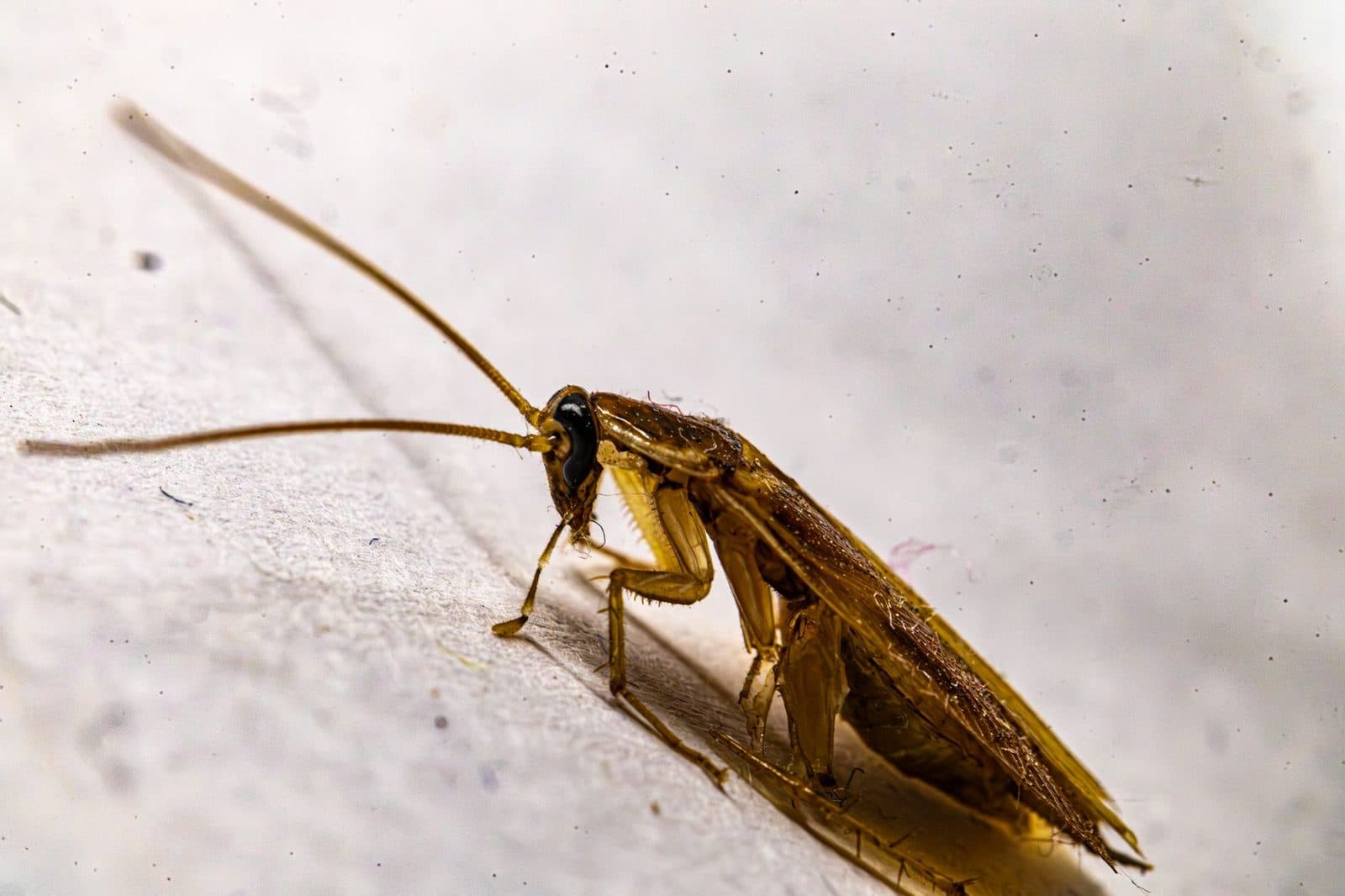
Insects are ectotherms: their metabolism, their larval development rate and their fertility depend directly on ambient temperature. In the German cockroach (Blattella germanica), the most common species found in homes, the egg-to-adult cycle takes around 100 days at 22 °C, but can drop below 60 days at around 30 °C. One ootheca contains about thirty eggs, and a female produces several over her lifetime.
In practical terms: a population that stagnated all summer in a cold duct can double twice before Christmas as soon as the shaft reaches 28 °C. That is exactly what happens in the service risers of buildings carrying domestic hot water and heating pipes.
The same logic applies to the silverfish, to booklice, and — in homes with a commercial kitchen or an adjoining bin store — to the house fly, which never really stops.
Rodents, for their part, follow a gradient
Rats and mice don't depend on temperature to reproduce, but they are excellent behavioural thermoregulators: they follow gradients. A heating pipe buried in a crawl space creates a dry, warm corridor, often in direct contact with mineral wool insulation — a perfect nesting material.
INRS and municipal health departments describe the same sequence every autumn: outdoor temperatures fall → search for shelter → exploration of entry points → permanent settlement if food follows. Heating doesn't create the rodent, but it anchors the rodent inside the building fabric.
Dormant pests wake up
Some species enter a quiescent state over winter in lofts, window reveals or roller-shutter boxes: harlequin ladybirds, brown marmorated stink bugs, cluster flies. When the heating warms the adjoining rooms, they partially reactivate and end up inside the home, disoriented. This isn't an infestation in the strict sense, but it is a source of a flood of calls to managing agents in October and November.
The four hot spots in a home in autumn
1. The service riser duct
This is the building's vertical motorway. It houses the wastewater downpipes, the cold and hot water supply, and sometimes the heating. The features that make it an ideal habitat:
- constant heat (the domestic hot water pipes run all year, the heating adds to it in winter);
- humidity from condensation and micro-leaks;
- total darkness;
- vertical continuity: an infested flat on the 2nd floor contaminates the 5th within weeks.
The critical point is the access hatch behind the toilet or under the sink. If it doesn't seal tightly, it acts as a permanently open door. A simple self-adhesive foam seal fitted around the edge of the hatch genuinely makes a difference, provided it is compressible and not crumbly.
2. Pipe penetrations through walls and floors
Every pipe passing through a partition leaves a gap of 5 to 30 mm. That's enough for a mouse (12 mm), more than enough for a cockroach, and sometimes enough for a young rat. The filling must be mechanically resistant: polyurethane expanding foam on its own is gnawed through without difficulty.
The professional rule is simple: metal packing first, mortar or filler afterwards. A roll of fine-mesh stainless steel rodent-proof mesh, cut and packed into the gap before filling, lasts for years. It's the only barrier that neither a rodent's incisors nor a jet-wash will degrade.
3. Behind and beneath radiators
A cast iron or steel radiator creates a dry zone beneath it at 30–40 °C that is never cleaned, where dust, crumbs and textile fibres accumulate. For cockroaches as much as for silverfish, it's an ideal refuge less than a metre from a food source in a kitchen or living room.
Wall-mounted electric convector heaters are worse still: their casing contains a hollow, hot, dusty volume. It's common to find cockroach exuviae inside when one is dismantled.
The useful step before the heating goes on: run a vacuum cleaner with a long, narrow nozzle, an extended crevice tool type, behind and under each heat emitter, then wipe the floor with a damp cloth. This removes both the organic fuel and the aggregation pheromone traces that keep drawing cockroaches back to the same spot.
4. The boiler room and the communal plant room
This is the absolute blind spot of apartment blocks. Warm, rarely visited, often in the basement and in direct contact with buried networks, it combines every favourable factor. In many buildings, equipment, cardboard boxes and sometimes split bags of water-softener salt are stored there too.
During the boiler's annual servicing visit — mandatory for installations from 4 to 400 kW under the decree on boiler maintenance — it's worth asking the technician to report any sign: droppings, runways, gnawed packaging. They're on site anyway.
The preparation protocol before the heating goes on
Here is the sequence to work through in two to three hours, ideally in late September.
| Step | Area | Action | Time |
|---|
| 1 | Access hatches | Check the seal, fit a foam strip | 20 min |
| 2 | Pipe penetrations | Identify all gaps > 5 mm, pack with mesh + filler | 45 min |
| 3 | Radiators / convectors | Fine vacuuming, damp cleaning | 30 min |
| 4 | Crawl space / cellar | Torch inspection, look for droppings and nests | 20 min |
| 5 | Loft / shutter boxes | Spot overwintering insects, vacuum | 20 min |
| 6 | Monitoring | Place detection traps in the hot spots | 15 min |
Step 6 is the most cost-effective
Placing three to five sticky detection traps — those folded cardboard plates, with no insecticide — under the sink, behind the fridge, near the kitchen radiator and in the service cupboard costs a few euros and gives you information no visual inspection can provide: the presence of a population before it becomes visible.
Reading them is straightforward:
- 0 catches in three weeks → nothing established;
- 1 to 3 individuals → isolated presence, act immediately, it's still manageable;
- more than 5, or juveniles (small dark cockroaches with a pale band) → established population, professional treatment.
This approach also works for rodents, using tracking plates or, more simply, a thin layer of flour laid along a suspect skirting board and photographed the next day.
The classic mistake: treating the symptom in the wrong flat
In a communally heated building, the flat where the cockroaches are seen is almost never the main focus. The service riser spreads them: the flat that suffers is often above or below the source flat, because the insects climb along the warm ducts or flee a partial treatment.
The practical consequence: treating flat by flat, on request, is structurally doomed to fail. Professional literature and operator feedback converge on one simple figure: you have to treat an entire riser — that is, all the stacked flats served by the same duct — to achieve a lasting result against the German cockroach.
A treatment that doesn't cover an entire service riser doesn't reduce the infestation: it moves it up one floor.
That requires a decision by the managing agent, access to every flat, and often two visits two to three weeks apart to break the ootheca cycle. On how costs are split between landlord, tenant and the building's owners' association, our dedicated guide to pests in apartment blocks and rented housing sets out the rules applicable since the law of 27 June 2024 on combating bed bugs, which clarified several points regarding decent housing standards.
What heat doesn't fix: humidity
A counter-intuitive point: heating dries out the ambient air, but it often makes localised damp worse. Thermal bridges — external wall corners, the back of furniture against a cold wall, poorly insulated window reveals — become condensation surfaces as soon as the indoor air becomes loaded with vapour.
And humidity directly determines the survival of several household pests:
- the silverfish (Lepisma saccharina) requires more than 70% relative humidity;
- dust mites thrive above 60%;
- mould, a food source for booklice, takes hold above 65%.
Two habits are usually enough: keep window trickle vents and mechanical ventilation outlets clear (blocking them "so as not to lose heat" is the most common and most costly mistake), and monitor the actual reading rather than your impression. An indoor hygrometer costing a few euros, placed in the coldest room, gives an objective reading; between 45 and 55% relative humidity, most damp-related pests won't settle in.
ANSES also points out that ventilating homes remains the single biggest lever for indoor air quality, ahead of any chemical treatment.
Special case: homes heated with wood
Storing logs introduces a specific and underestimated risk. A pile of wood brought indoors in October can carry:
- wood-boring insects (woodworm, house longhorn beetles) whose larvae will emerge in the warmth of the home;
- spiders and centipedes;
- more rarely, Languedocian scorpions in the South;
- and, if the outdoor stack was in contact with the ground, rodents settled inside it.
The rule is to bring in only two or three days' worth of fuel, to store the bulk of the volume outdoors on raised, covered pallets, and never to stack wood against a wall of the house. A breathable log pile cover, which shelters the top without trapping moisture at the sides, limits both rot and colonisation.
Timeline: what's left to do before the heating goes on
Mid-September to early October — the optimal window:
- Clean behind and under the heat emitters.
- Mechanically seal all pipe penetrations.
- Inspect the cellar, crawl space and bin store.
- Place the detection traps.
- Report communal issues (boiler room, risers, faulty hatches) to the managing agent — in writing, which starts the clock on liability.
October–November — monitoring phase:
- Check the traps every two weeks.
- Verify humidity levels in the cold rooms.
- Trigger a professional assessment as soon as the first catch is confirmed.
An intervention in October on an emerging population typically costs a third of a full riser treatment in February. It's one of the few areas of pest control where acting early translates directly into euros.
In summary
- Switching the heating on turns a building into a network of continuous warm corridors, favourable to cockroaches, rodents and overwintering insects.
- The lag between the heating start-up and the first reports is four to eight weeks: December's problems are set up in September.
- Four areas concentrate the risk: service ducts, pipe penetrations, radiator bases and the communal boiler room.
- Mechanical sealing (stainless steel mesh + filler) is the only lasting barrier; foam alone is not.
- In an apartment block, cockroach treatment only makes sense at the scale of an entire riser.
- Heating doesn't eliminate localised damp: monitor, ventilate, and never block the air inlets.
Unsure about something you've found behind a radiator or in a cellar? It's better to have the species identified before any treatment: the strategy isn't the same for a German cockroach, an oriental cockroach or a silverfish.