It was best known around the southern Mediterranean. For a few years now, another tick — much larger than the woodland one — has been spreading along the southern French coast: Hyalomma marginatum. And with it, a virus previously confined to Africa, the Balkans and Central Asia: the Crimean-Congo haemorrhagic fever (CCHF) virus. While no indigenous human case has yet been reported in France, the first detection of the virus on ticks collected on cattle in the Pyrénées-Orientales in October 2023 (Santé publique France, 24 October 2023) changes the picture. Here is what the science says, where the at-risk areas are in 2026, and — above all — how to protect yourself before a trip to the seaside, on horseback or in the garrigue.
A tick you cannot confuse with any other
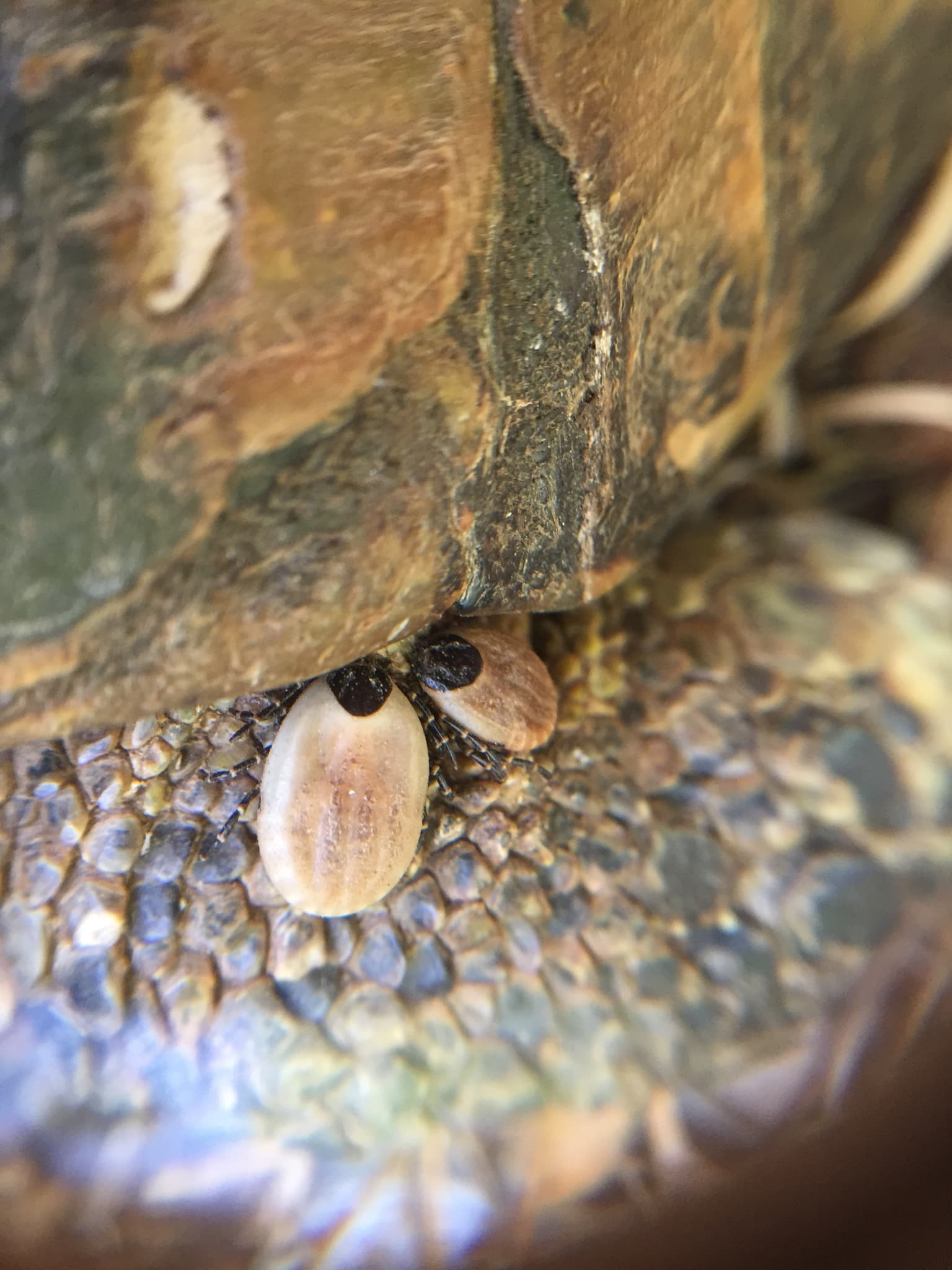
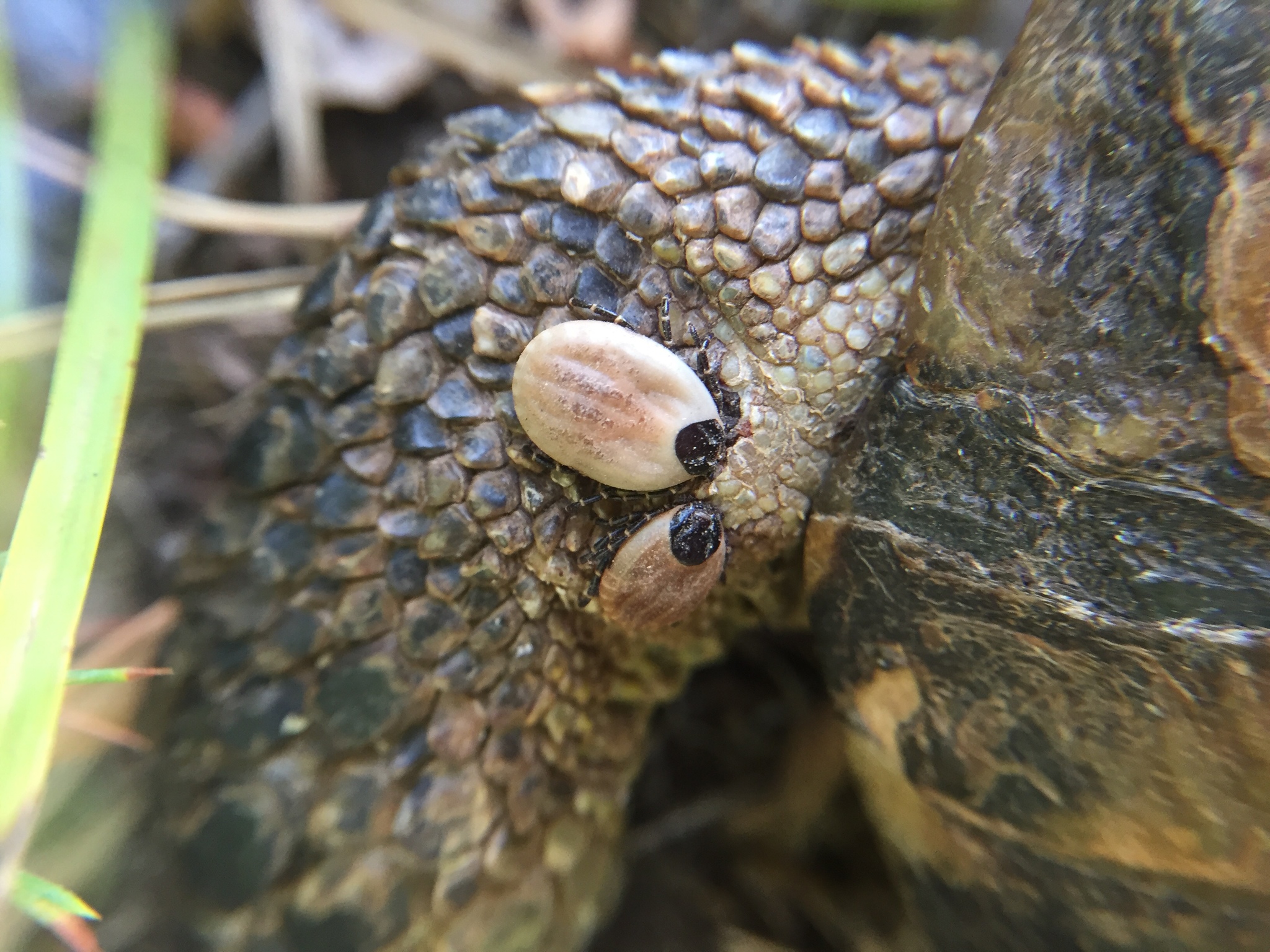
Hyalomma marginatum has nothing to do with the Ixodes ricinus tick found in forests and tall grass. It is a much larger tick (adult: 5 to 8 mm unfed, up to 2 cm once engorged), striped and fast on the move: it actively chases its host over several metres, whereas Ixodes waits passively to be brushed against.
Identification criteria to remember:
- Legs clearly banded with light and dark stripes, visible to the naked eye.
- Reddish-brown body, more elongated than Ixodes.
- Long rostrum (head) visible from above, whereas it is short in Ixodes.
- Active host-seeking: it can sometimes be seen running on the ground or on stable walls, which never happens with the "common" tick.
- Preferred hosts: large mammals — horses, cattle, deer, wild boar — and, by default, humans.
Unlike Ixodes, it is not found in damp undergrowth: it favours dry, open habitats typical of the Mediterranean climate — garrigue, maquis, pastures, farm edges, steppe-like grasslands. The beach and coastal hiking trails are among its preferred habitats.
Why 2026 marks a turning point
Three elements combine to explain why ANSES, CIRAD and Santé publique France now speak of "an emerging risk to monitor":
-
The virus is already here. On 6 October 2023, the National Reference Centre for Viral Haemorrhagic Fevers (Institut Pasteur) confirmed the detection of CCHFV RNA in Hyalomma ticks collected on cattle in the Pyrénées-Orientales (Eurosurveillance, February 2024). Of about 2,000 ticks analysed, around a hundred tested positive. No indigenous human case has been reported so far, but the virus is circulating in the environment.
-
The range is expanding. Hyalomma marginatum was historically confined to the Mediterranean coast (Pyrénées-Orientales, Aude, Hérault, Bouches-du-Rhône, Var) and Corsica. It has been observed since 2019 in Ardèche and Drôme (Santé publique France, Auvergne-Rhône-Alpes bulletin, May 2026), and is spreading towards the Rhône Valley. CIRAD climate models project an extension to the Atlantic coast by the end of the decade.
-
The European context is tightening. 2024 saw the first indigenous case in Portugal, and 2025 confirmed 3 cases in Spain and 2 in Greece. In Spain, 1 to 3 indigenous cases per year have been recorded since 2016. The northern limit of Hyalomma's range in Europe lies around the 50th parallel, which runs through northern France — no longer out of reach by 2030.
For metropolitan France, the risk assessment by ANSES, published in June 2025, concludes that the risk of human transmission is today "low but not negligible", and recommends strengthening active surveillance in the Mediterranean and Rhône departments.
Crimean-Congo fever: a disease you need to know about
CCHF is a viral disease mainly transmitted by Hyalomma ticks. It is endemic in more than 30 countries in Africa, the Balkans, the Middle East and Central Asia. The WHO classifies it among the priority pathogens for research and development.
How the virus is transmitted:
- Bite of an infected Hyalomma tick: this is the main route of transmission.
- Direct contact with blood or tissues of infected animals: the most frequent route of contamination for professionals (farmers, veterinarians, slaughterhouse staff, hunters).
- Human-to-human transmission: possible, in care settings, through contact with the blood or fluids of an infected patient (hence the importance of isolation).
- No foodborne transmission in Europe, nor via pets (except through direct contact with an infected tick).
The two-phase clinical course:
- Phase 1 (D1 to D5 after the bite): sudden flu-like illness — high fever, chills, headache, muscle pain, nausea. The picture is indistinguishable from flu or Covid. This is where the diagnosis is most often missed.
- Phase 2 (D5 to D14, in 10 to 30% of cases): possible onset of a severe haemorrhagic form — mucosal bleeding, bruising, gastrointestinal bleeding, liver and kidney failure. Documented case fatality rate: 5 to 30% in severe forms, according to the WHO and ECDC.
- Treatment: no specific antiviral validated at scale; symptomatic intensive care in severe forms. Ribavirin is sometimes used off-label.
- Recovery: slow, several weeks, with marked asthenia.
The case fatality rate is high, but it reflects the detected cases. In reality, a significant share of infections is asymptomatic or pauci-symptomatic, as with many haemorrhagic fevers — which complicates surveillance.
Where and when you risk encountering it in France
Most exposure is concentrated between May and September, with a peak in June-July (period of adult tick activity). At-risk areas in 2026:
- Mediterranean coast: Pyrénées-Orientales, Aude, Hérault, Bouches-du-Rhône, Var, Alpes-Maritimes.
- Corsica: long-standing presence, reinforced surveillance.
- Rhône Valley: Ardèche, Drôme, southern Vaucluse — progression observed since 2019.
- Inland Provence: garrigue of the Gard, Vaucluse and Luberon.
The most at-risk situations:
- Hiking in garrigue or maquis (June to August).
- Swimming in rivers or by the sea in grazing areas (ticks hide in the tall grass nearby).
- Horse-riding and trail riding in livestock areas.
- Hunting for wild boar or large game in the south.
- Agricultural or pastoral work, and farm visits (cattle, sheep, horses).
- Wild camping or bivouacking in dry, grassy areas.
Note: the Arcachon Basin, the Corbières, the Camargue and the Crau plain are historical presence areas for Hyalomma and warrant extra vigilance this summer.
Protecting yourself: the right reflexes
Prevention is based on the same triptych as for common ticks — clothing, repellent, inspection — with two particularities: the Hyalomma tick is faster and larger, and it favours dry habitats, which slightly changes habits.
Before outdoor activity:
- Wear long, light-coloured clothing (easier to spot the tick), closed shoes, trousers tucked into socks or boots.
- Apply a skin repellent based on DEET (30-50%), icaridin (20-30%) or IR3535 to exposed areas. Children and pregnant women: follow the contraindications.
- Treat clothing and shoes with permethrin (clothing spray, lasts several weeks). This is the most effective repellent against Hyalomma because the tick is a "hunter".
- Inspect equipment (saddles, blankets, rugs) before and after a ride.
- Keep bivouac and picnic areas away from pastures and water points frequented by livestock.
During the activity:
- Stay on clear paths, avoid tall grass in garrigue and muddy trail edges.
- Inspect your body and clothing regularly — every 2 to 3 hours — because Hyalomma can climb quickly and attach within minutes.
On return:
- Inspect your whole body within two hours, including skin folds, scalp, behind the ears, neck, groin, backs of the knees.
- Inspect animals too (dogs, horses) with a glove: Hyalomma is easily seen with the naked eye due to its size and striped legs.
- Shower quickly to dislodge not-yet-attached ticks.
- Monitor for 14 days for flu-like symptoms: sudden fever, chills, intense aches, headache. If fever occurs within 14 days of a bite or at-risk exposure, seek urgent care and mention the travel and activity in a Mediterranean area.
What to do in case of a bite
The protocol is identical to that of an Ixodes bite, but with extra vigilance on the chronology of flu-like symptoms.
- Remove the tick immediately with a tick remover (sold in pharmacies), grasping the animal as close to the skin as possible and pulling gently upwards, without rotation or twisting. Tweezers, eyebrow tweezers, ether, oil are forbidden: they cause the tick to regurgitate and increase the risk of transmission.
- Disinfect the area with an antiseptic.
- Keep the tick if possible (in an airtight vial, in the freezer): its identification by CIRAD or INRAE can guide surveillance.
- Photograph the tick and the bite (with a coin for scale): this is useful to the doctor for traceability.
- Report the bite on the "Signalement TIQUE" app from CiTIQUE (citique.fr) or via signalement-tique.fr.
- Seek urgent care in case of fever above 38.5°C, chills, severe headache, muscle pain or skin rash within 14 days of the bite. Mention the activity in a Mediterranean area and the possible Hyalomma bite.
- Call 15 (SAMU) or the Poison Control Centre (number: 0 805 50 00 80) in case of any haemorrhagic sign (nosebleed, gum bleeding, spontaneous bruising).
⚠️ What NOT to do: apply alcohol, vinegar, essential oil, toothpaste, or try to "burn" the tick. These practices cause regurgitation and increase the viral load inoculated.
When to call a professional
For farmers, equestrian centres, golf courses, campsites, leisure centres and land open to the public in southern France, a professional acaricide treatment may be relevant:
- Presence diagnosis by dragging a flag and visual identification of Hyalomma ticks (the size and striped legs make identification easier).
- Targeted treatment of refuge areas (tall grass, edges of pastures, woodland edges) with approved biocides applied by a Certibiocide-certified operator, in compliance with the regulations on TP18 — acaricide products.
- Landscaping (clearing, tall grass management, drainage of stagnant water points) to reduce the density of intermediate hosts (rodents, small mammals).
- Awareness-raising for exposed audiences: farm workers, riders, hikers, hunters, leisure centre children.
The intervention is carried out in two passes: a diagnosis then a treatment on confirmed positive areas, with a safety delay to be observed before the public returns.
Summary: what to remember
Hyalomma marginatum is a large, striped and fast tick found in southern Mediterranean France. While no indigenous human case of Crimean-Congo haemorrhagic fever has yet been reported in France, the virus was detected on ticks collected on cattle in the Pyrénées-Orientales in 2023, and the tick is extending its range towards the Rhône Valley. The risk is today low but real — especially as southern Europe now records several indigenous cases per year (Spain, Greece, Portugal in 2024-2025).
The right reflexes to integrate into any outing in garrigue, on horseback, hunting or near pasture this summer:
- Long, light-coloured clothing + DEET/icaridin repellent + permethrin-treated clothing.
- Inspect body and clothing every 2-3 hours, and within 2 hours of return.
- Tick remover + antiseptic in case of a bite, without ether or oil.
- Urgent consultation for any fever > 38.5°C within 14 days of a bite or at-risk exposure, mentioning the Mediterranean area.
- Veterinary monitoring of horses and dogs (suitable external antiparasitic, inspection after each outing).
For occupational exposure (farming, equestrian, hunting, slaughterhouse) or a report of a large striped tick in southern France, our team operates in Val-de-Marne, Paris and Île-de-France, and has a network of partners in the south for reports outside our area. Discover our outdoor pest control and space treatment services, our shop of repellents and tick removers, our pricing and our service areas.
To dig deeper, read our briefing on Ixodes ticks and Lyme disease, at high risk this summer 2026, and our guide on how to choose a reliable pest control company. For any question or intervention, contact our experts or, in case of an urgent situation, request a fast intervention.
In short — The Hyalomma marginatum tick, vector of the Crimean-Congo haemorrhagic fever virus, is now established in southern Mediterranean France and is spreading towards the Rhône Valley. The virus was detected on ticks in 2023, and southern Europe is recording its first indigenous cases. The risk to humans remains low but real. Prevention is based on covering clothing, repellent, regular inspection and urgent consultation in case of fever within 14 days of an at-risk exposure.
Sources: Santé publique France (regional Auvergne-Rhône-Alpes bulletin, 5 May 2026; press release of 24 October 2023), ANSES (2024 opinion and 2025-2030 roadmap), CIRAD (press release of 25 October 2023), Eurosurveillance (Bernard C. et al., 8 February 2024), ECDC, WHO.
A pest problem?
Our experts act fast and for good. Request a free assessment.
Request a free quoteOur services