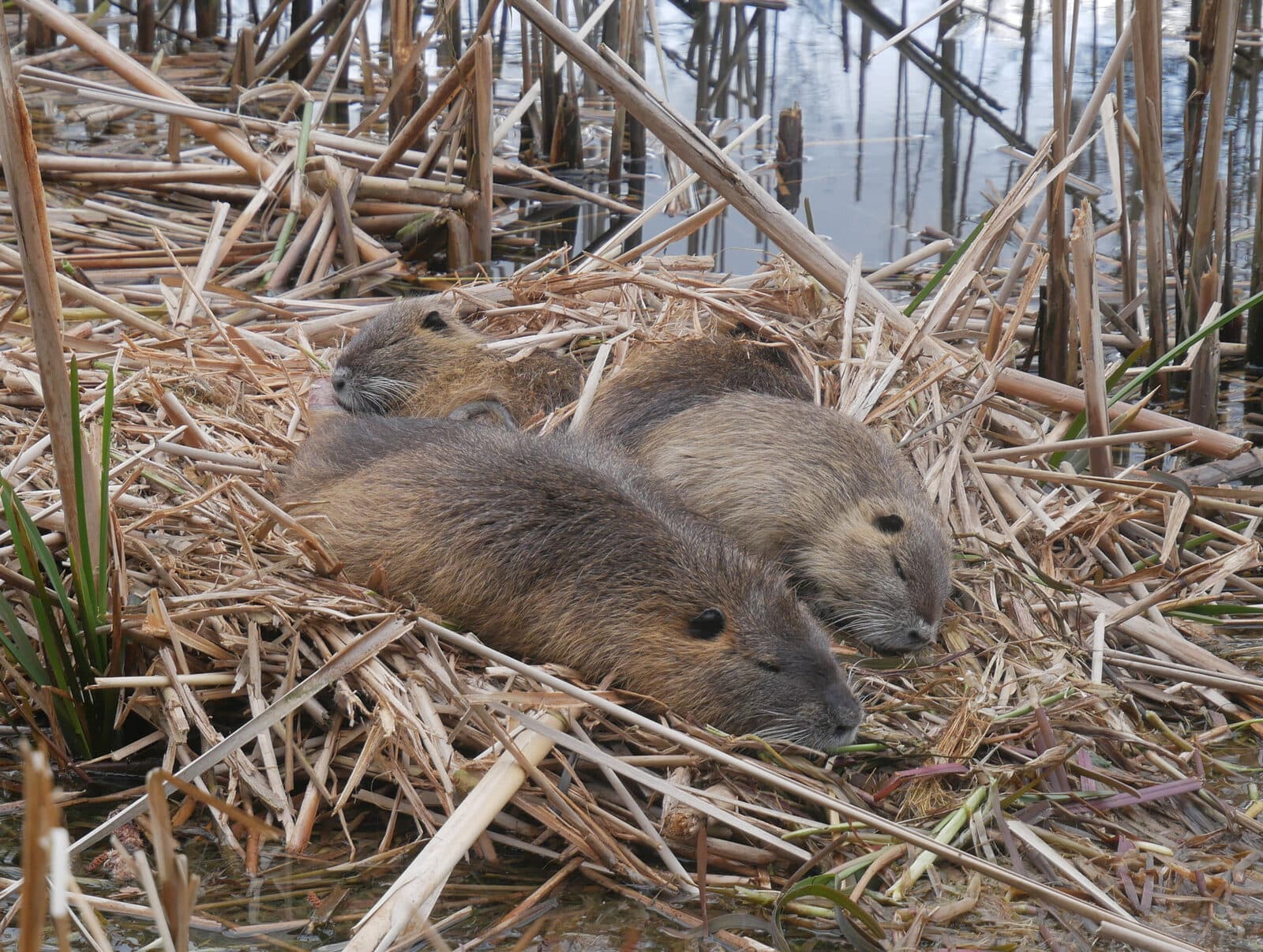
A large South American rodent that has colonised European wetlands
Native to Argentina, Uruguay, Chile and Brazil, the coypu (Myocastor coypus) — also known as nutria — is a large semi-aquatic rodent that can weigh up to 9 kg and reach 80 cm in length including its cylindrical tail. Introduced into France in the 19th century for its fur, it escaped from fur farms and has since colonised almost the entire country, with the exception of high-altitude areas.
In 2026, several regional FREDON pest-control federations and departmental hunting federations are coordinating collective trapping campaigns in the wetlands of Charente-Maritime, Gironde, the Camargue, Loire-Atlantique, Vendée, Bouches-du-Rhône and Morbihan, with numerical targets exceeding 200 coypus removed per zone over the summer season.
Why the coypu is classified as an invasive alien species
The coypu is listed as an invasive alien species (IAS) by the French Biodiversity Office (OFB) and the National Museum of Natural History (MNHN). It is also classified as a "species likely to cause damage" (ESOD) by three-year prefectural orders in more than 70 French departments, including the entire Atlantic coast, the Camargue and Brittany.
The regulatory framework combines:
- European Regulation 1143/2014 on the prevention and management of invasive alien species;
- The ministerial order of 14 February 2018, which prohibits the introduction, sale, breeding and transport of live coypus;
- The order of 29 January 2007 governing trapping conditions;
- The 2024-2027 or 2025-2028 ESOD prefectural orders that authorise destruction by shooting, cage trapping or bow-hunting depending on the department.
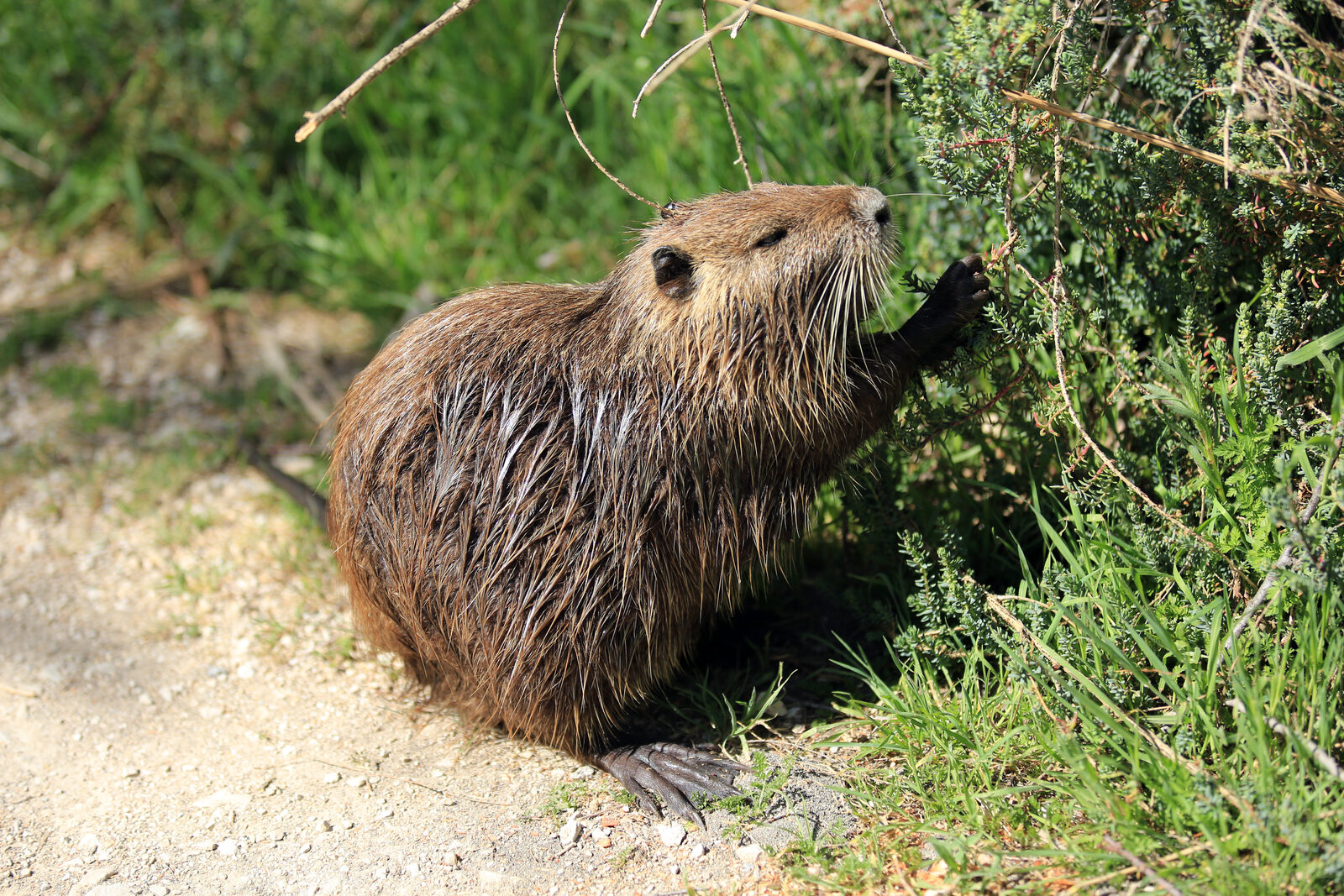
Massive damage to banks, crops and biodiversity
The coypu is a strict herbivore that consumes the equivalent of 25 % of its body weight in plants every day. Its damage falls into three categories:
- Bank and levee collapse: it digs 6 to 8-metre burrows with submerged entrances, weakening hydraulic structures, towpaths, fish ponds and irrigation canals. In the Camargue and the Marais poitevin, several dykes have had to be rebuilt urgently after collapses attributed to coypu activity;
- Agricultural losses: maize, cereals, rapeseed, alfalfa, sunflower, market-garden crops — losses exceed €500 per hectare locally according to the chambers of agriculture of Charente-Maritime and Vendée;
- Impact on biodiversity: consumption of reed beds, destruction of waterfowl nests (ducks, coots, rails), competition with the water vole and the muskrat, and the spread of liver fluke (Fasciola hepatica), a parasite of livestock.
The total cost to local authorities and farmers is estimated by the OFB at several tens of millions of euros per year nationally.
The 2026 control campaign: collective trapping and prefectural coordination
In 2026, the national scheme is built around several complementary approaches:
- Cage trapping (single-entrance "coypu cage", bait-free) carried out by local hunting associations (ACCAs), regional FREDONs and departmental hunting federations;
- Shooting operations led by official wolf-and-wildlife officers (lieutenants de louveterie), particularly in summer when coypus are active along canals;
- Departmental "Invasive Alien Species" coordinator appointed by the prefectures in most of the departments concerned, in line with the National IAS Strategy 2022-2030;
- Training of staff from coastal municipalities and ASA associations of fish-pond owners in setting compliant traps;
- Centralised data collection via the SINP platform (Information System on Nature and Landscapes) and the OFB's "Acting for biodiversity" app, which lets members of the public report their sightings.