On Saturday 11 July 2026, the Edylis nursing home in Lons-le-Saunier (Jura) detected about ten cases of scabies among its residents. By 13 July, the official count released by the management and the Bourgogne-Franche-Comté Regional Health Agency (ARS BFC) had risen to 11 residents and 1 caregiver, triggering a crisis unit and a two-wave action plan (15 July, then around 22 July). For a facility of 91 residents with 80 places across 71 single rooms and 9 shared rooms, run by the CCAS of the City of Lons-le-Saunier, the episode is a reminder that, in communal settings, scabies — a parasitosis long considered marginal — remains one of the most contagious chains of transmission. Here is what to take away, and what to do at home or in a care facility.
What happened at the Edylis nursing home
According to the articles in Le Progrès (14 July 2026), Ouest-France and Hebdo39 quoting the ARS Bourgogne-Franche-Comté, the timeline is as follows:
- Saturday 11 July 2026: care staff detect several suggestive skin lesions among residents in the same wing. The diagnosis of scabies is clinically confirmed, and the report is immediately sent to the ARS.
- Sunday 12 – Monday 13 July: the management of the nursing home and the ARS BFC activate a crisis unit and organise an exhaustive census of cases and contacts (residents, caregivers, families, visiting professionals).
- Wednesday 15 July 2026: the first wave of treatment begins. All residents and all staff are treated simultaneously, either orally (ivermectin) or topically (benzyl benzoate / permethrin), over 48 hours. A full disinfection of the premises (bedding, curtains, armchairs, handles, sanitary facilities) is carried out by the in-house team supported by a specialist disinfection company of the 3D type (disinfection, disinsectisation, deratisation).
- Following week (around 22 July): a second wave of treatment to prevent any relapse, with a 3rd dose of ivermectin at D20 for the residents, in line with the recommendations of the French Society of Dermatology for grouped cases in nursing homes.
The facility operated at a reduced pace for three days: supervised visits, limited resident movements, suspended group activities. Axelle Duflot, director of social cohesion for the city of Lons-le-Saunier, said she was "confident" about the outcome of the operation, while stressing the difficulty of breaking the chain definitively without a simultaneous treatment of all exposed people.
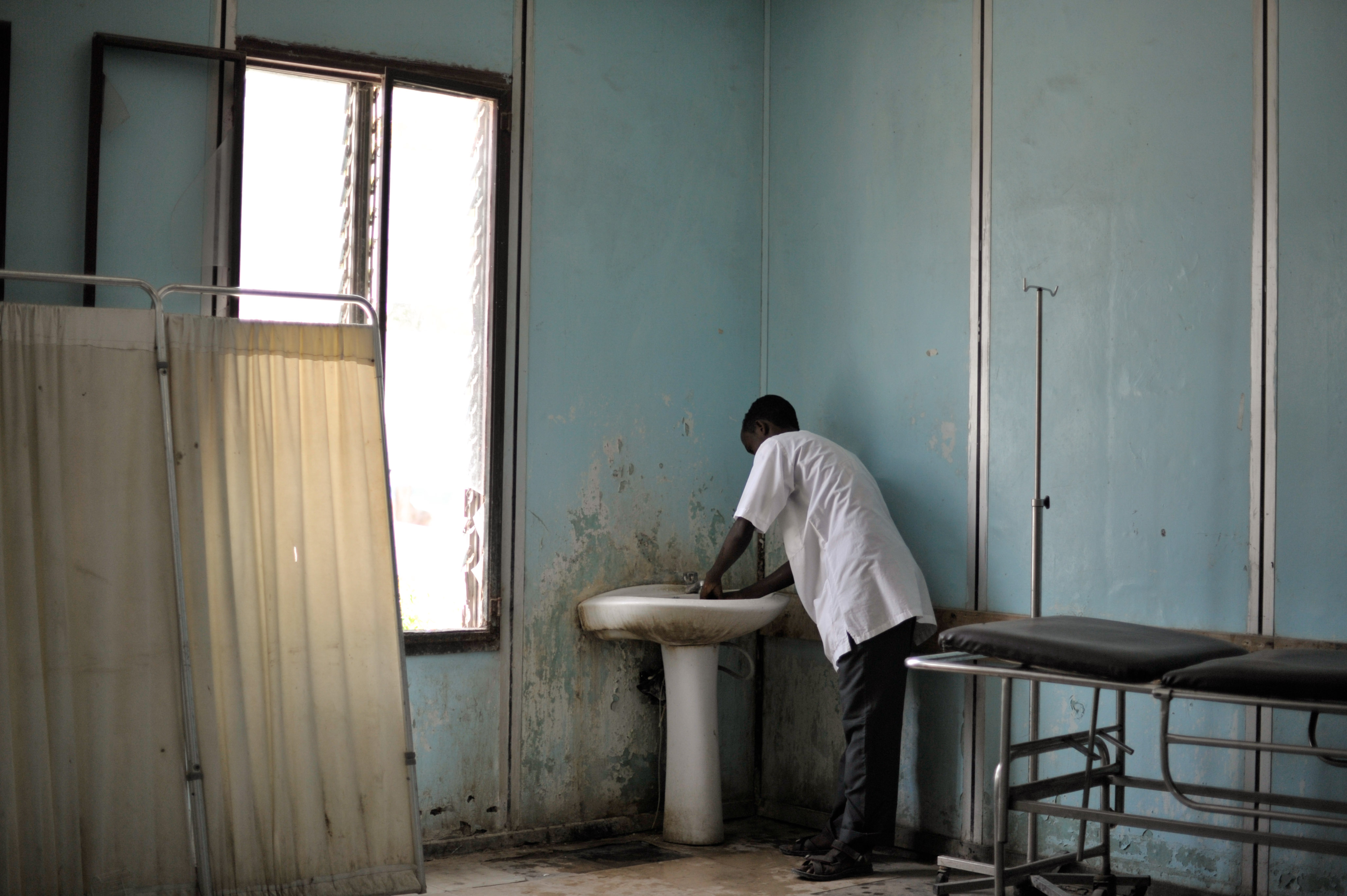
Why scabies is a public health issue in 2026
Scabies is not a "disease of the past". After a low incidence in the 2010s, several French regions have observed a resurgence since 2022-2023, fuelled by close contact in some facilities, increased migration flows and the growing resistance of Sarcoptes scabiei to certain topical treatments. The French High Council for Public Health (HCSP) and the French Society of Dermatology (SFD) have updated their recommendations: a national CPIAS / ARS webinar held on 8 January 2026 was even titled "Scabies is back: keys to an effective response".
In nursing homes, the issue is particularly sensitive:
- Prolonged skin contact is almost daily between caregivers and residents (washing, dressing, changes);
- Shared linen and bedding (sheets, draw sheets, wash gloves) constitute a secondary vector of contamination;
- Atypical forms in elderly people ("clean people's scabies", unexplained pruritus, discreet lesions on the back) delay diagnosis;
- The immune deficiency of residents favours profuse or hyperkeratotic scabies, far more contagious, which requires hospital care.
This is precisely what health authorities fear in the context of a national flash survey on grouped cases in elderly care facilities.
Understanding scabies: transmission, symptoms, incubation
Scabies is a cutaneous parasitosis caused by a microscopic mite, Sarcoptes scabiei variety hominis. The fertilised female digs a burrow in the superficial layer of the skin (the stratum corneum) where she lays her eggs. The larvae hatch in 3 to 5 days, become adults in 10 to 14 days, and the cycle starts again. The parasitic load is usually low (5 to 15 mites per patient) — except in profuse scabies, where it can reach thousands of individuals.
Modes of transmission
- Direct and prolonged skin contact (15 to 20 minutes): responsible for 95% of cases;
- Indirect contact (linen, bedding, clothes, contaminated armchairs): about 5% of cases, but more in profuse scabies;
- The mite survives 2 to 4 days in human scales away from the host, up to 7 days in a humid environment.
Characteristic symptoms
- Intense pruritus, especially at night, often causing insomnia;
- Sinuous, fine burrows (a few mm to 1 cm) between the fingers, on the wrists, elbows, armpits, waist, buttocks, genitals;
- Pearly vesicles and scabies nodules on the areas described;
- In the elderly: discreet forms, unexplained pruritus, scratching lesions on the back;
- Superinfection of the skin (impetigo) from scratching in prolonged forms.
Incubation
- Common scabies: 3 to 6 weeks after first contact;
- Profuse scabies: 1 to 3 days (in cases of massive infestation, shortened incubation);
- Re-infestation: 1 to 3 days (immediate pruritus).
Recommended treatment in 2026
The French Society of Dermatology and the ANSM (SPC updated in November 2025) recommend two first-line options, often combined in nursing homes:
1. Oral ivermectin (STROMECTOL® 3 mg) — reimbursed, preferred in communal settings
- Dosage: 200 µg/kg as a single dose, on an empty stomach (2 h before / 2 h after), with a large glass of water;
- Repeat at D8 – D14;
- 3rd dose at D20 recommended in nursing homes (reduces failures);
- Contra-indications: children under 15 kg (magistral preparation required), caution during the 1st trimester of pregnancy.
2. Topical treatments
- ASCABIOL® (benzyl benzoate 10%) — historical first-line;
- TOPISCAB® (permethrin 5%) — available in pharmacies since 2015, better tolerated;
- Apply to damp skin, all over the body except face and mucous membranes, in two passes at D1 and D8-D14;
- Mittens required for infants to prevent ingestion.
The 3 key principles of success
- Simultaneous treatment of all cases and all contacts in the 1st circle (spouse, children, parents, caregivers, neighbouring room in nursing homes);
- 2nd circle treated if epidemic (≥ 2 cases), at-risk profession (caregiver) or repeated skin-to-skin contact;
- Rigorous disinfection of linen and bedding.