Introduction: the little pile of sawdust at the foot of the wall
It appeared one morning, on the tiled floor, against the skirting board of the loft bedroom. A millimetre thick, about the size of a two-euro coin, a very fine blond dust flecked with darker fragments. You vacuum it up. Three days later, the pile is back, in exactly the same spot.
This seemingly trivial detail is one of the few outward signals of a problem unfolding inside the wood, out of sight, sometimes for several years already. Wood-boring insects — those that feed on timber or tunnel through it — are the slowest and most expensive pests in the French housing stock. They don't bite, they carry no disease, they cause no itching. They degrade the load-bearing structure of a building.
This site regularly covers "visible" pests: rodents, bed bugs, cockroaches, wasps. This article looks at the exact opposite: a population that remains invisible until it has already consumed a significant share of the material. Carpenter ants, house longhorn beetles, woodworm, powderpost beetles and — in the departments concerned — termites: knowing how to read the clues, tell the species apart and understand what attracts them is what separates a localised repair from a five-figure roof structure rebuild.
The carpenter ant: it doesn't eat the wood, it hollows it out
A common confusion
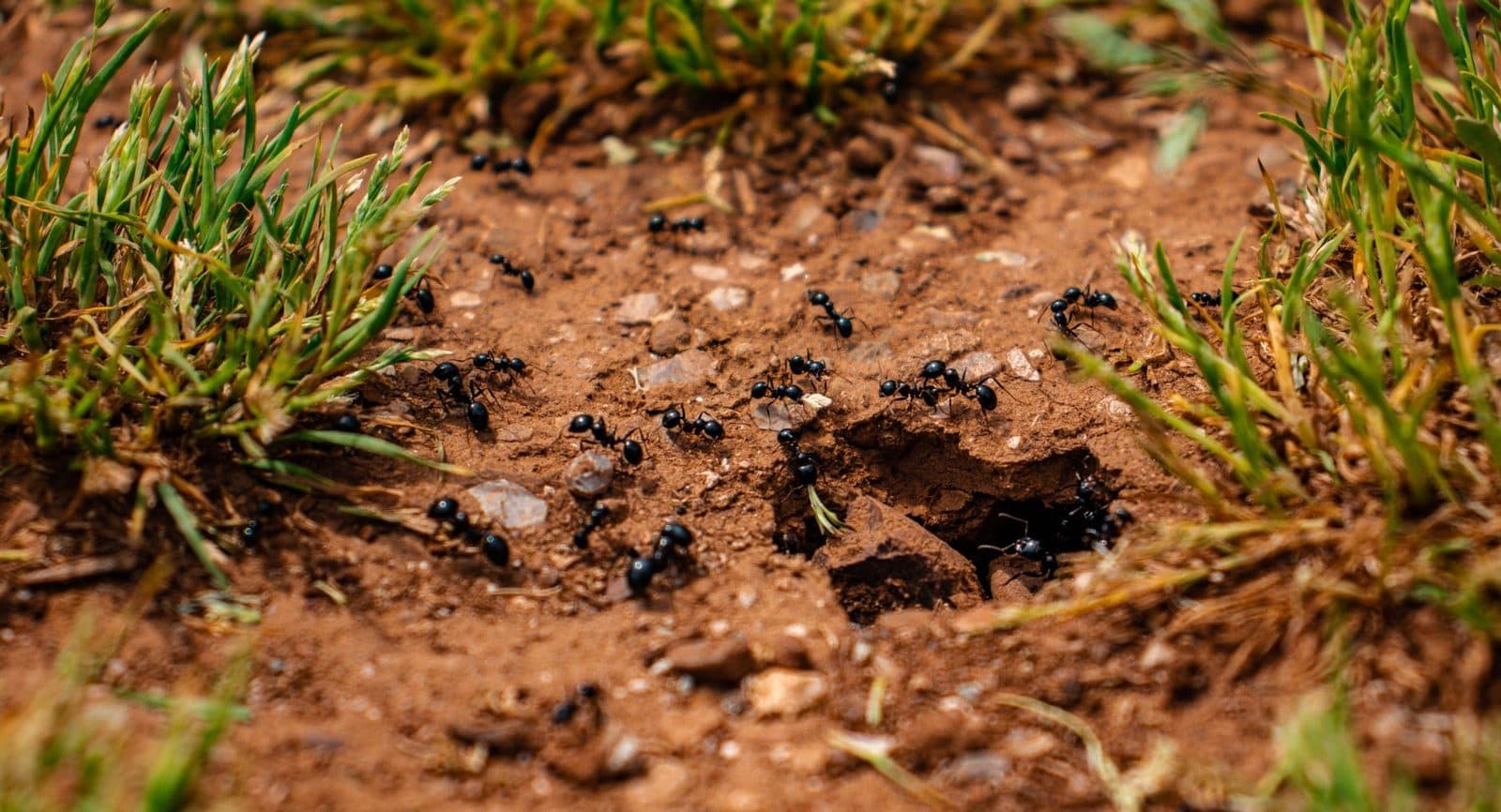
Contrary to a stubborn misconception, ants of the genus Camponotus — known as carpenter ants — do not feed on wood. They lack the enzymes needed to digest cellulose. What they do is different, and in some respects more problematic: they excavate the wood to build their nest, pushing the shavings out of the galleries.
The result is a network of smooth, clean corridors with almost polished walls, following the softer growth rings of the timber. Seen in cross-section, an infested beam looks like a well-organised sponge. Mechanical strength collapses without the outer surface changing in appearance.
In mainland France, the species most frequently involved in buildings is Camponotus herculeanus and, further south, Camponotus ligniperda. These are large ants, 7 to 15 mm for workers, sometimes more for queens, black or two-toned (a reddish thorax in some cases).
The three signs that should raise the alarm
| Clue | What it means | Urgency |
|---|---|---|
| Coarse sawdust mixed with insect debris at the foot of a stud | Active nest directly above, shavings being ejected | High |
| Large black ants indoors in winter | Colony overwintering in the structure, not a passing visit | High |
| A dry rustling sound audible at night inside a partition | Excavation under way | High |
| Winged ants emerging indoors in spring | Colony mature for at least 3 to 6 years | Very high |
That last point deserves emphasis. A Camponotus colony only produces winged reproductives once it has reached maturity, which takes several years. Seeing winged ants emerge from a ceiling in April therefore means the problem is long-standing, not that it is just beginning.
The real culprit: moisture
Carpenter ants almost never attack sound, dry timber. They look for wood with a moisture content above 15 to 20%, often already slightly degraded by fungus. In practice, a Camponotus nest is the symptom of a waterproofing defect, not the root cause:
- a failing chimney or roof flashing;
- an overflowing gutter wetting a verge rafter;
- a slow leak under an upstairs shower tray;
- decking joists in permanent contact with the ground;
- structural timber in direct contact with damp masonry without a damp-proof course.
In other words, treating the ants without dealing with the water is like repainting a cracked wall. A pin-type moisture meter for wood, a device costing about as much as a tank of petrol, lets you map the at-risk areas yourself before you even call anyone — above 18%, the area is vulnerable.
The true wood-borers: house longhorn beetle, woodworm, powderpost beetle
Where ants merely excavate, other insects genuinely digest wood. These are beetles whose larvae spend several years inside the material before emerging as adults through a characteristic exit hole.
The house longhorn beetle (Hylotrupes bajulus)
This is the most destructive structural timber insect in France, and it attacks exclusively the sapwood of softwoods (fir, spruce, pine) — that is, the vast majority of roof structures built since the post-war years.
- Exit hole: oval, 5 to 10 mm along the long axis. This is the most reliable identification criterion.
- Frass: very fine, powdery sawdust mixed with cylindrical pellets.
- Larval stage: 3 to 11 years depending on temperature and the nitrogen content of the wood.
- Sound: an audible gnawing in summer, particularly in hot weather, in the loft.
A house longhorn larva can reach 25 mm in diameter at the end of its development. It travels beneath a film of wood half a millimetre thick: a single jab with an awl is enough to break through the surface of a rafter that looks perfectly intact. This is the so-called "screwdriver test", which every surveyor carries out as a matter of course.
The deathwatch beetle (Xestobium rufovillosum)
It prefers old, damp hardwoods: oak in period roof structures, half-timbering beams, floors in unheated buildings. Its exit hole is round, 2 to 4 mm. It is associated with the presence of wood-rotting fungi, which pre-degrade the timber.
Its distinctive feature: in spring, the adult taps the wall of its gallery with its head to attract a mate, producing a regular ticking heard in the silence of a church or an old house. This is the "death watch" of English-speaking folklore.
The common furniture beetle (Anobium punctatum)
A round hole 1 to 2 mm across, sawdust as fine as talc. It attacks furniture, floorboards, staircases and panelling — hardwoods and softwoods alike — as soon as ambient humidity exceeds 60%. This is the insect you find in a flea-market wardrobe or in the treads of an attic staircase. Its structural impact is real but slower than that of the house longhorn beetle.
The powderpost beetle (Lyctus brunneus)
It is interested only in the sapwood of starch-rich hardwoods: oak, chestnut, ash, but also imported tropical timbers. A 1 to 2 mm hole, with extremely fine, free-flowing frass that pours out like sand when you shake the piece. It is found mainly in recent floorboards, panelling and new furniture.
Quick identification table
| Insect | Exit hole | Timber attacked | Sawdust |
|---|---|---|---|
| House longhorn beetle | Oval, 5-10 mm | Softwood sapwood | Fine + cylindrical pellets |
| Deathwatch beetle | Round, 2-4 mm | Old, damp hardwoods | Granular, lens-shaped |
| Common furniture beetle | Round, 1-2 mm | All timbers, humidity > 60% | Very fine powder |
| Powderpost beetle | Round, 1-2 mm | Hardwood sapwood | Free-flowing, like talc |
| Carpenter ant | No exit hole: irregular openings | Damp timber | Coarse shavings + debris |