Introduction: the little pile of sawdust nobody looks at
Some pests announce themselves overnight — a bed bug, a cockroach darting across the kitchen. Others work away for ten years before anyone notices. Wood-boring insects, the ones that live inside structural timber, belong firmly to the second category.
The warning sign is often laughably small: a little heap of beige dust at the foot of a door jamb, a few round two-millimetre holes in a skirting board, a sound like crumpling paper inside a partition wall at night. You vacuum it up and think no more about it. Three years later, a carpenter pushes a screwdriver into a purlin and it sinks in six centimetres without resistance.
September is the right moment for this check. Carpenter ant colonies (Camponotus) have finished their season of activity and left their debris in plain view; the larvae of the house longhorn beetle (Hylotrupes bajulus) and of woodworm have emerged over the summer, leaving fresh holes and frass; and above all, you can still act before heating and winter damp make everything harder. This article sets out a do-it-yourself inspection method, honest about its limits, before you call in a professional.

Who eats what: the four usual suspects
Not all timber attacks look alike, and confusion is the number one cause of the wrong treatment. Here are the four profiles you actually encounter in a French home.
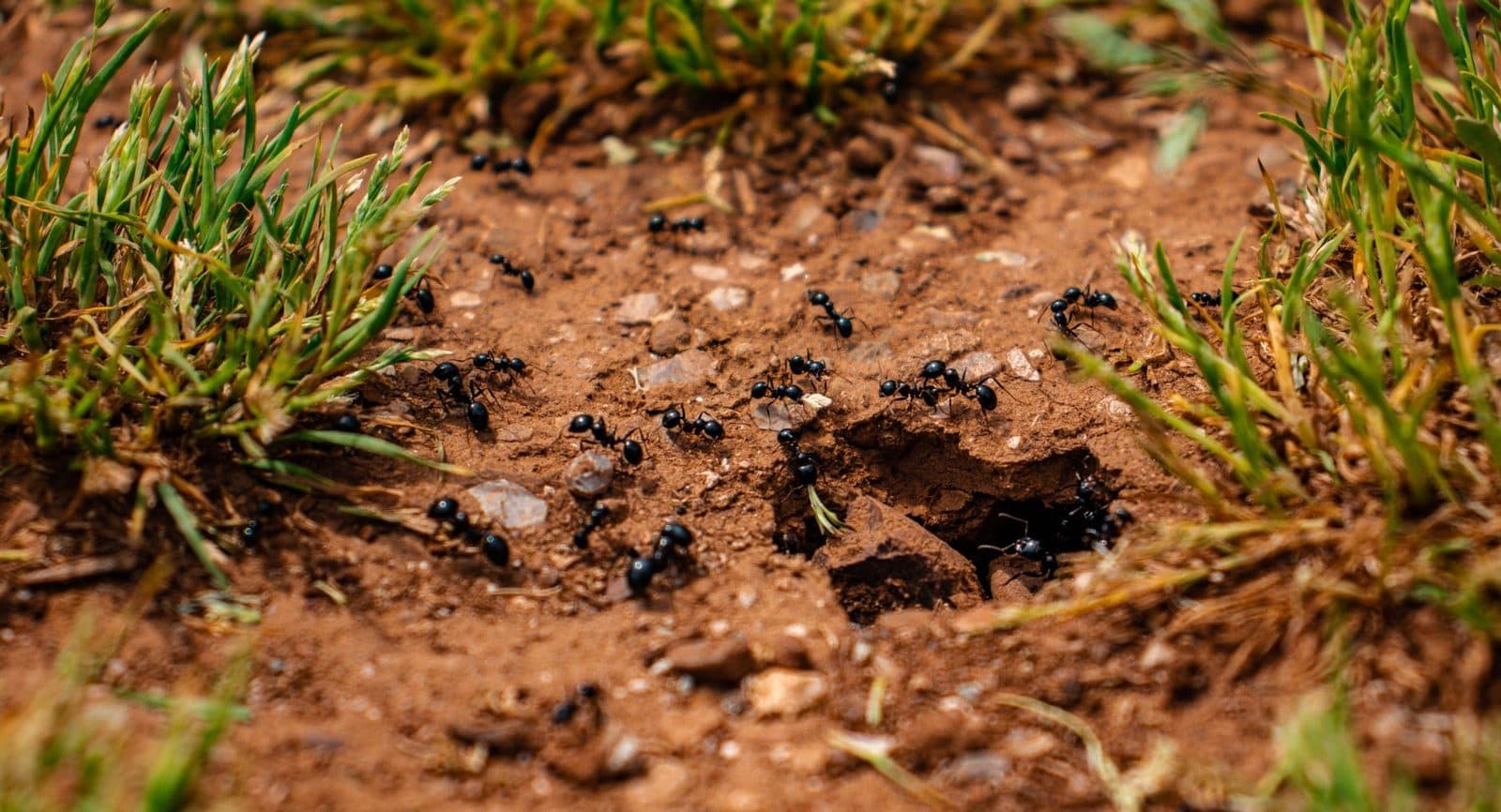
The carpenter ant (Camponotus ligniperda, C. herculeanus)
Contrary to popular belief, it does not eat wood: it hollows it out to house its colony, ejecting the shavings outside. It attacks almost exclusively timber that is already damp or slightly degraded — a rafter beneath a roof leak, the bottom of cladding in contact with soil, a window frame taking on water.
Distinctive signs:
- large black ants (6 to 16 mm, with considerable size variation within a single colony);
- piles of fibrous shavings, resembling pencil sharpenings, mixed with insect fragments;
- galleries that are smooth, as if sanded, following the soft growth rings of the wood;
- an audible rustling inside a partition wall in warm weather.
The house longhorn beetle (Hylotrupes bajulus)
This is the most destructive wood-boring insect affecting buildings in mainland France, termites aside. Its larva tunnels for 3 to 10 years through the sapwood of softwoods (fir, spruce, pine) — so typically through roof structures. The adult emerges in summer through a characteristic oval hole, 5 to 10 mm across.
The frass is fine and powdery, with small cylindrical pellets. The timber can be hollowed out from within while the surface remains intact: that is exactly what makes this insect so dangerous structurally.
Woodworm beetles (Anobium punctatum, Xestobium rufovillosum)
The common furniture beetle makes round holes 1 to 3 mm across in antique furniture, floorboards and joinery. The death watch beetle, on the other hand, attacks large-section timbers already affected by fungus, and almost always signals an underlying damp problem. Its male produces a rhythmic tapping in spring to attract the female — hence its English name, deathwatch beetle.
Termites (Reticulitermes spp.)
A category of their own. Subterranean termites advance from the ground up, leave no visible exit holes, produce no sawdust, and build mud tubes along masonry. Their presence falls under a specific regulatory framework: article L.126-4 of the French Construction and Housing Code requires a termite report when selling a built property located in a zone designated by prefectoral order. Any confirmed infestation must be reported to the town hall.
Key point: a visible exit hole + sawdust = an insect with wood-boring larvae (house longhorn beetle, woodworm). Shavings with no regular exit hole = carpenter ants. Neither one nor the other, but mud tubes = suspected termites, and that is not a DIY job.
The home inspection: two hours, a torch and a screwdriver
This check does not replace a professional survey, but it tells you whether you need to order one. Set aside a dry morning, and something to protect yourself: lofts concentrate dust, mineral fibres and droppings. An FFP2 mask and a rechargeable head torch are not a luxury — in an unconverted loft, you need both hands free.
Step 1 — The loft and roof structure
Work your way over the whole roof structure, lighting it from the side (raking light): that is how you see holes and surface relief, never head-on.
Priority areas to inspect:
| Area | What to look for |
|---|
| Rafter feet, wall plates | Damp marks, greyed timber, galleries |
| Around chimneys and flues | Old water ingress, blackened wood |
| Under slipped or broken tiles | Wet rafters, moss on the inside |
| Tie beams, purlins | Oval holes, frass on the floor |
| Shuttering timber left in place | Classic house longhorn beetle hotspot |
The screwdriver test is the central move: press the tip of a flat-blade screwdriver against the wood, perpendicular to it, with firm but reasonable pressure. Sound timber resists. Infested timber gives way, or reveals a thin surface crust that collapses into a powdery void.
Follow up with the mallet test: tap the beam at regular intervals. A dull, muffled sound where the rest rings solid indicates a cavity.
Step 2 — The cellar, the crawl space, the base of walls
This is the domain of termites and the death watch beetle, both tied to damp. Look for mud tubes running up walls, ground-floor joists, and timber in direct contact with the soil. A indoor hygrometer left in the cellar for a few days gives a useful reading: above a sustained 70% relative humidity, timber becomes vulnerable to fungi and then to the insects that follow them.
Step 3 — Joinery and interior woodwork
Skirting boards, window frames, staircases, old floorboards, family furniture. The common furniture beetle happily travels from a piece of furniture to fixed joinery. A simple trick: vacuum the area, note the date, then come back three weeks later. If fresh frass has reappeared in the same spot, the infestation is active. Without this, you cannot tell an ongoing attack from one that died out twenty years ago.

Active or extinct? The question that changes everything
This is the most important question, and the one alarmist quotes tend to skip. A timber can carry hundreds of holes from an attack that ended before the war. Treating it then costs a lot for nothing.
Three signs of genuine activity:
- Fresh, pale frass. Old sawdust is grey, compacted, often stuck down by dust. Fresh frass is pale, powdery, and reappears after cleaning.
- Holes with sharp edges. A recent emergence hole has clean edges and a pale wood-coloured interior. An old hole is rounded, grimy, sometimes covered in paint.
- Live insects or recent remains in summer, on nearby window sills.
Always photograph what you find with an object for scale (a coin). If you later have to compare quotes, those photos are worth more than any recollection.
What you can treat yourself — and what you must not
The case of carpenter ants
Here, insecticide is the second step, never the first. The colony moved in because there was water. Remove the cause: broken tile, lifted flashing, overflowing gutter, blocked loft ventilation, timber in contact with soil. Otherwise a new colony will simply return.
Treatment then relies on ant bait gel or bait stations, placed along foraging trails rather than on the nest: workers carry the bait back to the colony, which a fly spray will never achieve. Allow several weeks. An insecticide duster can supplement this by injecting a suitable product into accessible galleries, once the nest has been located with certainty.
Small areas of woodworm
On a piece of furniture, a staircase or an isolated skirting board, surface treatment by brushing or injection with an approved wood treatment product remains a realistic option for a private individual. Two rules:
- check that the product holds a marketing authorisation as a TP8 biocidal product (wood preservatives). ANSES publishes the list of authorised substances and products; unauthorised formulations still circulate online, often imported, and that is precisely the kind of product that has sent users to A&E in other areas of pest control.
- observe the PPE stated on the label. INRS reminds users that wood biocides must be applied in a ventilated space, with solvent-resistant nitrile gloves, eye protection and an appropriate cartridge respirator.
What is strictly a job for professionals
- Any structural attack: roof structure, load-bearing floors, posts.
- Any suspicion of termites.
- Treatments involving pressure injection or the chipping-and-brushing of an entire roof structure.
- Heat treatments or treatment under controlled atmosphere for the timbers of historic buildings.
A serious roof-timber treatment includes chipping back (removing degraded material down to sound wood), brushing and dust removal, drilling and injection in large-section timbers, and a final brush application. It comes with a detailed report specifying products, concentrations, and a ten-year guarantee on the treatment. A quote that mentions neither chipping nor injection is a surface-only quote — useful as prevention, inadequate against a confirmed attack.
For a sense of the price brackets and of what a quote should contain, our article on the cost of pest control work and the services page provide benchmarks for comparison; supporting products are gathered in the shop.
Prevention: five habits that buy you twenty years
Fighting wood-boring insects is first and foremost about fighting water. Dry, ventilated timber below 20% moisture content is of almost no interest to these insects — with the notable exception of the house longhorn beetle, which is quite happy with dry wood.
- Check the roof covering every autumn. Slipped tiles, ridge, flashings, gutters. A single roof leak can create, in one winter, exactly the damp zone a carpenter ant colony is waiting for.
- Keep lofts and crawl spaces ventilated. Tile vents and air grilles must stay clear; over-insulated cold lofts with no air gap are a classic trap.
- Break wood-to-soil contact. Terrace posts on metal base plates, cladding kept 20 cm above ground level, logs never stacked against a façade. A raised log store avoids maintaining an ant colony a metre from the wall.
- Only bring sound timber in. Reclaimed wood, decorative old beams and second-hand furniture are the main vectors of woodworm in new homes. If in doubt, isolate the piece for several weeks and watch for frass.
- Inspect at the right time. Adults emerge between May and August depending on the species; the post-season check, in September and October, gives the truest picture of the year just gone.
Special case: shared ownership and rented property
Roof structure and building fabric fall under the common parts in a co-ownership building: collective roof-timber treatment is voted on at a general meeting, on the basis of quotes presented by the managing agent, and not at the initiative of an individual owner. So report any observation in writing to the managing agent, with photos, and ask for it to be added to the agenda.
In rented property, the usual distinction applies: routine maintenance is the tenant's responsibility, but an infestation that affects the structure or renders the dwelling non-compliant with the decency standards is down to the landlord. Our dedicated article on how costs are shared between landlord, tenant and co-ownership sets out this division in detail.
Conclusion: one inspection a year, not one treatment a year
With timber, the costliest reflex is swinging between two extremes: ignoring it entirely, or preventively treating the whole roof structure at the first hole. Good practice fits into three lines.
Carry out one annual inspection at the end of summer, with raking light and a screwdriver. Date your observations and confirm activity with the fresh-frass test. Fix the moisture cause before tackling the insect. And reserve heavy chemical treatment for genuinely active, structural attacks, carried out by a certified firm, with a written report and a guarantee.
A house longhorn beetle takes ten years to ruin a purlin. You have plenty of time to do this properly — provided you actually look.
Sources and references
- ANSES — list of authorised biocidal products, product type TP8 (wood preservatives).
- INRS — factsheets on occupational exposure to wood treatment products and associated PPE.
- French Construction and Housing Code, articles L.126-4 et seq. (termite report, declaration to the town hall).
- FCBA / CTBA — technical documentation on biological wood-degrading agents and curative treatment processes for roof structures.
- Muséum national d'Histoire naturelle / INPN — distribution data for Camponotus and Reticulitermes species in France.