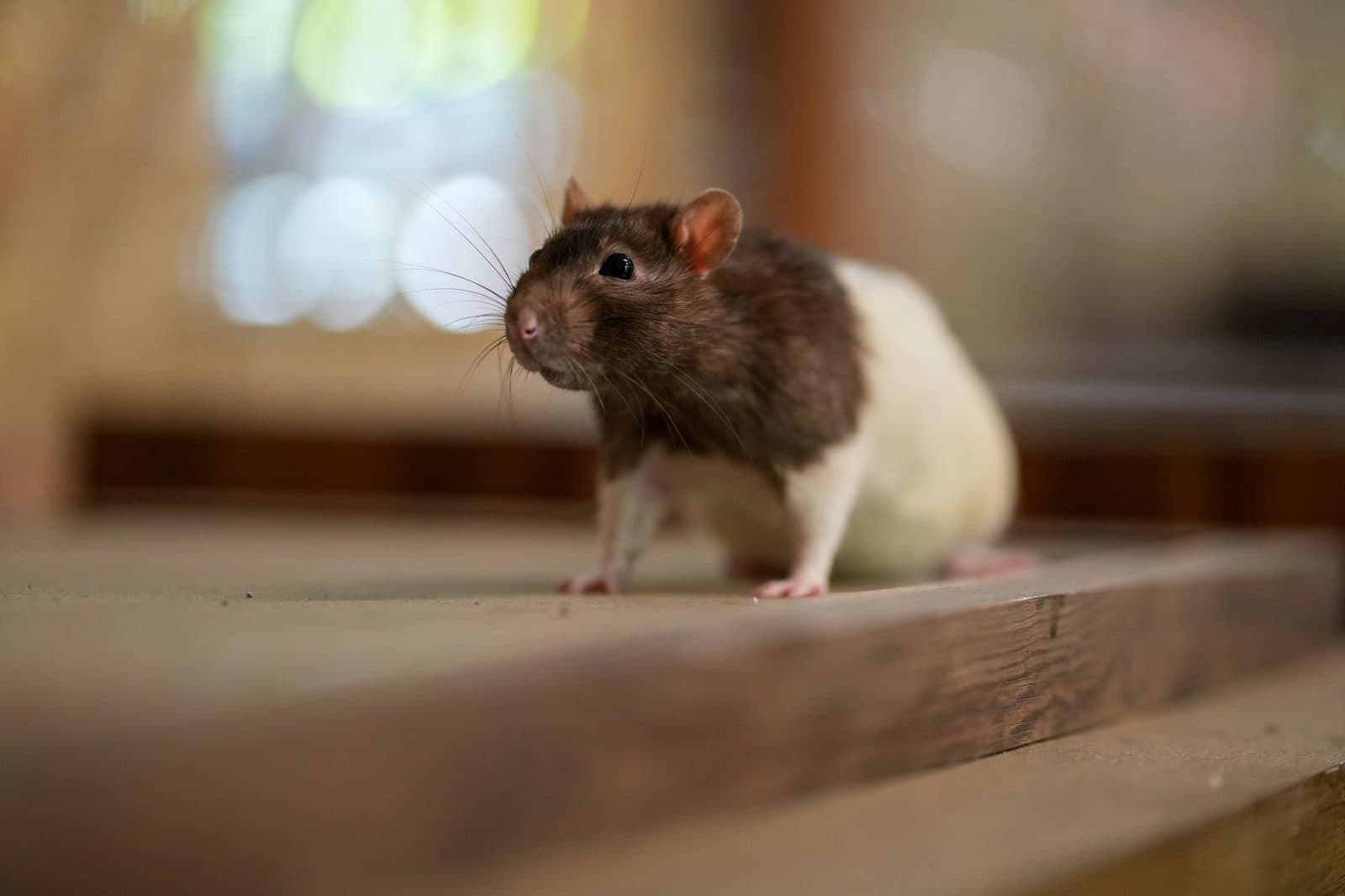
"The pest controller looked at the house for five minutes, then spent half an hour at the bottom of the garden. He showed me the log pile, the ivy on the neighbour's wall and the stack of pots under the lean-to. He told me: your rats don't live in your house, they live out there, they just come in to eat." This homeowner in Nogent-sur-Marne was expecting an indoor treatment. What he mainly got was a garden redesign plan.
It is a logic many residents discover too late: a rodent almost never colonises a house directly. It first settles outside, in a discreet, stable, dry shelter close to a food source. It stays there for weeks, sometimes months. Moving into the cellar or the loft is only the next step, triggered by cold weather or by one litter too many.
This blog has already covered rats at the compost bin and the hen house, the garden shed and the garage and bird feeders. This article tackles a distinct, earlier question: the garden's plant structure and outdoor storage — woodpiles, ivy, hedges, scrub, tarpaulins, pots — in other words the shelter itself, not the food or the building.
What a rodent is really looking for in a garden
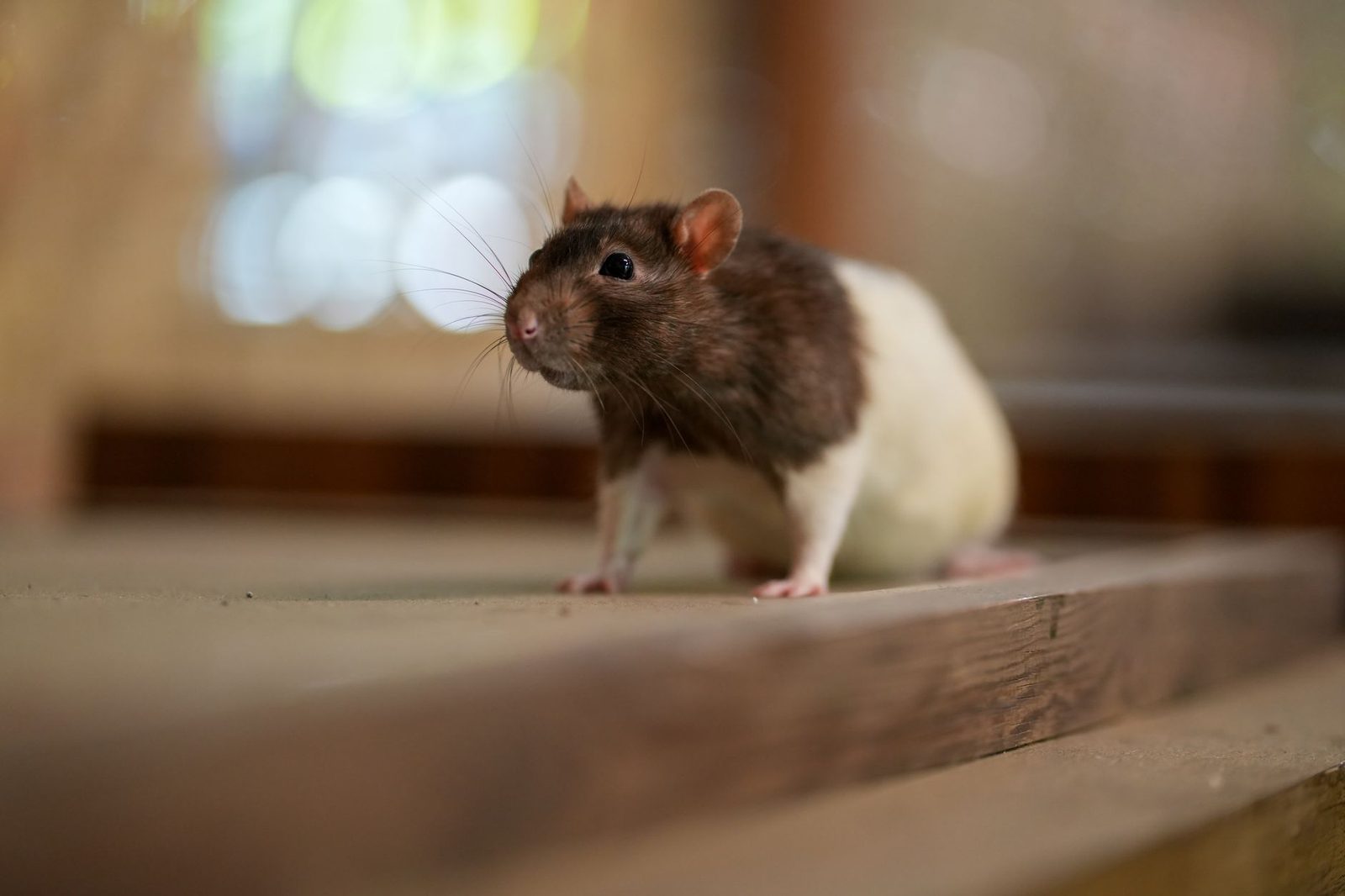
The brown rat (Rattus norvegicus), the dominant species in the detached houses of the Val-de-Marne, is a burrowing, thigmotactic animal: it likes physical contact with surfaces. It travels along walls, under boards, between two layers. It will not cross ten metres of close-mown lawn if it can follow an edge instead.
Three criteria, and only three, define a good shelter from its point of view:
- Continuous cover that hides it from cats, foxes and night-hunting birds of prey. A mown lawn is worthless to it; a dense hedge touching the ground is ideal.
- Loose, dry soil in which to dig a burrow 30-50 cm deep, with two or three exits. A heap of earth, a mulched bed, the space under a shed set on breeze blocks.
- A short distance to food: less than 30 to 50 metres, ideally less than ten. Compost bin, hen house, feeder, food-waste caddy, fallen fruit.
The house mouse, by contrast, has far lower requirements: a few centimetres of empty space will do. A stack of upturned flower pots, a roll of wire mesh stored upright, an opened bag of compost. That is why a garden that is "tidy but cluttered" can host mice without hosting rats.
Field rule: if you cannot see the ground through it, a rodent can live in it.
The woodpile: November's prime suspect
As stoves and fireplaces come back into use, firewood deliveries arrive between October and December. And nearly always in the same way: tipped out loose, stacked against a wall, sitting directly on the soil, sometimes covered by a tarpaulin that reaches the ground.
It is the perfect shelter. The wood creates thousands of interstitial spaces, the tarpaulin guarantees dryness, the wall provides support, the soil allows digging. In house surveys, the log pile regularly tops the list of identified harbourages, ahead of the compost bin.
What makes all the difference, without giving up firewood:
- Raise it 20 to 30 cm on pallets or, better, on an open support such as a metal log rack, so that a cat can pass underneath and a burrow becomes impossible to conceal.
- Pull it 10 to 15 cm away from the wall to remove the sheltered travel corridor.
- Cover from above only, never down to the ground: you are protecting the wood from rain, not the occupants.
- Use it in rotation: the bottom of a pile that has not moved in three winters is an established habitat, not a stock.
Store firewood in two stages: a large volume at the bottom of the garden, raised and ventilated, and a small working supply near the house, ideally in a wheeled log trolley that is emptied completely every week. A stock that empties out does not get colonised.
The "temporary" piles that stay
The same logic applies to anything waiting to be taken away: prunings awaiting a trip to the tip, boards from the old decking, rubble under a tarpaulin, stacked old garden furniture. A two-month-old brush pile is a potential burrow. An electric garden shredder reduces an autumn's prunings to a few bags of mulch in an hour — and gets rid of the pile.
Ivy, hedges and ground cover: what to cut, what to keep
Ivy has a poor reputation among pest controllers, and partly for good reason. Mature ivy on a wall creates a rigid, dense structure that holds up all year round, up which a black rat (Rattus rattus) or a brown rat can climb effortlessly to the roof. This brings us to the question of high-level access via gutters and trees.
But stripping all the ivy from a garden is both pointless and ecologically questionable: it is a major resource for pollinating insects in October and November and for nesting birds. The right approach is surgical:
| Vegetation | Risk | Useful action |
|---|
| Ivy on the house wall, up to the roof | High: direct access to the loft | Cut a 1 m band below the gutter and clear the downpipes |
| Ivy on a boundary wall or an isolated tree | Low | Keep it, monitor the base |
| Trimmed hedge with a clear base | Low | Keep it |
| Dense hedge touching the ground (laurel, thuja) | High: corridor and burrows | Clear 15-20 cm under the lowest branches |
| Thick ground cover (periwinkle, ivy at ground level) against the façade | Medium to high | Create a 30-40 cm mineral strip along the wall |
| Thickly mulched bed (wood chip, bark) | Medium | Mulch ≤ 5 cm near the house |
This clear strip along the façades is the most cost-effective measure in the garden: 30 to 40 cm of gravel or paving, with no vegetation, against the house walls. A rodent refuses open surfaces; you also make air-brick openings, service duct entries and cracks visible. And you immediately spot a fresh burrow. It is the logical companion to the work of sealing cellar air bricks.
For autumn cutting at ground level under an established hedge, a telescopic hedge shear saves you crawling into the vegetation and lets you clear the bottom 20 centimetres cleanly.
Reading the signs: recognising an active harbourage
An active harbourage leaves precise traces, different from those you look for inside the house. For identifying the droppings themselves, see our guide to rodent droppings. Outdoors, the signs to look for are structural:
- A hole 6 to 9 cm across, clean-edged, with no spider's web at the entrance, often under a root, a low wall, a slab or a step. A 3 cm hole is more likely a vole or a wood mouse; a 10 cm hole with a fan of spoil, a rabbit.
- Runs: strips of compacted, burnished earth 5 to 10 cm wide, snaking along the foot of a fence or an edging. This is the most reliable signature of daily traffic.
- Fresh spoil of fine earth in front of the entrance, reappearing after rain.
- Hair and grease smears at forced passage points: under a board, on a breeze block, at the mouth of a pipe.
- Gnaw marks on the edges of a plastic compost bin, a hose, a pot, a wooden shed door.
The simplest test remains blocking the hole: plug the suspect holes with crumpled newspaper or compacted earth, then come back at 24 and 48 hours. If the plug has been reopened, the burrow is active. This test costs nothing and saves you treating a burrow abandoned six months ago.
An inspection in the late afternoon in mild weather tells you more than one at midday. And for homeowners who want hard evidence without spending their nights outside, a motion-detection trail camera set facing a woodpile or a fence usually settles the question in two nights: you see the species, the number of individuals and the times they pass. It is also the best way to tell a rat from a hedgehog or a neighbourhood cat.
Wasteland, shared boundaries and neighbouring building sites
In the densely built communes of the Val-de-Marne — Champigny, Vitry, Créteil, Saint-Maur — a house is rarely isolated. The real harbourage is often on a neighbouring plot: a garden left to run wild after a death, land awaiting planning permission, a building site with a site cabin and leftover meals, the far end of an adjoining apartment block's grounds.
In that case, acting alone on your own garden will not eliminate the population: it reduces pressure and shifts the frontier. That is not pointless — it is what makes the difference between "rats pass through" and "rats live at my place" — but it has to be combined with action beyond your boundary. The practical options (the local public health and hygiene service, a letter to the owner, the mayor's role under the departmental public health regulations) are detailed in our article on rats coming from the street or a neighbouring plot.
It is also worth recalling that the obligation to maintain plots and keep surroundings sanitary falls under the règlement sanitaire départemental (departmental public health regulations), and that the department's communes regularly run rat-control campaigns in the sewer network and public spaces — several neighbouring towns have done so in recent years, from Vitry-sur-Seine to Charenton. These campaigns treat sewers and roads, never the inside of private plots: the garden remains the responsibility of the owner or tenant.
The mistakes that make things worse
A few reflexes, common in November, produce the opposite of the intended effect.
Blocking a burrow without changing anything around it. A brown rat will dig a new exit in one night, sometimes 50 cm away. Blocking only has value as a test, or as a finishing touch after cover and food resources have been removed.
Flooding a burrow with the hose. Ineffective on a network with several exits, and above all: you soak the foot of your façade and push the animals towards the cellar or the crawl space.
Scattering pellets into a garden hole. Beyond the strict rules governing rodenticide use by private individuals — bait in a secured box, limited use, protection of children, pets and non-target wildlife, set out in our article on what a private individual can really use — exposed bait in a garden directly endangers hedgehogs, cats, dogs and birds of prey. ANSES (the French Agency for Food, Environmental and Occupational Health and Safety) and the ministère de la Transition écologique (Ministry for the Ecological Transition) regularly highlight the problem of secondary poisoning of predators that eat poisoned rodents: by wiping out the night-hunting birds of prey and the mustelids of a neighbourhood, you disarm natural regulation.
Relying on ultrasonic repellents. No solid independent study demonstrates any lasting effect on rodents; habituation is rapid and the sound passes through neither walls nor soil.
Clearing everything. A bare, paved garden is less welcoming to rats — but also to natural predators and beneficial wildlife. The aim is not to remove vegetation, it is to break the continuity of cover between the bottom of the garden and the house, and to make the surroundings legible.
The November plan, in order
- Walk round the garden with a notebook, writing down every volume where you cannot see the ground: woodpiles, pots, tarpaulins, brush, furniture, low hedges, ivy.
- Raise the firewood and move it off the wall, cover it from above, remove or shred the brush.
- Clear a 30-40 cm clean strip along every façade, and 15-20 cm under the hedges.
- Cut the 1 m band of ivy below the gutters and around the downpipes.
- Test suspect holes with newspaper, and come back after 48 hours.
- Lock down the resources: closed compost bin, hen feed in a sealed container, feeder on a post with a catch tray, fallen fruit picked up.
- If burrows are still active after two to three weeks, hand over to a professional: more than ten individuals seen, multiple burrows, young visible during the day, or a harbourage located outside your plot.
Work on harbourage does not produce spectacular results in 48 hours. It produces a lasting effect over three to six weeks, because it reduces the carrying capacity of the site. That is exactly the opposite of a chemical treatment, which cuts numbers without changing the environment — and leaves the place free to repopulate.
As for protection while cutting back and handling damp wood, cut-resistant gardening gloves and picking up with a shovel (never bare-handed) remain the rule: the risk of leptospirosis exists anywhere rodent urine meets standing water, as we noted regarding cellars after a flood on the Marne.
Having your garden surveyed
A proper outdoor survey takes an hour: a record of harbourages, runs, feeding points and access routes into the building, plus a prioritised redesign plan. It is often cheaper than a series of treatments repeated every autumn for want of having addressed the cause.
Our teams based in Champigny-sur-Marne work across the whole of the Val-de-Marne — see our service areas and our prices. For a garden inspection before winter, contact us. If rodents are already moving about indoors, or if you find bites on a pet, go straight to our emergency line.